01What is paranoia?
Paranoia is persistent, unjustified suspicion that others mean harm, are plotting or are watching. It may be a passing thought with anxiety, or a fixed delusion that doesn't change with evidence. Read about the symptoms of paranoia.
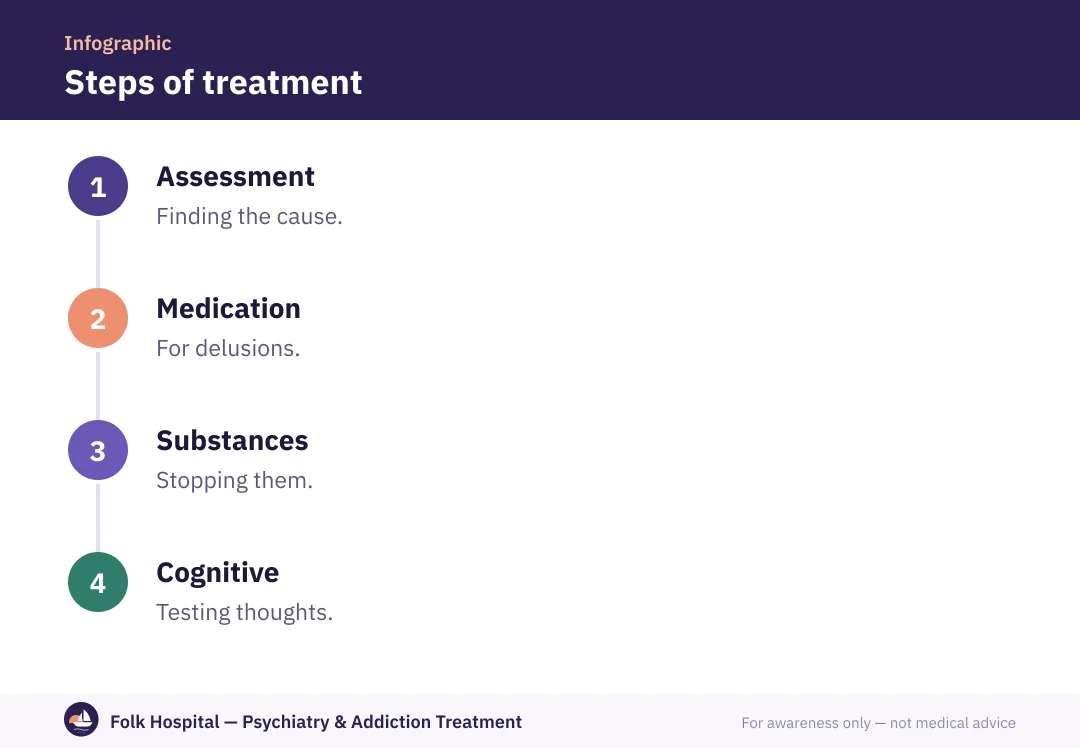
02Treatment by cause
| Cause | Treatment |
|---|---|
| Psychosis or schizophrenia | Antipsychotics with psychological and family therapy |
| Shabu, stimulants and cannabis | Stopping and addiction treatment, sometimes short-term antipsychotics |
| Paranoid personality disorder | Long-term therapy to build trust |
| Severe anxiety or depression | Treating the anxiety or depression |
03Cognitive therapy
It helps test thoughts calmly without confrontation: what's the evidence? Are there other explanations? What happens if I act as if the idea isn't certain? It takes time to build trust with the therapist.
04The family's role
Increases suspicion
Helps
- Arguing to prove the idea wrong | Listening and acknowledging their feelings
- Mocking or laughing | Calm and respect
- Hiding things or lying | Clarity and honesty
- Confirming the delusion to please them | Neither confirming it nor arguing
05Danger signs
- Threatening someone they believe is harming them, or carrying a weapon for protection.
- Refusing food for fear of poisoning.
- Severe agitation or suicidal thoughts.
Ambulance 123.
Ambulance: 123Read about psychosis treatment and drug-induced psychosis.
؟Frequently asked questions
How do I persuade a paranoid person to get treatment?
Focus on their suffering from insomnia or stress rather than debating whether their suspicions are true.
Is paranoia a mental illness?
It's a symptom that can appear in psychosis, schizophrenia or with drugs, or as a trait in paranoid personality disorder. Assessment determines the cause.
Does shabu cause paranoia?
Yes. Suspicion and persecution are among the best-known symptoms of shabu and stimulants, and can lead to violence. Stopping and addiction treatment are essential.
Should I argue to prove their suspicions wrong?
No. Arguing strengthens their hold on the idea and loses their trust in you. Acknowledge their feelings without confirming the idea, and encourage assessment.
Sources and references
- Psychosis — NHS (UK)
- Psychosis and schizophrenia in adults (CG178) — National Institute for Health and Care Excellence (NICE)
- Methamphetamine — research topic — National Institute on Drug Abuse (NIDA)
- Psychotherapies — National Institute of Mental Health (NIMH)

A psychiatrist specialising in addiction and mental illness in adults and adolescents, with a focus on dual diagnosis.
For awareness only — not a substitute for medical advice. Editorial policy · View profile