01What is drug-induced psychosis?
It's the appearance of hallucinations, delusions (such as suspicion and persecution) or disturbed behaviour during use, after it or during withdrawal. The substances most linked to it are shabu, cannabis and Strox. Read about the symptoms of drug-induced psychosis.
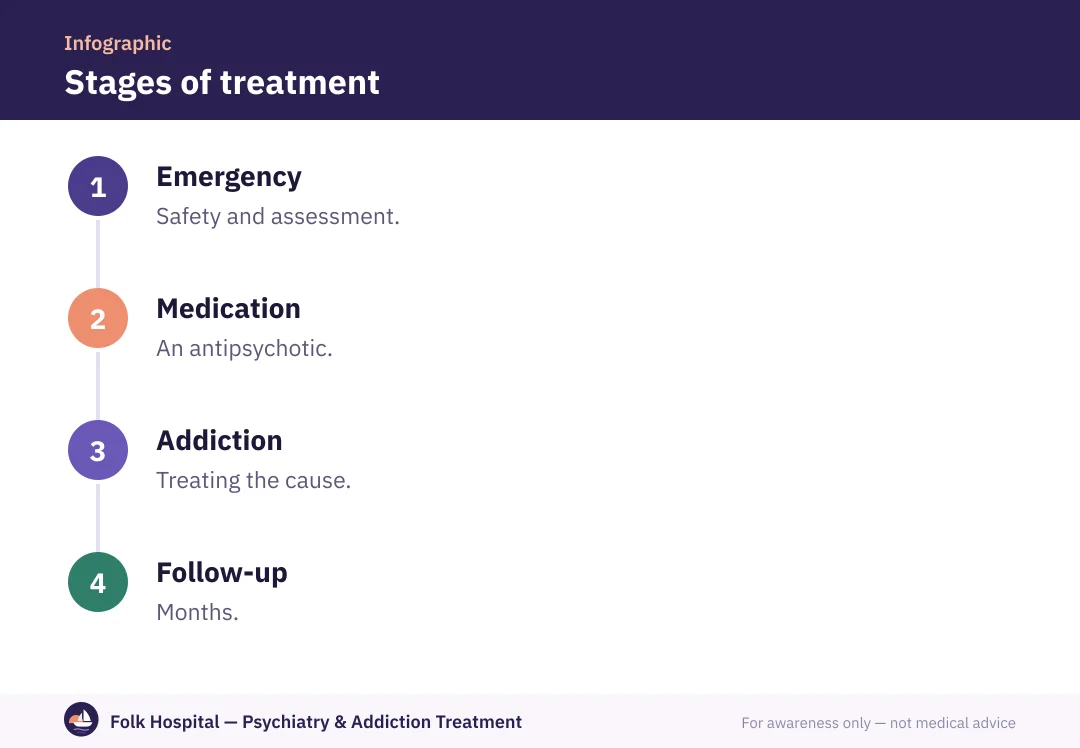
02Stages of treatment
- Safety and urgent assessmentrisk assessment, a drug screen, and tests to rule out physical causes.
- Settling the symptomsantipsychotics and sometimes short-term sedatives under medical supervision.
- Safe withdrawal of the drugand treatment of withdrawal symptoms.
- Addiction treatmentpsychological therapy, rehabilitation and relapse prevention.
- Follow-upto find out whether the psychosis was tied only to the drug or reveals an ongoing disorder.
03Drug-induced psychosis or schizophrenia?
Drug-induced psychosis
Schizophrenia
- Linked in time to use or withdrawal | Not necessarily linked to use
- Usually improves within days to weeks of stopping | Lasts months and needs long treatment
- Visual hallucinations more common | Auditory hallucinations more common
But the distinction isn't certain at first, which is why the case is followed after stopping. Read about psychosis versus schizophrenia.
04Danger signs
- An attempt to harm oneself or others.
- Severe agitation or dangerous action driven by suspicion or hallucinations.
- Very high temperature, seizures or loss of consciousness.
05The family's role
- Don't argue with delusions; speak calmly and reassuringly.
- Remove dangerous objects and drugs from the home.
- Encourage assessment and get help when there's danger.
- Take part in family and relapse-prevention sessions.
Read about the harms of drug-induced psychosis, psychosis treatment and addiction treatment.
؟Frequently asked questions
How long does treatment for drug-induced psychosis last?
Acute symptoms usually improve within days to weeks of stopping, but follow-up and addiction treatment continue for months.
Does drug-induced psychosis turn into schizophrenia?
In a proportion of cases drug-induced psychosis is the start of schizophrenia or bipolar disorder, especially with cannabis, stimulants and a genetic predisposition. That's why follow-up is needed.
Which drugs cause psychosis most?
Shabu and other stimulants, cannabis (especially strong types), Strox and synthetic drugs, hallucinogens, and sometimes alcohol withdrawal.
Is hospital admission needed?
Usually yes at first when there's agitation, danger or severe hallucinations, to keep the patient safe, start treatment and withdraw the drug safely.
What if they go back to the drug?
The risk of psychosis returning rises sharply, and episodes may become longer and harder. So relapse prevention is a core part of treatment.
Sources and references
- Co-Occurring Disorders and Health Conditions — National Institute on Drug Abuse (NIDA)
- Methamphetamine — research topic — National Institute on Drug Abuse (NIDA)
- Cannabis (Marijuana) — research topic — National Institute on Drug Abuse (NIDA)
- Psychosis and schizophrenia in adults (CG178) — National Institute for Health and Care Excellence (NICE)
- Schizophrenia — National Institute of Mental Health (NIMH)

A psychiatrist specialising in addiction and mental illness in adults and adolescents, with a focus on dual diagnosis.
For awareness only — not a substitute for medical advice. Editorial policy · View profile