
01Psychological symptoms
Common symptoms
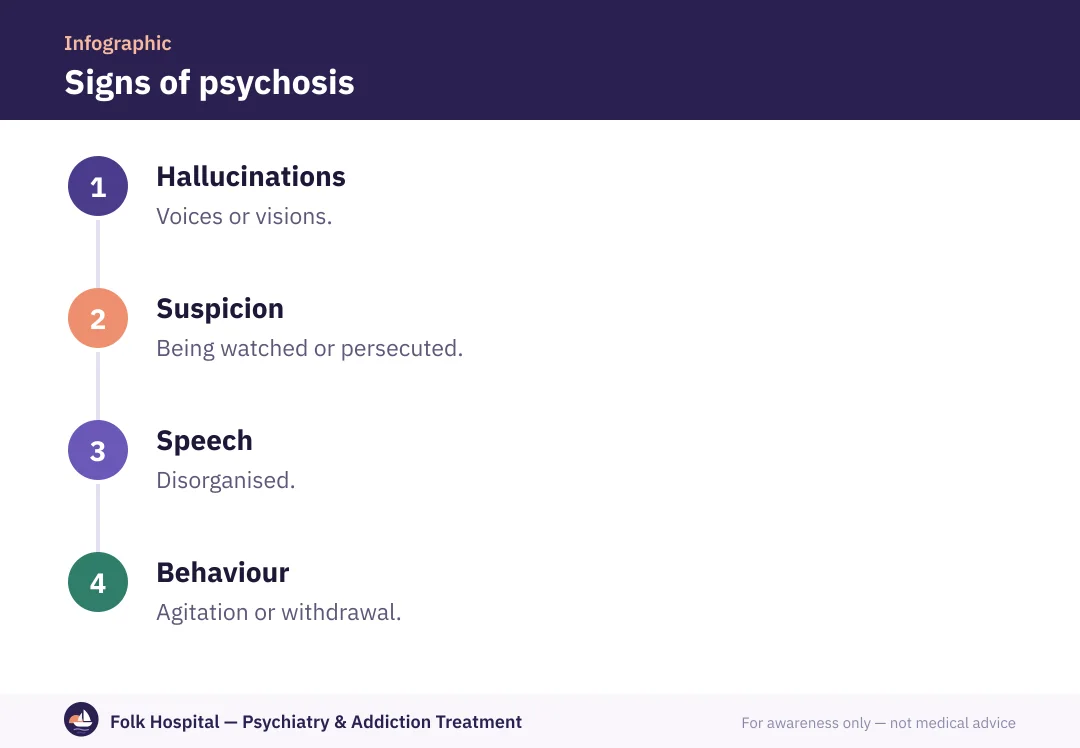
- Suspicion and persecution: «people are watching me», «someone wants to hurt me».
- Ideas of reference: that conversations and events are aimed at them.
- Auditory hallucinations: threatening or commenting voices.
- Visual hallucinations: shadows, people or shapes.
- Tactile hallucinations: insects under the skin, especially with stimulants.
- Morbid jealousy or delusions of infidelity.
- Fast, disconnected speech.
02Accompanying physical signs
| Substance | Physical signs that may appear |
|---|---|
| Stimulants | Dilated pupils, sleeplessness, weight loss, sweating, palpitations |
| Hashish and synthetic cannabinoids | Red eyes, sometimes freezing, vomiting with strox |
| Alcohol withdrawal | Tremor, sweating, palpitations, confusion, fever |
| Sedative withdrawal | Severe anxiety, tremor, sometimes seizures |
03Drug psychosis or another psychosis?
Points to drug psychosis
- Began with use or withdrawal.
- Clear visual or tactile hallucinations.
- Physical signs of use.
- Improvement within days to weeks of stopping.
Points to another disorder
- Symptoms came before use.
- They persist a month after stopping.
- Negative symptoms and gradual decline.
- Family history of schizophrenia or bipolar disorder.
- Threats to harm themselves or others.
- Severe agitation or violence.
- High fever, seizures or marked confusion.
- Visual hallucinations with tremor and sweating after stopping alcohol.
Mental health hotline: 08008880700.
Ambulance: 12304What should the family do?
Speak calmly, don't argue about the suspicion, remove dangerous items, seek urgent assessment, and tell the doctor the substance, amount and last dose. Read supporting someone with psychosis, drug-induced psychosis and shabu symptoms.
؟Frequently asked questions
What are the commonest symptoms of shabu psychosis?
Intense suspicion of being watched or chased, hearing voices, a feeling of insects under the skin, severe insomnia and sometimes aggression.
How can I tell drug psychosis from schizophrenia?
Drug psychosis is linked in time to use or withdrawal, usually improves with stopping, and more often includes visual and tactile hallucinations. A final distinction needs medical follow-up.
Does hashish psychosis have particular symptoms?
Usually suspicion, ideas that people are talking about them or events are aimed at them, and severe anxiety, often with strong strains or heavy use.
Are hallucinations during alcohol withdrawal dangerous?
They may be the start of delirium tremens, especially with tremor, sweating, confusion and fever, which is an emergency.
When do symptoms appear?
During use or within hours to days after, or during withdrawal from alcohol and sedatives.
Does the person realise they're hallucinating?
Sometimes at first, but as psychosis deepens the symptoms feel completely real.
Sources and references
- Psychosis — NHS (UK)
- Methamphetamine — research topic — National Institute on Drug Abuse (NIDA)
- Cannabis (Marijuana) — research topic — National Institute on Drug Abuse (NIDA)
- Synthetic Cannabinoids (K2/Spice) DrugFacts — National Institute on Drug Abuse (NIDA)
- Comorbidity: Substance Use and Other Mental Disorders — National Institute on Drug Abuse (NIDA)

A psychiatrist specialising in addiction and mental illness in adults and adolescents, with a focus on dual diagnosis.
For awareness only — not a substitute for medical advice. Editorial policy · View profile