01How does Strox use begin?
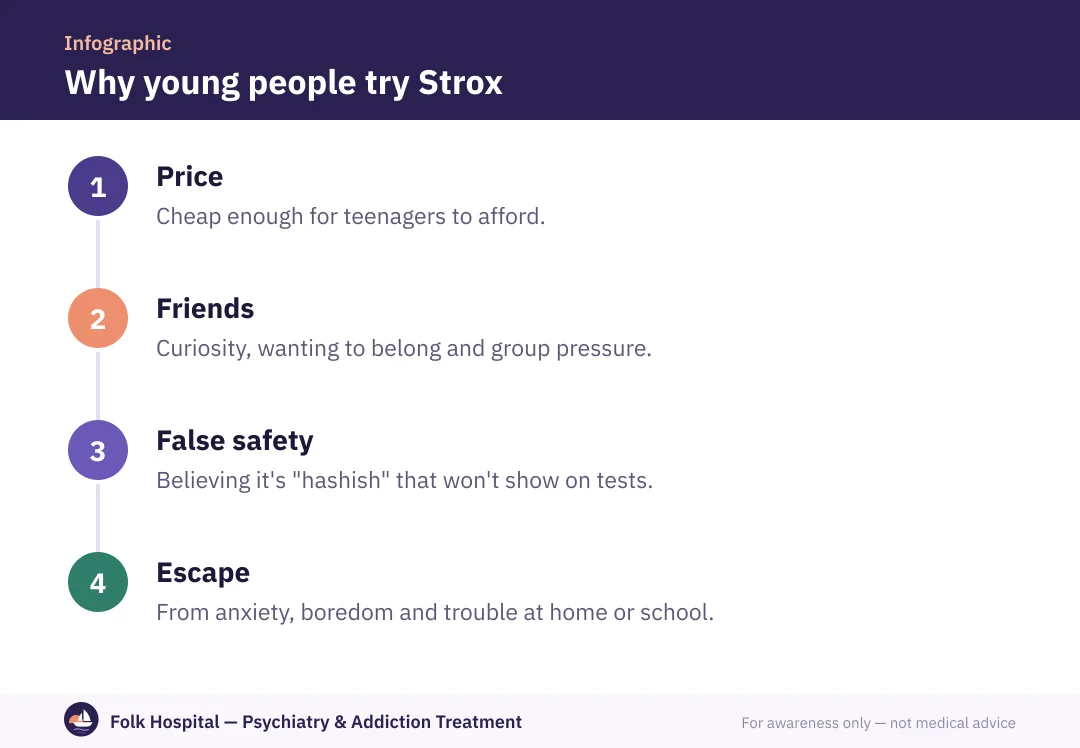
Usually at a gathering with friends, or with an offer from someone who says it's "something light". Because it's cheap, trying it again is easy, and repetition turns it into a habit and then addiction.
02Who is most at risk?
Risk factors
- Adolescence and early adulthood.
- Untreated anxiety, depression or ADHD.
- Family conflict or little supervision.
- Friends who use.
- Early use of hashish or cigarettes.
- Idle time and few alternative activities.
03How can you protect your son?
Open conversation, knowing his friends, filling his time with things he enjoys and noticing early changes. If anxiety or depression shows up, treating it protects him from looking for a "fix" in a drug. Read how to deal with Strox use.
؟Frequently asked questions
My son is a top student from a good home. How did he end up with Strox?
Addiction doesn't choose a home or an education level. Study pressure, anxiety and friends can push any young person to try it; what matters now is staying calm and getting help.
Sources and references
- Synthetic Cannabinoids (K2/Spice) DrugFacts — National Institute on Drug Abuse (NIDA)
- Drugs, Brains, and Behavior: The Science of Addiction — National Institute on Drug Abuse (NIDA)

A psychiatrist specialising in addiction and mental illness in adults and adolescents, with a focus on dual diagnosis.
For awareness only — not a substitute for medical advice. Editorial policy · View profile