
01During an episode: what to say and what to avoid
What raises tension
- «That's nonsense», or mocking the voices.
- Long arguments to prove they're wrong.
- Raised voices and threats.
- Crowding around them or touching them suddenly.
- Lying to get them to see a doctor.
What helps
- «I can see you're scared, and I'm here with you».
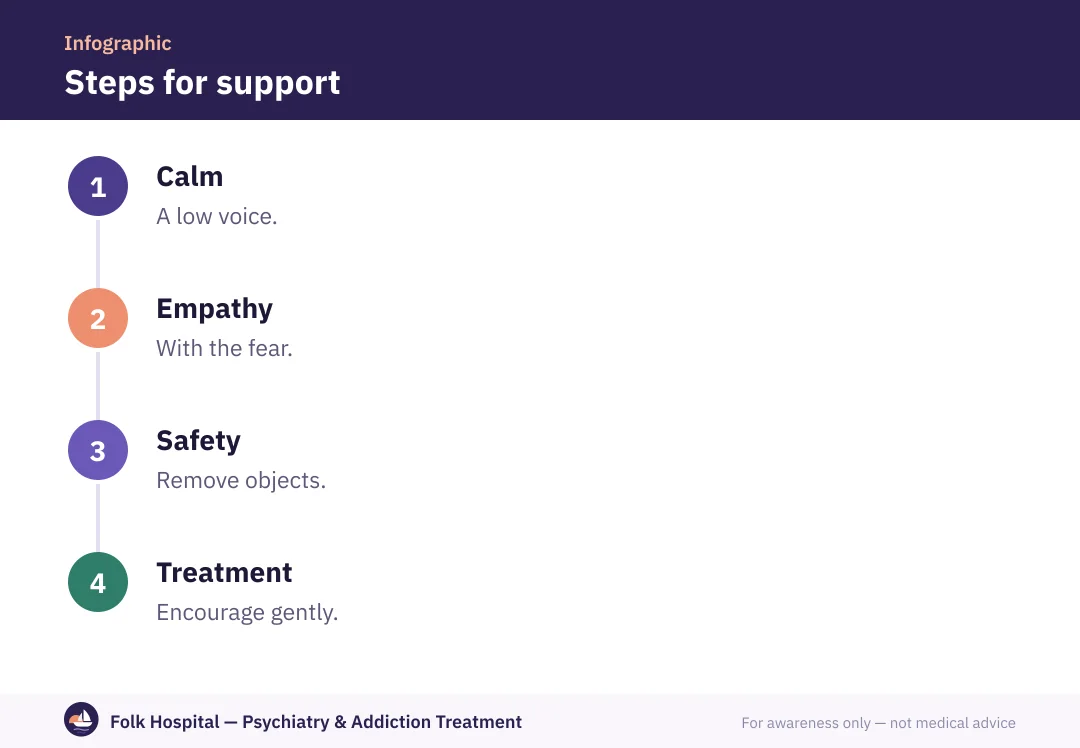
- Short sentences and a calm voice.
- Comfortable distance and a clear exit for both.
- Less noise and harsh light.
- Honesty: «I'm worried about you and want a doctor to help us».
- Threats to harm themselves or others, or talk of suicide.
- Acting on commands the person hears.
- Severe agitation or refusing food and drink.
- Confusion with fever or seizures, or after taking a substance.
Mental health hotline: 08008880700.
Ambulance: 12302Practical steps
- Safety firstremove sharp objects, medicines and car keys, and don't leave them alone if there's risk.
- Calminga quiet place, with one person talking to them.
- Basic needsoffer food, water and rest.
- Seek assessmentcontact a psychiatrist or hospital, and mention symptoms and any substances.
- Keep noteswhen symptoms began and what changed; this helps the doctor.
03After the episode: the family's role in preventing relapse
| What helps | Why |
|---|---|
| Sticking with medication and appointments | Stopping medication is a leading cause of relapse |
| Noticing early signs | Poor sleep, suspicion and withdrawal often precede relapse |
| A calm home with little criticism | High criticism and tension are linked to more relapse |
| Staying away from drugs | Hashish and stimulants are among the strongest triggers |
| A daily routine and regular sleep | Stabilises mood and thinking |
| A gradual return to life | Work or study in small steps builds confidence |
04When they refuse treatment
Lack of insight is part of psychosis, not just stubbornness. Start with what they do acknowledge: insomnia, anxiety or tiredness. Seek family guidance. If there's real danger, the law regulates involuntary admission with medical safeguards.
05Caring for the carer
Caring for someone with psychosis is exhausting. Take breaks, share responsibility and seek psychological support for yourself when needed. Read supporting a mentally ill relative, psychosis and psychosis treatment.
؟Frequently asked questions
How do I talk to someone who hears voices?
Calmly, in short sentences; ask how they feel, don't mock the voices or confirm they're real. For example: «I can't hear them, but I believe you can, and that they're upsetting».
Should I go along with their delusions?
Don't confirm them or argue forcefully. Focus on their feelings and on practical things such as food, sleep and safety.
What if they refuse treatment?
Keep the relationship calm, focus on what bothers them, such as poor sleep or anxiety, and seek family guidance. If there's risk, admission under the law may be needed.
When should I call an ambulance?
For threats to harm themselves or others, acting on commands from voices, refusing food and drink, or severe agitation.
How can I help prevent relapse?
By supporting medication and appointments, noticing early signs such as poor sleep and suspicion, reducing criticism at home, and keeping away from drugs.
How do I protect myself as a family member?
Get support and family guidance, share responsibility with others and make time to rest; exhaustion reduces your ability to help.
Sources and references
- Psychosis — NHS (UK)
- Schizophrenia — National Institute of Mental Health (NIMH)
- Schizophrenia — fact sheet — World Health Organization
- Psychotherapies — National Institute of Mental Health (NIMH)

A psychiatrist specialising in addiction and mental illness in adults and adolescents, with a focus on dual diagnosis.
For awareness only — not a substitute for medical advice. Editorial policy · View profile