01Parkinol: a necessary medicine for some patients
Parkinol (trihexyphenidyl) is an anticholinergic medicine prescribed for parkinsonian symptoms, and often given to ease movement side effects of some antipsychotics, such as stiffness and tremor. But at doses far above those prescribed it causes euphoria, confusion and sometimes hallucinations, which is why it's misused, especially by young people and with other drugs.
Read about signs of Parkinol use.
02Poisoning: when to go to emergency
- Confusion, delirium or hallucinations.
- Very dry mouth and skin, flushing and heat.
- High temperature and racing heart.
- Dilated pupils and blurred near vision.
- Urinary retention or severe constipation.
Call an ambulance on 123 immediately, especially with high temperature, seizures or loss of consciousness.
Ambulance: 12303How is it treated?
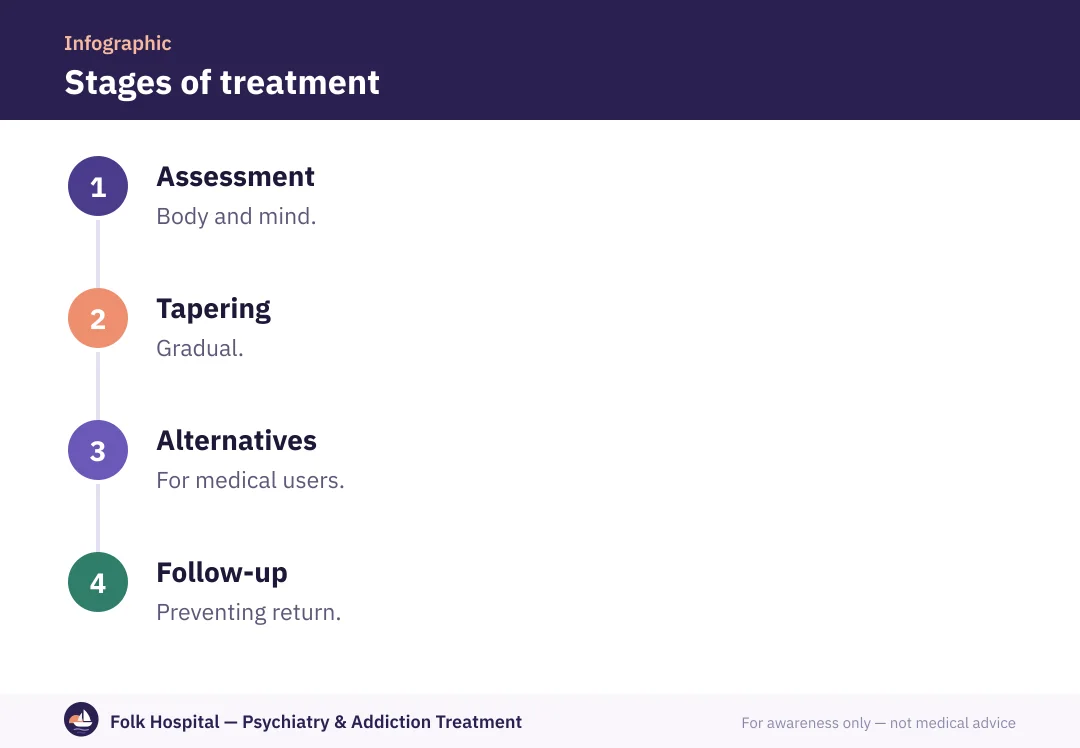
- Assessmentis it needed medically? What's the real dose? What other drugs? What's the mental state?
- Treating delirium if presentcare in a safe setting with monitoring of temperature, heart and urine.
- Gradual taperingto avoid unpleasant withdrawal and the return of movement symptoms in those who need it.
- Medical alternativesfor anyone taking it with an antipsychotic, the doctor reviews the original medicine and its dose.
- Psychological therapy and follow-upmotives, other substances and preventing a return.
Read about Parkinol withdrawal.
04If you need it medically
Don't stop on your own
If Parkinol is prescribed with a psychiatric medicine or for movement symptoms, stopping suddenly can bring back stiffness, tremor and distressing symptoms. The doctor can adjust the original medicine, choose an alternative, or taper Parkinol safely.
05If it's used for a high
Here treatment deals with:
- Motives: curiosity, escaping stress, copying friends, or boosting another drug.
- Other substances: cannabis, tramadol or others.
- Psychological symptoms: is there depression, anxiety or psychosis that needs treatment? Read about drug-induced psychosis.
- The family: especially with teenagers. Read teenagers and drugs.
06Residential or outpatient?
Most cases are treated as outpatients once any acute poisoning has passed. We use a residential stay for repeated delirium, mixing many drugs, or persistent psychotic symptoms.
Read about the harms of Parkinol.
؟Frequently asked questions
I take Parkinol with a psychiatric medicine. Should I stop?
Don't stop it yourself. It's often prescribed to ease movement side effects of some psychiatric medicines, and the doctor may adjust the dose or change the original medicine instead.
What are signs of Parkinol poisoning?
Confusion, delirium and hallucinations, very dry mouth and skin, flushing and fever, dilated pupils, racing heart and urinary retention. These need emergency care immediately.
Is it addictive?
It can cause psychological dependence in people using high doses for a high, seen as cravings, rising doses and anxiety on stopping.
How long does treatment take?
Tapering takes a few weeks, psychological rehabilitation one to two months, and follow-up several months.
Sources and references
- Prescription Medicines — research topic — National Institute on Drug Abuse (NIDA)
- Mental Health Medications — National Institute of Mental Health (NIMH)
- Treatment Approaches for Drug Addiction — DrugFacts — National Institute on Drug Abuse (NIDA)
- Psychosis and schizophrenia in adults (CG178) — National Institute for Health and Care Excellence (NICE)

A psychiatrist specialising in addiction and mental illness in adults and adolescents, with a focus on dual diagnosis.
For awareness only — not a substitute for medical advice. Editorial policy · View profile