
01Signs
| Type | Signs |
|---|---|
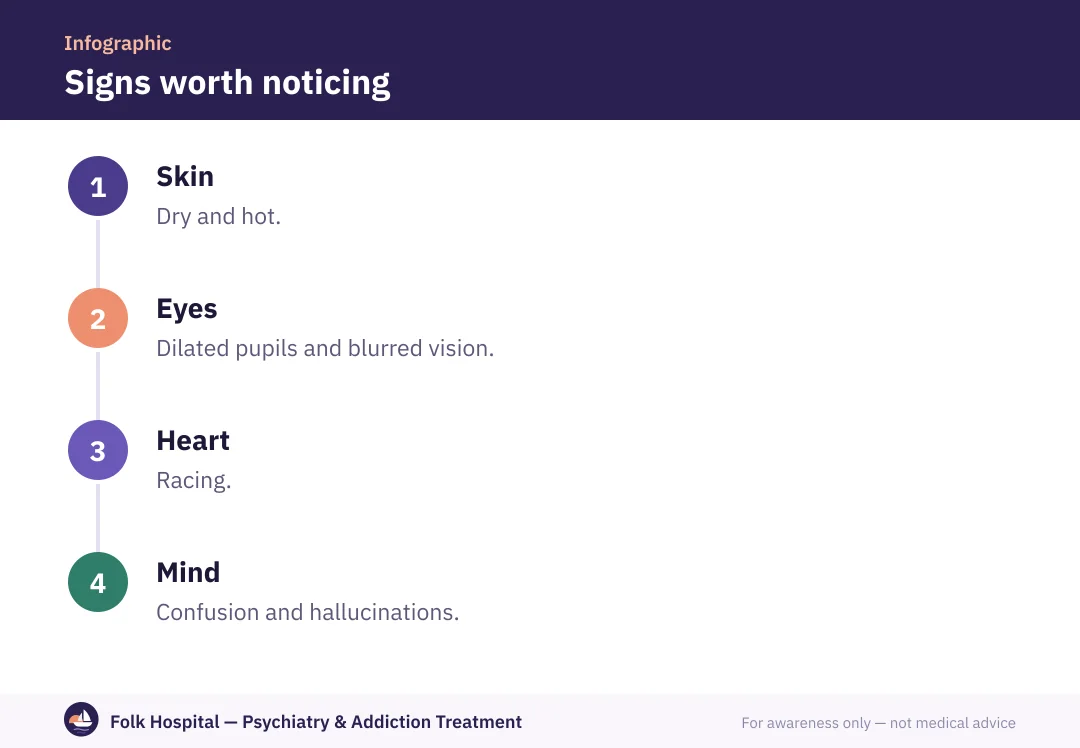
| Physical | Dry mouth and skin, wide pupils and blurred vision, flushing and warmth, fast heartbeat |
| Urinary and digestive | Urinary retention and constipation |
| Psychological | Confusion, hallucinations, incoherent speech, and euphoria or anxiety |
| Signs of misuse | Increasing the dose, getting it without a prescription, using it without movement symptoms |
02Danger signs
- Severe confusion or hallucinations.
- High temperature with dry skin.
- Urinary retention or a very fast heartbeat.
- Seizures.
03What should you do?
If it's prescribed, don't stop it without the psychiatrist. If there's misuse, seek an assessment. Read about Parkinol withdrawal, its treatment and its harms.
؟Frequently asked questions
My son is speaking incoherently and seeing things that aren't there. What should I do?
It may be delirium from a substance such as Parkinol. Stay with him, call an ambulance and don't leave him alone.
Why does the doctor prescribe Parkinol?
To treat stiffness and tremor that some antipsychotics can cause, or for Parkinson's disease in specific cases.
How do I know use has become misuse?
By increasing the dose without a doctor, taking it without movement symptoms, or seeking a high or hallucinations.
Does it interact with other medicines?
Yes, especially with other medicines that have a similar effect, such as some antihistamines and antidepressants, increasing confusion and side effects.
Sources and references
- Prescription Medicines — research topic — National Institute on Drug Abuse (NIDA)
- Mental Health Medications — National Institute of Mental Health (NIMH)

A psychiatrist specialising in addiction and mental illness in adults and adolescents, with a focus on dual diagnosis.
For awareness only — not a substitute for medical advice. Editorial policy · View profile