01Two different situations
| Situation | What happens on stopping | What's needed |
|---|---|---|
| Medical use with antipsychotics | Movement symptoms such as stiffness and tremor may return | A plan with the psychiatrist |
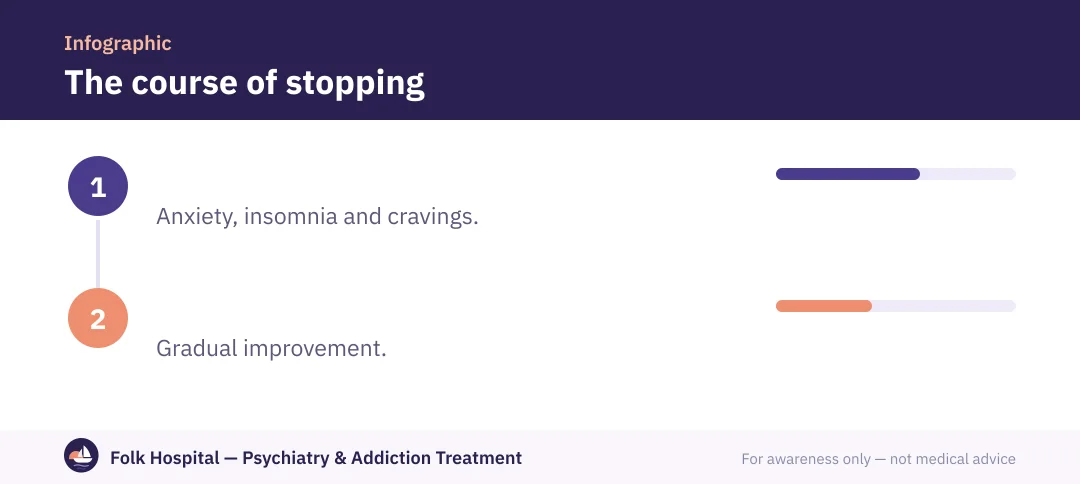
| Misuse at high doses | Anxiety, insomnia, mood swings and cravings | Gradual reduction and addiction treatment |
02A plan for stopping
- A medical assessmentreason for use, dose and other medicines.
- Gradual reductionunder supervision.
- Reviewing psychiatric medicinesif they need adjustment.
- Treating symptomsinsomnia and anxiety.
- Psychological supportwhere there has been misuse.
- Severe confusion, hallucinations, high temperature, a very fast heartbeat or urinary retention.
Read about Parkinol addiction treatment, the symptoms of its use and its harms.
؟Frequently asked questions
I take it with a psychiatric medicine. Should I stop?
Don't stop without your doctor, as it may bring back movement symptoms. Discuss alternatives and the dose.
I use it with a psychiatric medicine. Should I stop it?
Don't stop without your doctor. They may reduce it gradually or adjust the psychiatric medicine causing the movement symptoms.
Why is Parkinol misused?
Because at high doses it can cause euphoria or hallucinations, but at those doses it can also cause confusion, palpitations, high temperature and urinary retention.
What are the signs of overdose?
Severe confusion, hallucinations, dry mouth and skin, flushing, high temperature, palpitations and wide pupils. It's an emergency.
Sources and references
- Prescription Medicines — research topic — National Institute on Drug Abuse (NIDA)
- Mental Health Medications — National Institute of Mental Health (NIMH)
- Treatment Approaches for Drug Addiction — DrugFacts — National Institute on Drug Abuse (NIDA)

A psychiatrist specialising in addiction and mental illness in adults and adolescents, with a focus on dual diagnosis.
For awareness only — not a substitute for medical advice. Editorial policy · View profile