01Morphine: between treatment and addiction
Morphine is one of the strongest and most important painkillers in medicine, used after operations, for severe injuries and for cancer pain. But continuous use makes the body adapt, so withdrawal appears on stopping, and in some patients it develops into addiction, carrying on after the pain has gone or at doses beyond what's needed.
The distinction matters:
Expected physical dependence
- Uses it for genuine pain on prescription.
- Keeps to the prescribed dose.
- Withdrawal appears on stopping suddenly.
- Needs a gradual taper with their doctor.
Signs of addiction
- Continues after the pain has gone, or raises the dose.
- Gets it from several or non-medical sources.
- Uses it for the high or to escape feelings.
- Carries on despite clear harm.
Read about signs of morphine addiction and its causes.
02How is it treated?
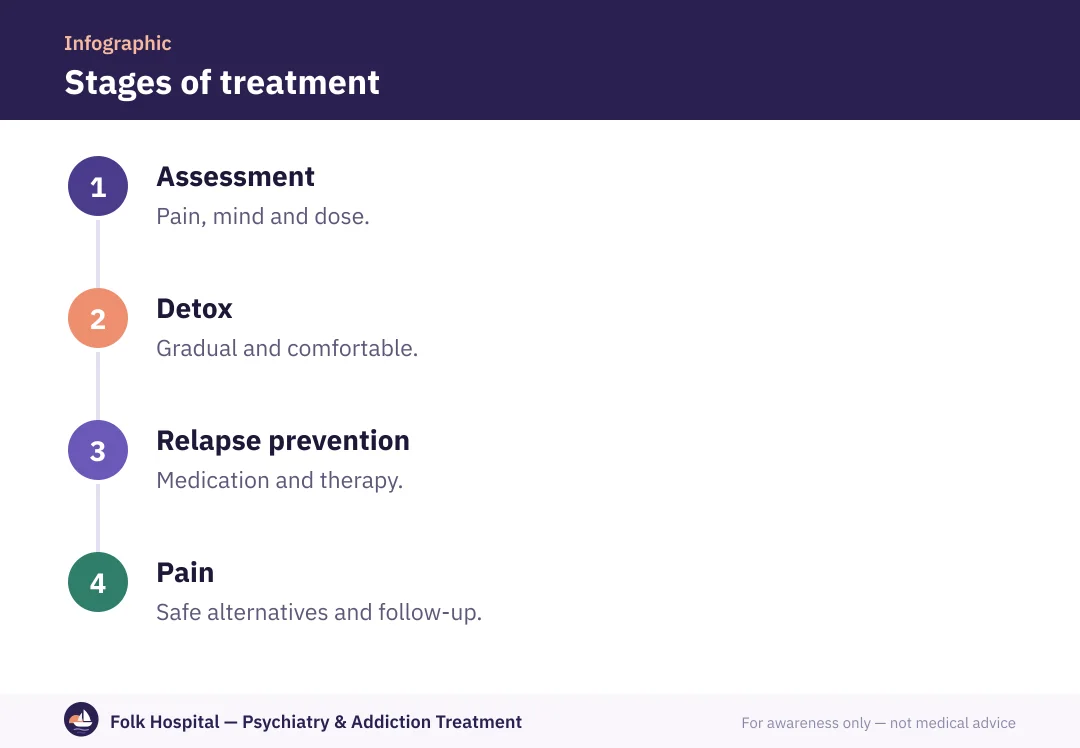
- Assessing pain and doseis the pain still there? What's the real dose and its source? What's the mental state?
- An alternative pain plannon-opioid medicines, physiotherapy and psychological techniques, coordinated with a pain specialist.
- Tapering or detoxa gradual taper for those who started therapeutically, or supervised detox with symptom medicines in cases of addiction.
- Medication where neededapproved relapse-prevention options for anyone with a use disorder.
- Psychological therapy and follow-uphandling chronic pain, depression and anxiety, and preventing a return.
Read about morphine withdrawal and opioid addiction treatment.
03Managing pain after morphine
Fear of the pain returning is what most often stops patients from coming off. So the plan includes:
- Non-opioid medicines suited to the type of pain, such as nerve-pain medicines or ordinary painkillers at safe doses.
- Physiotherapy and regular exercise.
- CBT for chronic pain, which changes the patient's relationship with pain and reduces its impact on their life.
- Relaxation techniques and sleep regulation.
Pain sensitivity may rise temporarily during withdrawal, then improves gradually for many people once the body settles.
04Cancer and palliative care patients
Pain relief is a right
People with cancer and advanced illness need pain relief and must not be denied it for fear of addiction. If signs of misuse appear, they're managed with a medical plan that preserves pain relief and adds safety, not by stopping it.
05Residential or outpatient?
An outpatient taper usually suits
- Use that began on prescription for genuine pain.
- Moderate doses from a medical source.
- No sedatives or alcohol.
Residential care is better with
- High doses or injecting from non-medical sources.
- Mixing with sedatives or other opioids.
- Severe depression or failed previous attempts.
- Extreme drowsiness or no response.
- Very slow breathing.
- Pinpoint pupils and blue lips.
Call an ambulance on 123 immediately.
Ambulance: 123Read about the harms of morphine.
؟Frequently asked questions
I was taking morphine after an operation. Am I addicted?
Not necessarily. Physical dependence and withdrawal can occur with any regular use. Addiction means losing control and carrying on despite harm. An assessment tells the difference and sets the plan.
How long does it take to come off morphine?
Tapering or detox takes from a week to several weeks depending on dose and duration, followed by follow-up for months.
Will I be in severe pain after stopping?
Pain sensitivity may rise temporarily during withdrawal, so we set an alternative pain plan and taper gradually. Over time, many people's pain tolerance improves after stopping.
Are cancer patients denied morphine for fear of addiction?
No. Pain relief in cancer and palliative care is a priority and is managed with medical supervision that balances relief and safety.
Are there medicines that help prevent going back?
Yes. Approved options for opioid use disorder reduce cravings and relapse, and the doctor decides according to the case.
Sources and references
- Prescription Medicines — research topic — National Institute on Drug Abuse (NIDA)
- Medications to Treat Opioid Use Disorder — Research Report — National Institute on Drug Abuse (NIDA)
- Guidelines for the psychosocially assisted pharmacological treatment of opioid dependence — World Health Organization
- Drug misuse in over 16s: opioid detoxification (CG52) — National Institute for Health and Care Excellence (NICE)
- Opiate and opioid withdrawal — U.S. National Library of Medicine — MedlinePlus

A psychiatrist specialising in addiction and mental illness in adults and adolescents, with a focus on dual diagnosis.
For awareness only — not a substitute for medical advice. Editorial policy · View profile