01Harms
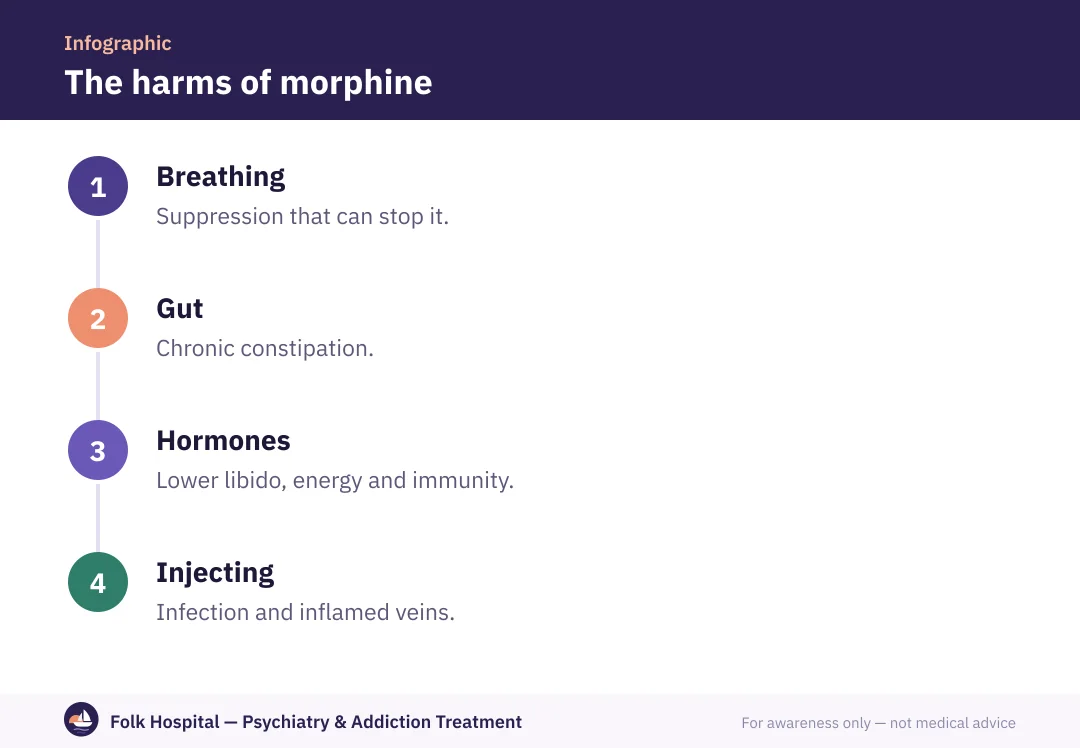
| Area | Harms |
|---|---|
| Breathing | Slowed and stopped breathing with overdose |
| Digestion | Chronic constipation and nausea |
| Hormones | Lower sex drive and menstrual disturbance |
| Mind | Drowsiness and depression with long-term use |
| Injecting | Abscesses, vein damage and infection |
| Dependence | Tolerance, withdrawal, and addiction with misuse |
- Unresponsiveness, slow breathing, or pinpoint pupils with blue lips.
02Treatment
With medical use: a plan with the doctor. With misuse: supervised detox and psychological therapy. Read about morphine symptoms, its withdrawal and its treatment.
؟Frequently asked questions
Can morphine increase pain?
Yes. In some cases of long use, the body's sensitivity to pain can increase, a condition the doctor assesses and adjusts the plan for.
Is morphine safe for people with cancer or severe pain?
Yes. Under medical supervision and in measured doses it's an important treatment; physical dependence is expected here and managed with the doctor.
What is opioid-induced hyperalgesia?
A rare state in which nerves become more sensitive to pain with long-term use, assessed by the doctor.
Does it affect pregnancy?
It can cause withdrawal in the newborn and needs specialist follow-up.
Sources and references
- Opioids — research topic — National Institute on Drug Abuse (NIDA)
- Prescription Medicines — research topic — National Institute on Drug Abuse (NIDA)
- Opioid overdose — fact sheet — World Health Organization

A psychiatrist specialising in addiction and mental illness in adults and adolescents, with a focus on dual diagnosis.
For awareness only — not a substitute for medical advice. Editorial policy · View profile