01Signs
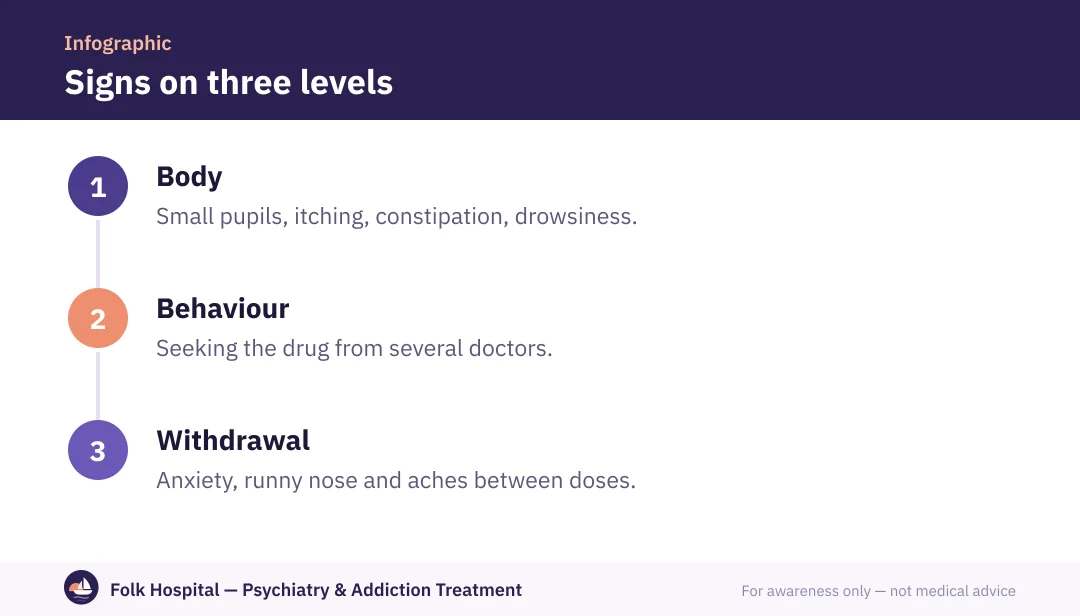
| Type | Signs |
|---|---|
| Under the effect | Drowsiness, calm, small pupils and slow speech |
| Physical | Itching, constipation, nausea and slow breathing |
| Signs of addiction | Increasing the dose without a doctor, seeking it from several doctors or pharmacies, injecting, and using it for things other than pain |
| When it's missing | Anxiety, sweating, runny nose, aches, diarrhoea and cravings |
02Signs of overdose
- Unresponsiveness.
- Slow breathing or strange snoring.
- Pinpoint pupils and blue lips.
03What should you do?
Don't stop prescribed morphine suddenly. Talk to the doctor about any signs of misuse to set a safe plan. Read about morphine withdrawal, its treatment and its harms.
؟Frequently asked questions
How do I know whether a patient really needs morphine or is addicted?
The treating doctor assesses pain, dose and behaviour. A rapid dose increase without reason, or using it for sleep or anxiety, are signs worth a review.
I use morphine on prescription for severe pain. Am I addicted?
Not necessarily. Physical dependence is expected with long-term use; addiction means loss of control, using it for things other than pain, and continuing despite harm.
How does morphine reach people who aren't patients?
Sometimes from a family member's medicines, or illegal sources. That's why strong medicines should be stored safely and leftovers disposed of.
Does it show up in a test?
Yes, it shows on an opioid test.
Sources and references
- Opioids — research topic — National Institute on Drug Abuse (NIDA)
- Prescription Medicines — research topic — National Institute on Drug Abuse (NIDA)
- Opioid overdose — fact sheet — World Health Organization

A psychiatrist specialising in addiction and mental illness in adults and adolescents, with a focus on dual diagnosis.
For awareness only — not a substitute for medical advice. Editorial policy · View profile