Morphine is one of the most important painkillers for severe pain, and addiction happens when use shifts from treating pain to needing the effect itself.
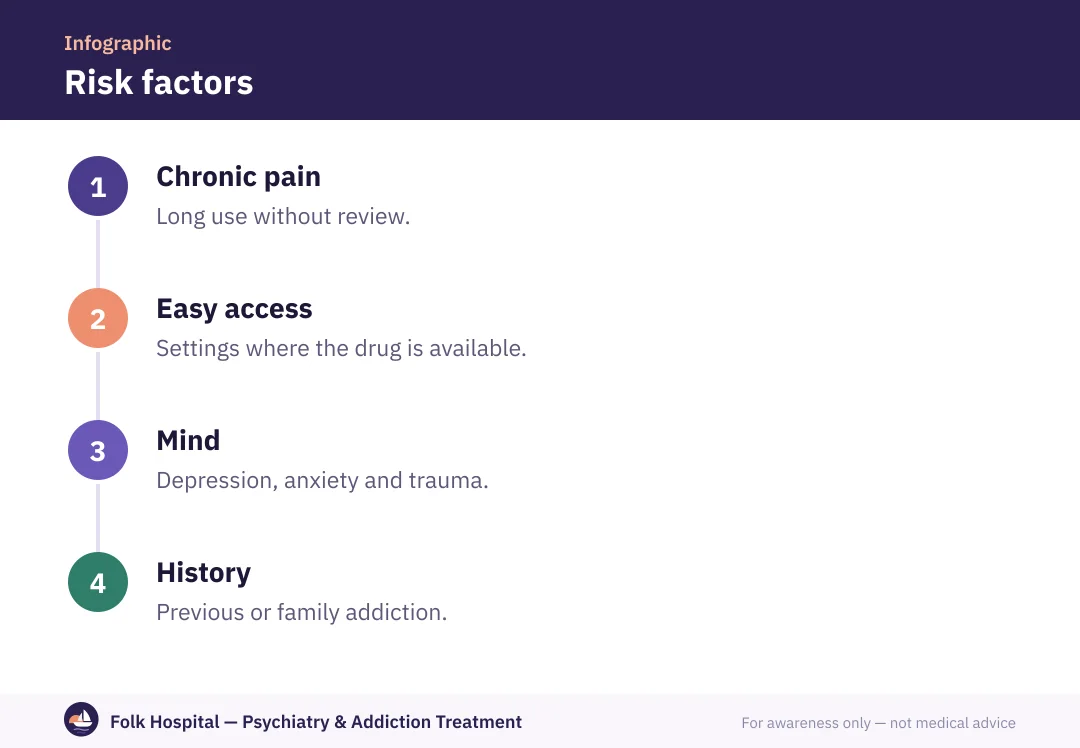
01Factors that raise the risk of addiction
| Factor | How it contributes |
|---|---|
| Severe or chronic pain | A genuine medical start |
| Lack of follow-up | Continuing or raising the dose without a doctor |
| Anxiety and depression | Using it to calm down |
| Easy access | A family member's medicine or illegal sources |
| Previous addiction | Increased predisposition |
Having a risk factor doesn't make addiction inevitable, and lacking one doesn't guarantee protection; addiction is an illness with many causes, and it can be treated.
02How does use turn into addiction?
With long-term use tolerance develops so a bigger dose is needed, withdrawal appears when delayed, and the goal may shift from easing pain to avoiding withdrawal.
03What protects?
- Treating anxiety, depression and insomnia early and safely.
- Supportive relationships and open conversation in the family.
- Healthy ways of coping with stress and pain.
- Seeking help at the first signs of losing control.
Read about morphine symptoms, its withdrawal, its treatment.
؟Frequently asked questions
I work in healthcare and depend on morphine. Can I be treated confidentially?
Yes. We handle these cases in full confidence, with a treatment plan that considers the nature of your work and your safe return to it.
Will every patient who takes morphine become addicted?
No. Physical dependence is expected, but addiction occurs in fewer people, especially with risk factors and no follow-up.
How can I protect a relative who is a patient?
With regular follow-up with the doctor, safe storage of the medicine, and watching for any dose increase without advice.
Sources and references
- Opioids — research topic — National Institute on Drug Abuse (NIDA)
- Prescription Medicines — research topic — National Institute on Drug Abuse (NIDA)

A psychiatrist specialising in addiction and mental illness in adults and adolescents, with a focus on dual diagnosis.
For awareness only — not a substitute for medical advice. Editorial policy · View profile