01Symptoms by timing
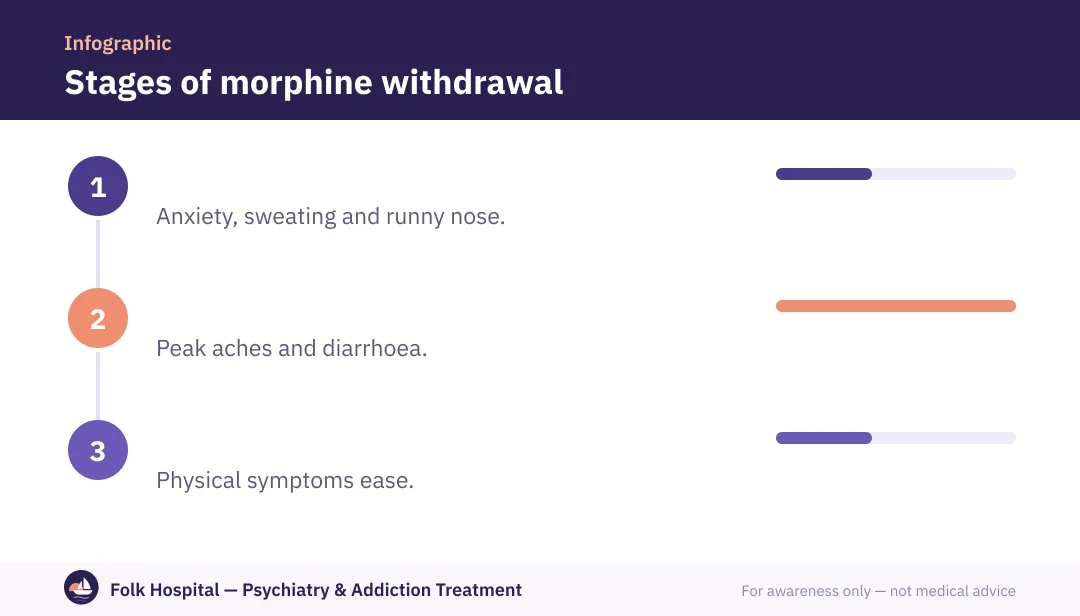
| Time since last dose | Symptoms |
|---|---|
| 6–12 hours | Anxiety, sweating, runny nose, yawning and watery eyes |
| Days two and three | Peak: muscle and bone pain, diarrhoea, vomiting, chills, insomnia and intense cravings |
| Within a week | Physical symptoms ease |
| Weeks | Milder insomnia, anxiety and cravings |
02Safe detox
- Assessmentreason for use, dose and duration.
- Supporting medicinesto ease symptoms, or substitution treatment depending on the case.
- Fluidsto replace losses from diarrhoea and vomiting.
- Treating the original painwith suitable alternatives if present.
- Relapse preventionpsychological therapy and follow-up.
- Tolerance drops after stopping, and going back to the same dose can cause an overdose. For slow breathing: ambulance 123.
Read about morphine addiction treatment, the symptoms of morphine use and detox.
؟Frequently asked questions
Is morphine withdrawal life-threatening?
Usually not, but it's painful and draining and can cause severe dehydration. The bigger danger is going back to a high dose after tolerance has dropped.
I use morphine for chronic pain. Should I stop it?
Don't stop suddenly. The doctor sets a gradual reduction plan and looks for alternatives for pain.
Can I stop morphine at home?
In some mild cases with outpatient medical supervision, but admission is better with high doses, injecting or multiple substances.
What's the difference between physical dependence and addiction?
Physical dependence happens with regular use, even on prescription, and shows as withdrawal symptoms; addiction involves loss of control and continuing despite harm.
Sources and references
- Opioids — research topic — National Institute on Drug Abuse (NIDA)
- Opiate and opioid withdrawal — U.S. National Library of Medicine — MedlinePlus
- Medications to Treat Opioid Use Disorder — Research Report — National Institute on Drug Abuse (NIDA)

A psychiatrist specialising in addiction and mental illness in adults and adolescents, with a focus on dual diagnosis.
For awareness only — not a substitute for medical advice. Editorial policy · View profile