01Khat: a social habit that becomes dependence
Khat is a plant whose fresh leaves are chewed, containing stimulants that bring alertness, energy and talkativeness. In some communities it's tied to long daily sessions that can last hours, becoming part of social life, work and relaxation. Over time it becomes hard to get through the day without it, and sleep, mood, money and family suffer.
Read about signs of khat use and its harms.
02How is it treated?
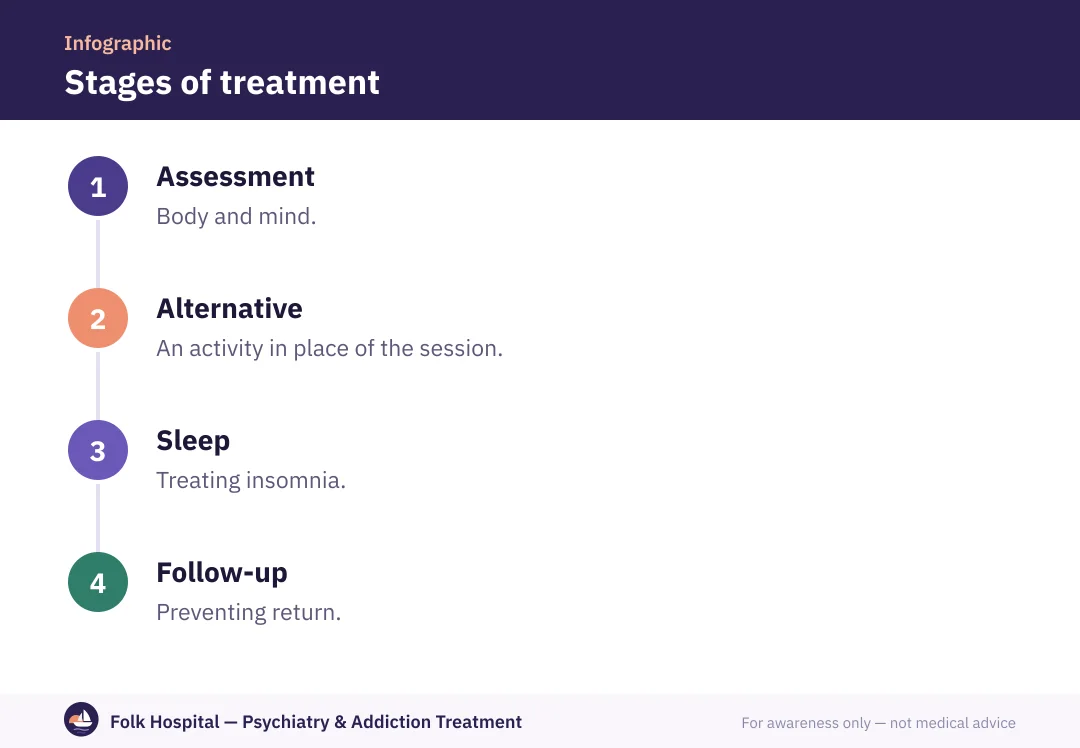
- Assessmentamount of khat and hours of sessions, sleep and mood, heart, blood pressure, teeth and digestion, and other drugs.
- A plan for the first days offregular sleep and meals, and treatment of insomnia and low mood when needed.
- A substitute for the sessionactivities and relationships to fill the time the sessions took.
- Cognitive behavioural therapycravings, social pressure and refusal skills.
- Follow-up and familyfollow-up sessions, and involving the family in the new routine.
Read about khat withdrawal.
03What happens on stopping?
| Period | What may happen |
|---|---|
| First days | Lethargy, fatigue, sleeping a lot or insomnia, strong cravings |
| Weeks one and two | Low mood, irritability, poor concentration, sometimes nightmares |
| After that | Gradual improvement in energy, mood and sleep |
04Empty time: the biggest challenge
When a session lasting four or five hours a day disappears, a large gap remains. Successful treatment fills it with a clear plan:
- Physical activity at the time the session used to be.
- Alternative social activities with people who don't chew khat.
- Time for family and practical or educational goals.
- Refusal skills for daily invitations to sessions without cutting friends off entirely.
05Psychological symptoms
Heavy use can be linked to anxiety, insomnia and irritability, and sometimes paranoia or psychotic symptoms in vulnerable people. Stopping may reveal depression that khat was masking. These cases need psychiatric assessment and treatment within dual diagnosis.
06Residential or outpatient?
Most cases are treated as outpatients with regular sessions. We use a residential stay for severe depression, psychotic symptoms or mixing other drugs. Read about outpatient care.
؟Frequently asked questions
Is khat addictive?
Yes, daily use can cause psychological dependence, seen as cravings, lethargy and low mood on stopping, and difficulty giving up the sessions.
What are the symptoms of stopping khat?
Lethargy and fatigue, sleeping a lot or insomnia, low mood, strong cravings and sometimes nightmares. They usually improve within weeks.
How do I stop khat when all my friends chew it?
This is the hardest part, and treatment works on it directly: alternatives for session time, refusal skills, and gradually building new relationships and activities.
Can treatment be done as an outpatient?
Yes in most cases, unless there's severe depression, psychotic symptoms or other drug use.
Sources and references
- Treatment Approaches for Drug Addiction — DrugFacts — National Institute on Drug Abuse (NIDA)
- Drug misuse in over 16s: psychosocial interventions (CG51) — National Institute for Health and Care Excellence (NICE)
- Co-Occurring Disorders and Health Conditions — National Institute on Drug Abuse (NIDA)
- Mental disorders — fact sheet — World Health Organization

A psychiatrist specialising in addiction and mental illness in adults and adolescents, with a focus on dual diagnosis.
For awareness only — not a substitute for medical advice. Editorial policy · View profile