01Signs
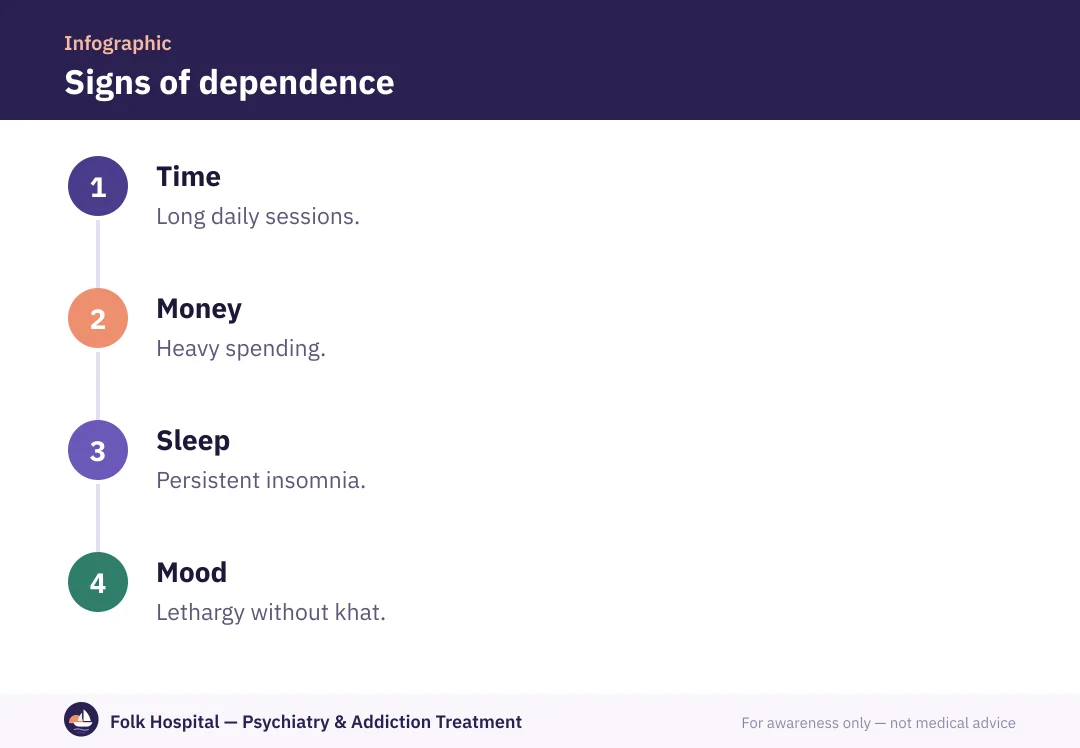
| Stage | Signs |
|---|---|
| While chewing | Alertness, energy, lots of talk, wide pupils, fast heartbeat and loss of appetite |
| After the session | Insomnia, tension and irritability, then lethargy and tiredness |
| With dependence | Long daily sessions, heavy spending and neglect of work and family |
| On stopping | Depression, irritability, nightmares and an urge to chew |
| Physical | Stained teeth, constipation and raised blood pressure |
02Danger signs
- Suspicion and hallucinations.
- Chest pain or a very fast heartbeat.
- Suicidal thoughts when stopping.
Ambulance 123.
Ambulance: 12303What should you do?
Talk about the effect of the sessions on work, family and money, and suggest a gradual plan to stop with support. Read about khat withdrawal, its treatment and its harms.
؟Frequently asked questions
My husband chews khat daily and says it's just a habit. Is it dependence?
If he can't go without for days without lethargy and distress, and it affects sleep, work and money, it's dependence that deserves treatment.
Is khat a drug?
It contains a stimulant similar to, but weaker than, amphetamine, causes psychological dependence with daily use, and is banned in many countries.
What does khat do to the mouth and teeth?
Staining of the teeth, gum inflammation and changes in the mouth lining with long-term use.
Does khat affect sleep?
Yes. It causes insomnia and delayed sleep, and over time daytime exhaustion.
Sources and references
- Treatment Approaches for Drug Addiction — DrugFacts — National Institute on Drug Abuse (NIDA)
- Drug addiction: getting help — NHS (UK)

A psychiatrist specialising in addiction and mental illness in adults and adolescents, with a focus on dual diagnosis.
For awareness only — not a substitute for medical advice. Editorial policy · View profile