01Common symptoms
| Type | Symptoms |
|---|---|
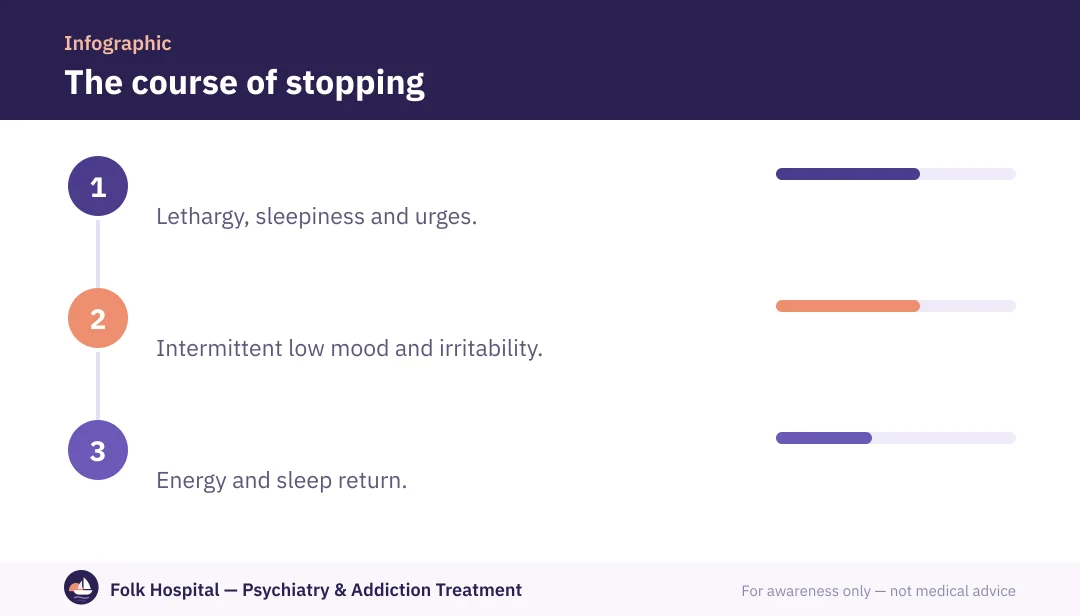
| Mood | Depression, irritability and anxiety |
| Energy | Lethargy, tiredness and sleepiness |
| Sleep | Nightmares and disturbed sleep |
| Body | Increased appetite and sometimes mild tremor |
| Cravings | An urge to chew, especially at session time |
02A plan for stopping
- Set a dayand tell those around you.
- Change your routinesession time becomes time for an alternative activity.
- Supportive companyfriends who don't chew.
- Sleep and nutritionfixed times.
- Psychological supportif depression appears or attempts fail.
03When should you seek help?
With ongoing depression or thoughts of self-harm, suspicion and hallucinations with heavy use, or using other substances alongside it. Read about khat addiction treatment, the symptoms of khat use and its harms.
- Suicidal thoughts: the mental health hotline 08008880700, or ambulance 123.
؟Frequently asked questions
Is quitting khat hard?
Physical symptoms are mild, but the social habit and urges at session time are the bigger challenge.
How do I handle the usual chewing session time?
Plan an alternative activity at the same time: sport, a visit, work, or time with friends who don't chew.
Does khat cause addiction?
Yes. It causes psychological dependence with daily use, and contains a stimulant similar to, but weaker than, amphetamine.
Does stopping khat need medicines?
Usually not, except to treat depression or insomnia if they're severe, as the doctor decides.
Sources and references
- Treatment Approaches for Drug Addiction — DrugFacts — National Institute on Drug Abuse (NIDA)
- Drug addiction: getting help — NHS (UK)

A psychiatrist specialising in addiction and mental illness in adults and adolescents, with a focus on dual diagnosis.
For awareness only — not a substitute for medical advice. Editorial policy · View profile