01Inhalants: danger within easy reach
Inhalants are cheap, easily available household and industrial products such as glue, petrol, thinner, aerosols and paint strippers. Some children and teenagers sniff them for a short dizzy high. Because they're cheap and easy to get, they're often the first substance a child tries, especially in hard circumstances such as poverty, family breakdown or living on the street.
Read about signs of inhalant use.
02An immediate danger that can't wait
- It can cause a sudden heart rhythm disturbance, suffocation, loss of consciousness or accidents. If you find a child unconscious or struggling to breathe:
- Call an ambulance on 123 immediately.
- Move them into fresh air and place them on their side.
- Don't startle them or make them run.
Remove the source of the substance and don't leave the child alone.
Ambulance: 12303How is it treated?
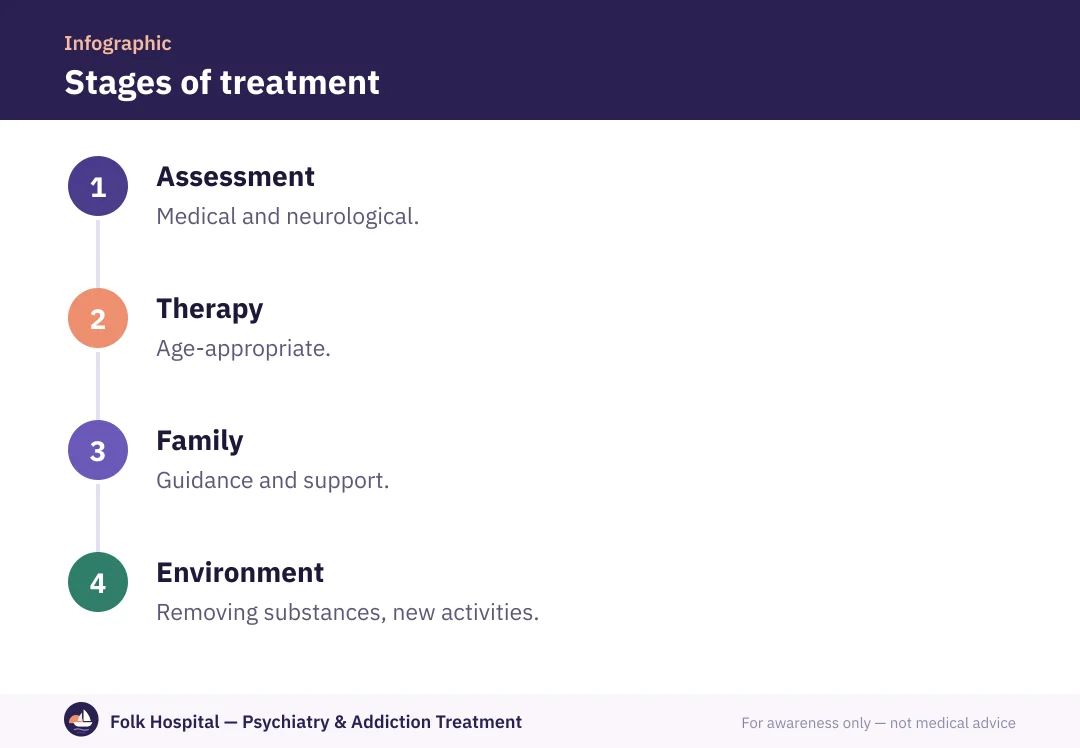
- Medical and neurological assessmentmemory, balance and nerves, liver and kidney function, and the heart.
- Psychological and social assessmentwhy did it start? What's happening at home and school? Is there depression, neglect or abuse?
- Age-appropriate psychological treatmentplay- and activity-based approaches for children, and CBT for teenagers.
- Family therapyprotection, supervision and communication, and removing substances from the home.
- School and social supportreturning to school, safe activities and long follow-up.
04What lies behind sniffing
Sniffing is rarely a separate problem. Behind it there's often:
- Family stress, violence or neglect.
- School failure or bullying.
- Friends who use together.
- Depression or anxiety, or undiagnosed learning difficulties.
So treatment works when it deals with these circumstances, not just by blocking the substance. Where there's neglect or abuse, protecting the child comes first.
05Advice for families
- Remove the substances: keep petrol, glue, thinner and aerosols locked away.
- Notice the signs: a chemical smell, stains on the face, hands or clothes, bags or soaked rags.
- Talk calmly: a child needs to feel safe to speak.
- Seek an assessment early, because nerve damage increases with continued use.
Read teenagers and drugs and drug prevention.
06Does the brain recover?
Some damage, such as poor concentration and memory, improves with stopping and time, especially if stopping is early. Long-term use can leave lasting damage to nerves or the brain. Read about the harms of inhalants.
؟Frequently asked questions
What are signs my child is sniffing substances?
A chemical smell on clothes or breath, paint or glue stains on the face or hands, bags or soaked rags, slurred speech and dizziness, falling school performance and changed behaviour.
Is sniffing really dangerous?
Yes. It can cause a sudden heart rhythm disturbance and death even the first time, as well as suffocation or accidents, and repeated use damages the brain and nerves.
Does the brain recover after stopping?
Some damage improves with stopping and time, especially when stopping early, while some may be permanent after long use. That's why early action matters so much.
How long does treatment take?
It varies widely with age and circumstances, usually months of family and psychological treatment and school follow-up.
What should I do if I find my child unconscious after sniffing?
Call an ambulance on 123 immediately, move them into fresh air, place them on their side, and don't startle them or make them run, because agitation can raise the risk of heart problems.
Sources and references
- Inhalants — research topic — National Institute on Drug Abuse (NIDA)
- Treatment Approaches for Drug Addiction — DrugFacts — National Institute on Drug Abuse (NIDA)
- Drug misuse in over 16s: psychosocial interventions (CG51) — National Institute for Health and Care Excellence (NICE)
- Co-Occurring Disorders and Health Conditions — National Institute on Drug Abuse (NIDA)

A psychiatrist specialising in addiction and mental illness in adults and adolescents, with a focus on dual diagnosis.
For awareness only — not a substitute for medical advice. Editorial policy · View profile