01Harms
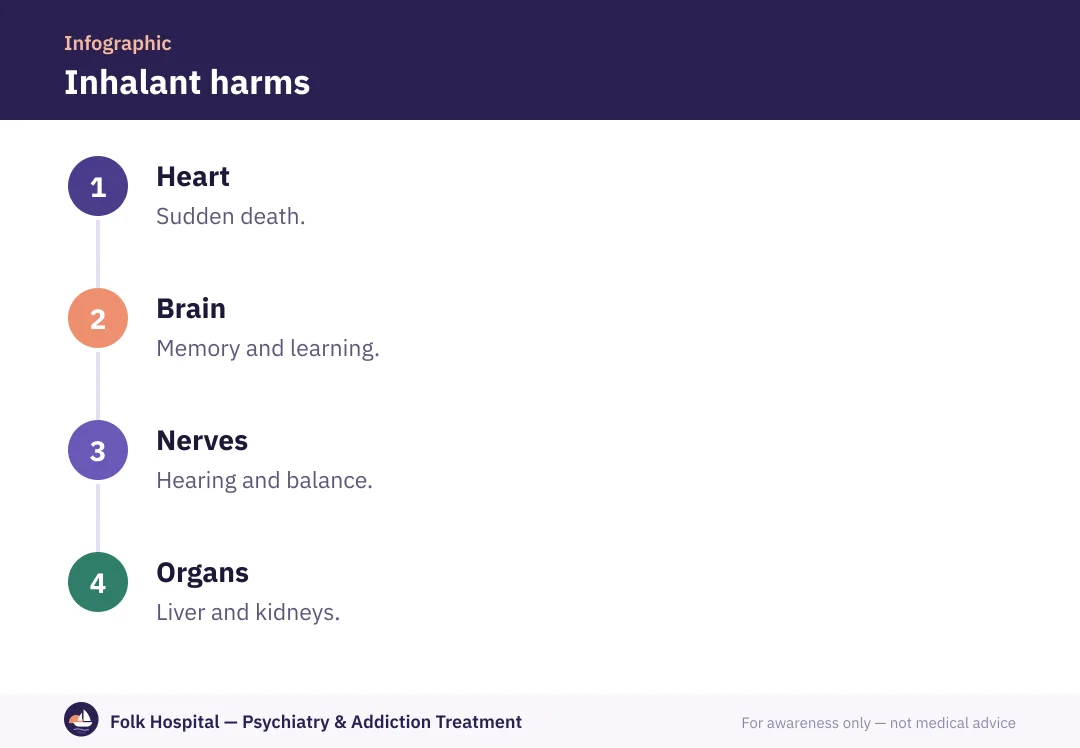
| Area | Harms |
|---|---|
| Heart | Sudden rhythm disturbance and cardiac arrest |
| Brain and nerves | Weak memory and concentration, nerve damage, and movement and balance problems |
| Liver and kidneys | Damage with repeated use |
| Breathing | Suffocation and inflammation |
| Growth and learning | Slipping at school and effects on brain development |
| Accidents | Falls, burns and suffocation with bags |
- Unconsciousness, difficulty breathing, palpitations or seizures.
02Treatment
It needs medical and psychological assessment, support for the family, and protecting the home from these substances. Read about inhalant symptoms, inhalant addiction treatment and preventing addiction.
؟Frequently asked questions
Does the brain recover after stopping sniffing?
Part of it improves with early stopping, but long use can leave permanent effects.
What is sudden sniffing death?
A sudden cardiac arrest from heart rhythm disturbance, which can happen the first time, especially with excitement or exertion after inhaling.
Are the harms of inhaling permanent?
Some may be permanent, such as nerve and brain damage with long-term use, and some improve with early stopping.
Why is it common among children?
Because the substances are cheap and available at home and in shops, and children don't realise the danger.
Sources and references
- Inhalants — research topic — National Institute on Drug Abuse (NIDA)
- Parents & Educators — National Institute on Drug Abuse (NIDA)

A psychiatrist specialising in addiction and mental illness in adults and adolescents, with a focus on dual diagnosis.
For awareness only — not a substitute for medical advice. Editorial policy · View profile