01Signs
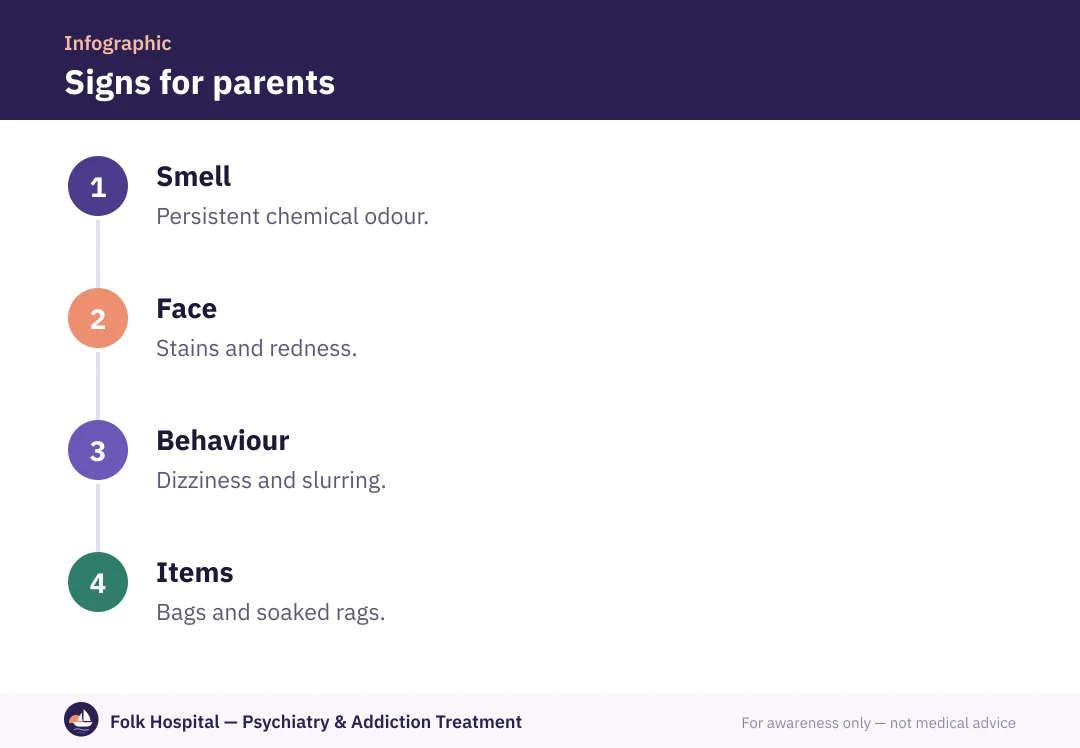
| Type | Signs |
|---|---|
| While inhaling | Dizziness, slurring, unsteadiness, a brief high and nausea |
| On the face | Paint stains or residue around the mouth and nose, red eyes and nose, and sores |
| At home | A chemical smell, bags or cloths soaked in substances, and empty spray cans |
| With repeated use | Headache, poor concentration, slipping at school, irritability and weight loss |
02Danger signs
Call an ambulance on 123 for
- Unconsciousness or difficulty breathing.
- Palpitations or chest pain.
- Seizures, or vomiting with unconsciousness.
What to do right nowAmbulance: 123
03What should you do?
- Stay calmdon't chase or startle them.
- Remove the substanceand open the windows.
- Watch their breathingand call an ambulance if needed.
- Assessmentpsychological and medical after the episode.
- Protect the homestore chemicals away from children.
Read about the harms of inhalants, inhalant addiction treatment and teenagers and drugs.
؟Frequently asked questions
My child sometimes smells of petrol. Should I worry?
If it recurs with other signs such as dizziness, stains and behaviour change, talk to them calmly and seek advice.
Which substances are inhaled?
Glue, petrol, paint thinners, aerosol sprays, lighter gas and some cleaning products.
Why is inhaling dangerous even the first time?
Because it can cause a sudden heart rhythm disturbance, suffocation, or unconsciousness with vomiting.
What should I do if I find my child inhaling?
Don't startle or chase them, as excitement can increase the heart risk. Stay calm, remove the substance, check their breathing and seek an assessment.
Sources and references
- Inhalants — research topic — National Institute on Drug Abuse (NIDA)
- Parents & Educators — National Institute on Drug Abuse (NIDA)

Written byDr. Mahmoud ElsawyConsultant in psychiatry and addiction treatment
A psychiatrist specialising in addiction and mental illness in adults and adolescents, with a focus on dual diagnosis.
For awareness only — not a substitute for medical advice. Editorial policy · View profile