01How does hashish affect sex?
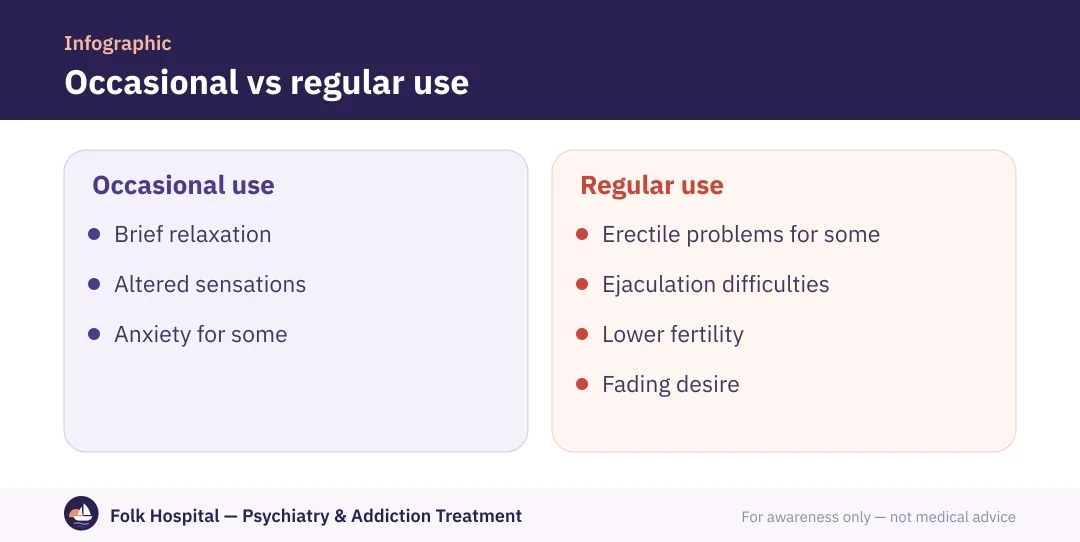
The endocannabinoid system is involved in regulating hormones and sensation, so effects differ: relaxation and pleasure for some, anxiety and distraction for others. With regular use, the negative effects begin to show.
02What are the effects with continued use?
Common effects
- Erectile problems in some men.
- Delayed, difficult or premature ejaculation.
- Reduced desire and a cooling relationship.
- Lower sperm count and motility.
- Irregular periods in some women.
Pregnancy and hashish
Hashish during pregnancy and breastfeeding isn't safe and is linked to lower birth weight and developmental problems. If you're pregnant and finding it hard to stop, talk to a doctor.
03Do things improve after stopping?
Usually yes. Desire and performance improve within weeks to months, and sperm quality improves over a production cycle of about three months.
؟Frequently asked questions
Does hashish treat premature ejaculation?
There's no evidence it does, and in some people it disrupts ejaculation instead, along with the risk of dependence. Premature ejaculation has safe medical treatments.
Does hashish affect the chances of having children?
Regular use can lower sperm quality in men and is linked to irregular periods in some women. We advise stopping several months before trying to conceive.
Sources and references
- Cannabis (Marijuana) — research topic — National Institute on Drug Abuse (NIDA)

A psychiatrist specialising in addiction and mental illness in adults and adolescents, with a focus on dual diagnosis.
For awareness only — not a substitute for medical advice. Editorial policy · View profile