01What are the short-term harms?
Temporary memory and focus lapses, slower reaction time (which makes driving under the influence dangerous), a faster heart rate and anxiety or panic in some people, especially with strong products or large amounts.
02What are the long-term harms?
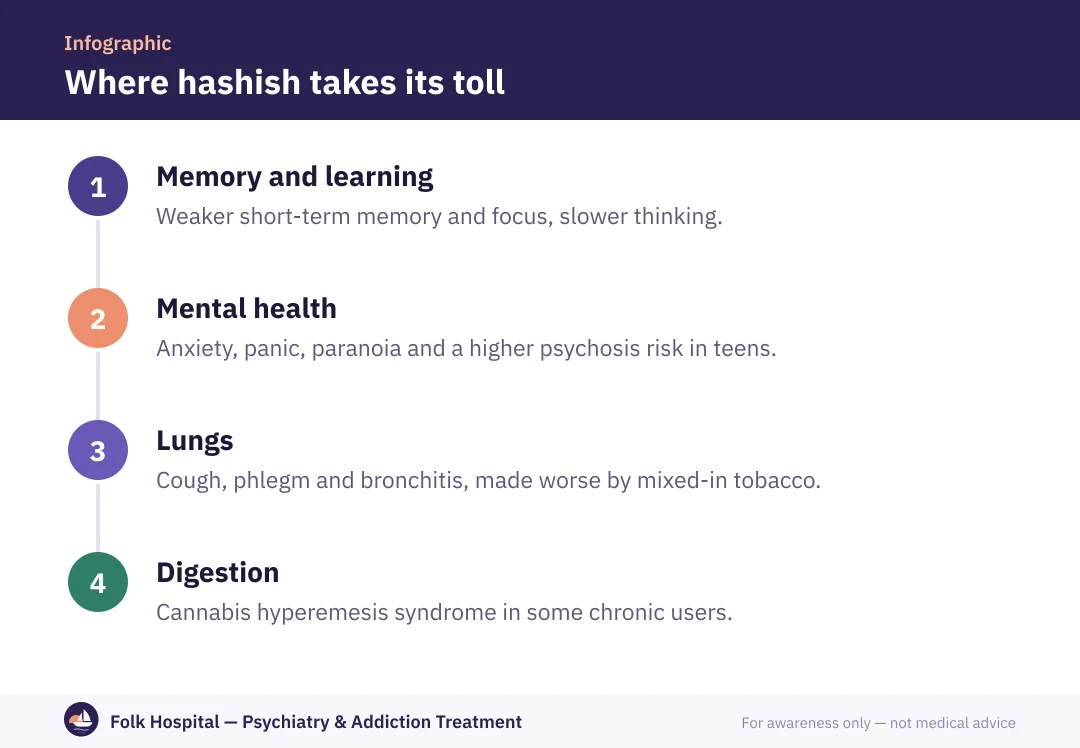
| Area | Harm |
|---|---|
| Memory and learning | Poor memory and focus, falling grades |
| Mental health | Anxiety, depression, paranoia, psychosis |
| Motivation | Loss of interest and ambition |
| Lungs | Chronic bronchitis plus tobacco damage |
| Digestion | Cannabis hyperemesis syndrome |
| Life | Family, school and legal problems |
03Why are teenagers more vulnerable?
The brain keeps developing until the mid-twenties, and the endocannabinoid system takes part in that development. Use during this stage is linked to weaker learning and a higher risk of addiction and psychosis later. Read about hashish and paranoia.
؟Frequently asked questions
Does hashish permanently destroy memory?
Most memory and focus effects improve within weeks to months of stopping. Heavy use that began in adolescence may leave longer-lasting effects.
What is cannabis hyperemesis syndrome?
A condition in some long-term users involving bouts of severe nausea, vomiting and abdominal pain, often relieved by hot showers. The definitive treatment is stopping cannabis.
Sources and references
- Cannabis (Marijuana) — research topic — National Institute on Drug Abuse (NIDA)
- Drugs, Brains, and Behavior: The Science of Addiction — National Institute on Drug Abuse (NIDA)
- Mental disorders — fact sheet — World Health Organization

A psychiatrist specialising in addiction and mental illness in adults and adolescents, with a focus on dual diagnosis.
For awareness only — not a substitute for medical advice. Editorial policy · View profile