01Signs
| Type | Signs |
|---|---|
| Under the effect | Drowsiness and heaviness, very small pupils, confusion and slow speech |
| Physical | Slow breathing, nausea, constipation and itching |
| Signs of addiction | Seeking multiple prescriptions, missing or cut patches, injecting and irritability when it's missing |
| When it's missing | Anxiety, sweating, runny nose, aches, diarrhoea and intense cravings |
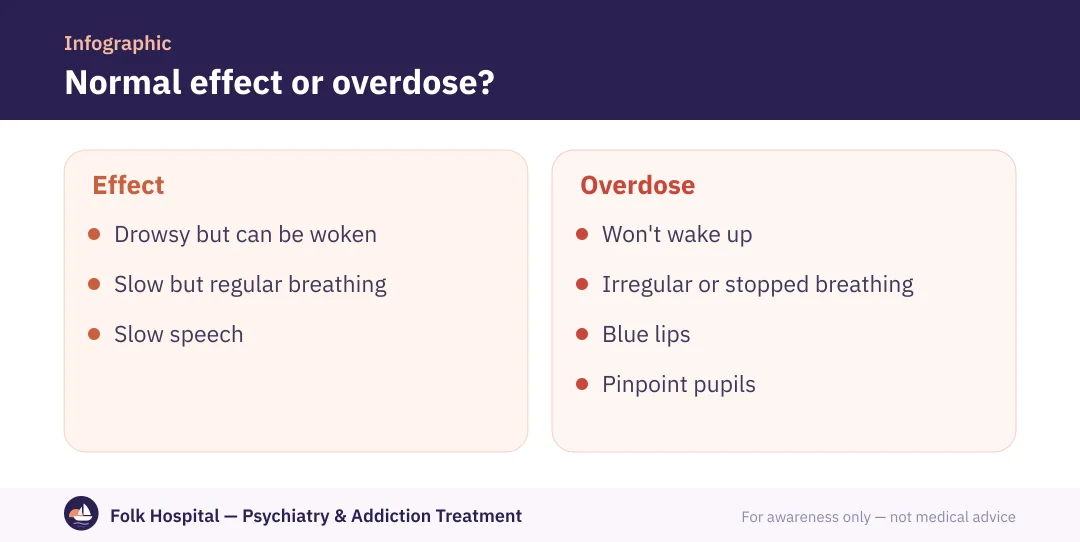
02Signs of overdose
- Unresponsiveness.
- Very slow or stopped breathing, or strange snoring.
- Pinpoint pupils and blue lips and nails.
Put them in the recovery position and stay with them. Read about overdose.
Ambulance: 12303What should you do?
Don't delay. Fentanyl is among the most dangerous substances, and quick assessment and treatment save lives. Read about fentanyl withdrawal, its treatment and its harms.
؟Frequently asked questions
What do I do if someone won't wake after using an opioid?
Call an ambulance on 123 immediately, put them on their side, watch their breathing and stay with them. Don't let them sleep it off.
How do people come to use fentanyl?
Either by misusing medical patches or medicines, or from illegal sources that may mix it with other substances.
Can someone take fentanyl without knowing?
Yes. It may be mixed into heroin or counterfeit pills, which causes many overdoses.
How do fentanyl and heroin symptoms differ?
They're similar, but fentanyl is far stronger, so it slows breathing faster and at smaller amounts.
Sources and references
- Fentanyl — research topic — National Institute on Drug Abuse (NIDA)
- Opioid overdose — fact sheet — World Health Organization

A psychiatrist specialising in addiction and mental illness in adults and adolescents, with a focus on dual diagnosis.
For awareness only — not a substitute for medical advice. Editorial policy · View profile