01Why do we buy what we don't need?
Buying gives a quick feeling of pleasure, especially with stress, sadness or boredom. Then comes regret, possibly followed by another purchase to lift mood, forming an addictive cycle. Read about the signs of shopping addiction and its causes.
02Creating distance between urge and payment
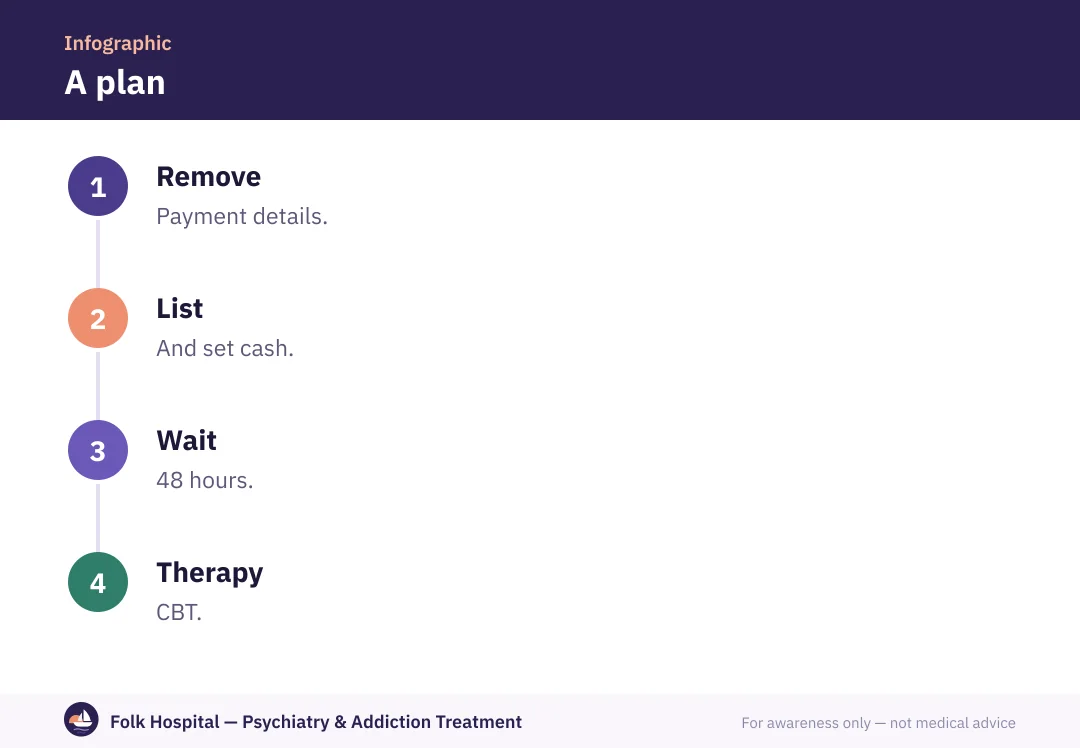
- Delete saved payment detailsfrom sites and apps.
- Delete shopping appsand unsubscribe from offer emails.
- The 48-hour rulewait before any unnecessary purchase; many urges disappear.
- Shop with a list and cashnothing off the list.
- Track feelingswrite what you feel before the urge to buy.
- Avoid high-risk timesbrowsing at night or after a stressful day.
03Motives and alternatives
| Motive | Alternative |
|---|---|
| Boredom | Physical activity or a hobby |
| Sadness or loneliness | Contact with someone close |
| Stress | A breathing exercise or a walk |
| Wanting a reward | A non-material reward: enjoyable time or rest |
04CBT and a debt plan
Therapy works on thoughts such as «I deserve it» or «this offer won't come again», and on the feelings behind buying. The plan includes a realistic budget and scheduling debts, and a trusted person may help track spending for a while.
05When do you need help?
When debts pile up, purchases are hidden from the family, repeated attempts fail, or there's depression, anxiety or severe mood swings that may point to bipolar disorder.
Read about the harms of shopping addiction.
؟Frequently asked questions
Should I cancel my credit cards?
That may help temporarily in severe cases, together with a debt plan and treatment of the motives.
What are the signs of shopping addiction?
Buying to lift mood, regret afterwards, hiding purchases, piling up unused items, and debt.
Is online shopping more dangerous?
Usually yes, because it's available all the time, payment takes one tap, and offers and notifications never stop.
Is it linked to depression?
Often. Buying gives a temporary mood lift followed by regret, which is why accompanying depression or anxiety is treated.
Sources and references
- Addiction: what is it? — NHS (UK)
- Psychotherapies — National Institute of Mental Health (NIMH)
- Depression — National Institute of Mental Health (NIMH)
- Anxiety Disorders — National Institute of Mental Health (NIMH)
A specialist in psychological rehabilitation, behaviour modification and relapse prevention, with over 15 years in addiction programmes.
For awareness only — not a substitute for medical advice. Editorial policy · View profile