01Signs
Signs
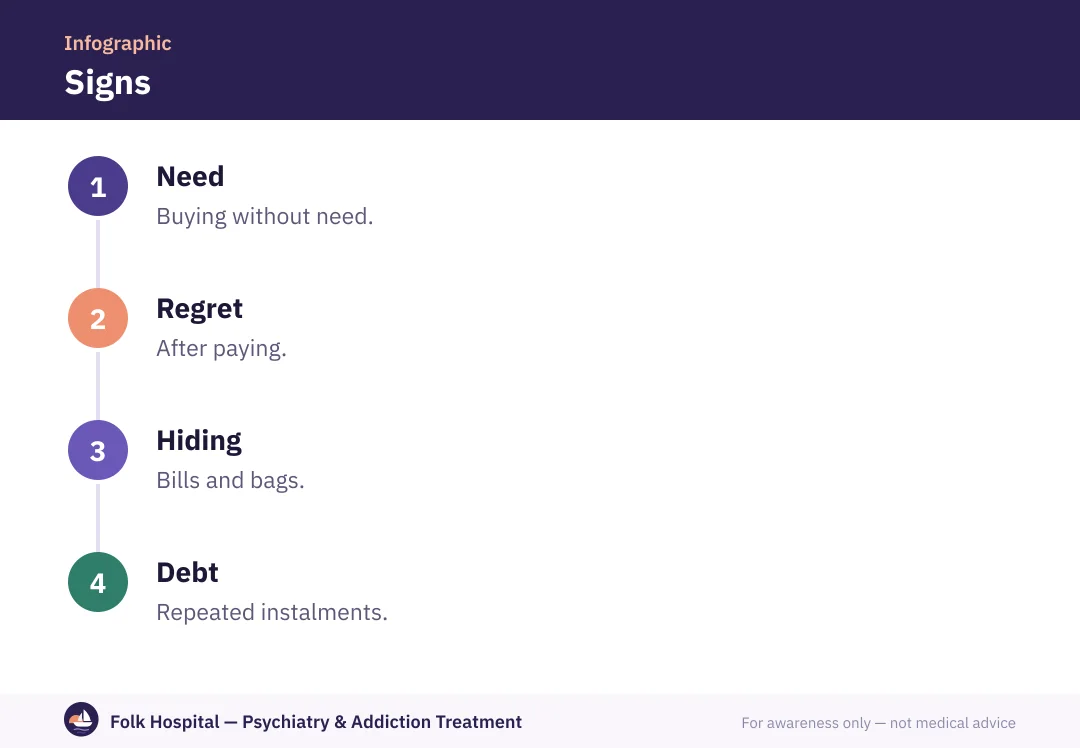
- Constant thoughts about buying.
- Unused purchases.
- Exceeding the budget.
- Hiding and lying.
- A high then guilt.
02Check yourself
| Question | Signal |
|---|---|
| Do you buy when sad? | Emotional buying |
| Do you hide purchases? | Secrecy |
| Do you have shopping debts? | Harm |
Worrying sign
- Daily parcels
- Card debt
Reassuring sign
- Planned buying
- A steady budget
Read also: shopping addiction, generalised anxiety, low self-esteem.
؟Frequently asked questions
What are the signs of shopping addiction?
Constant thoughts about buying, unused items, exceeding the budget, hiding, and guilt after buying.
Are unopened purchases a sign?
Yes. They show buying itself is the goal.
Is late-night online shopping a sign?
It can be, especially with loneliness or insomnia.
Is excessive buying for others a sign?
It can be, if compulsive and causing debt.
How do families notice?
Frequent parcels, hidden bills and tension about money.
When should I worry?
With debt, lying or loss of control.
Sources and references
- How To Tell if You're Addicted To Shopping — Cleveland Clinic
- Addictive behaviours: gaming disorder — World Health Organization

Written byDr. Mohamed HosneyConsultant in mental health and behavioural rehabilitation
A specialist in psychological rehabilitation, behaviour modification and relapse prevention, with over 15 years in addiction programmes.
For awareness only — not a substitute for medical advice. Editorial policy · View profile