01Causes
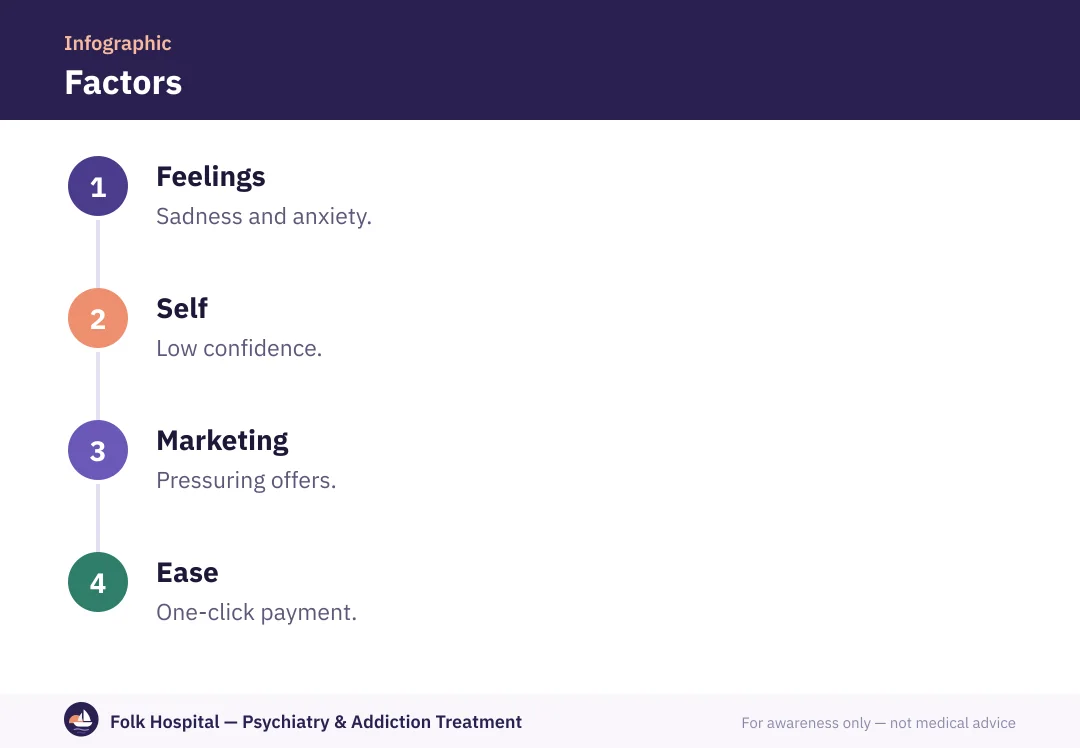
| Cause | Example |
|---|---|
| Emotional | Buying after a bad day |
| Self-esteem | Worth tied to brands |
| Marketing | «Offer ends today» |
| Financial | Instalments and one-click pay |
| Illness | A manic episode |
Feeds buying
- Saved card details
- Following influencers
Protects
- Cash or limited payment
- Alternatives for coping with emotions
Read also: shopping addiction, bipolar disorder, dopamine.
؟Frequently asked questions
Why do some people get addicted to shopping?
To regulate emotions, the buying high, low self-esteem, marketing and easy payment.
Is dopamine a cause?
Anticipating a purchase activates the reward system.
Does bipolar disorder cause overspending?
Yes. Overspending is a common sign of manic episodes.
Are ads a cause?
Targeted marketing and limited offers increase impulsivity.
Do instalments worsen it?
Yes. They hide the cost and make buying easy.
How do I address the cause?
Learn other ways to regulate emotions, and cognitive therapy.
Sources and references
- How To Tell if You're Addicted To Shopping — Cleveland Clinic
- Addictive behaviours: gaming disorder — World Health Organization

Written byDr. Mohamed HosneyConsultant in mental health and behavioural rehabilitation
A specialist in psychological rehabilitation, behaviour modification and relapse prevention, with over 15 years in addiction programmes.
For awareness only — not a substitute for medical advice. Editorial policy · View profile