01When does the habit need treatment?
The habit needs intervention when it becomes compulsive, hard to control despite wanting to stop, takes up a lot of time, is tied to stress, loneliness and pornography, or causes psychological distress. Read about its causes and its harms.
02Steps to recovery
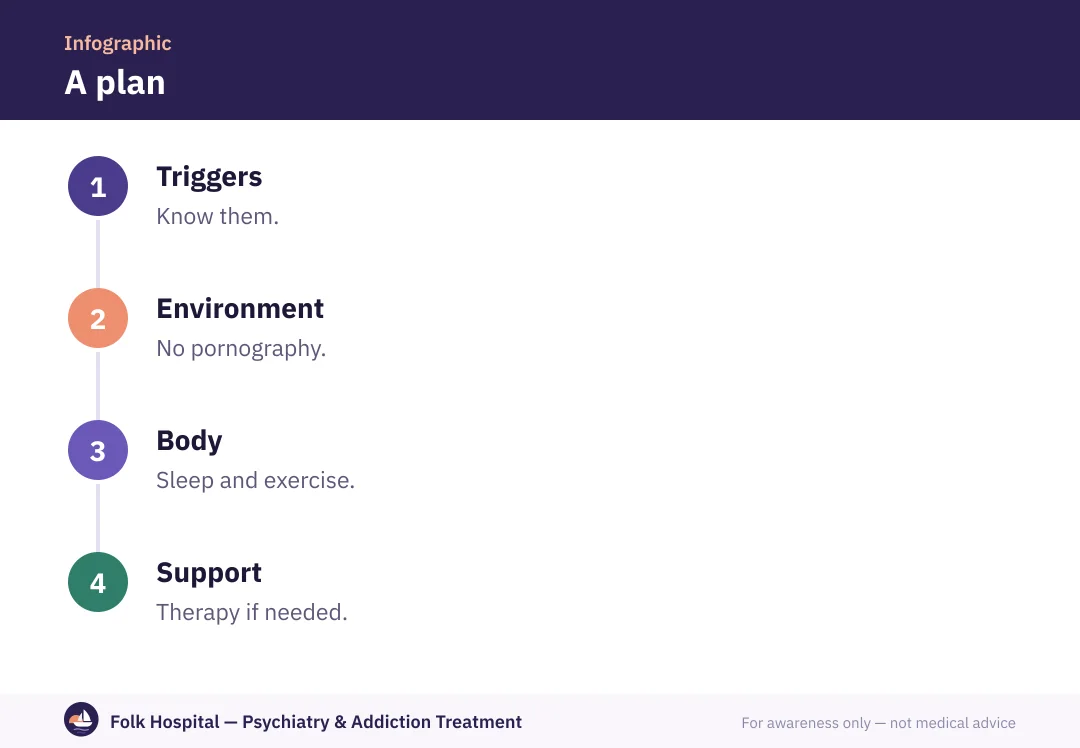
- Track triggerswhen do urges come? With late nights? Loneliness? After stress?
- Change the environmentthe phone out of the room at night and content filters.
- Avoid pornographybecause it's the strongest trigger.
- A daily routineregular sleep, exercise and going out.
- Alternatives for stressa walk, talking to a friend or a breathing exercise.
- Handle a slipanalyse the trigger, then return to the plan.
03What helps and what harms?
Makes it worse
Helps recovery
- Staying up alone with the phone | Regular sleep and the phone out of the room
- Self-punishment after every slip | Calm analysis and adjusting the plan
- Isolation and idleness | Social activities and sport
- Big promises without a plan | Small, achievable goals
04When do you need a therapist?
- When repeated attempts fail despite a plan.
- When there's accompanying anxiety or depression.
- With repeated obsessive, distressing thoughts, which may be OCD.
Read about the benefits of stopping and pornography addiction treatment.
؟Frequently asked questions
Is there a medicine to stop?
Medicine isn't usually used; behavioural therapy and changing the environment are the foundation, unless there's a co-existing condition.
When does the habit become a problem?
When it becomes compulsive and hard to control, takes up a lot of time, affects sleep, study or relationships, or causes great distress.
Does intense guilt help in stopping?
Usually not. Intense guilt increases stress, and stress triggers repetition. A practical plan and calm handling of slips work better.
Do obsessive worries about it need treatment?
If the thoughts are repeated, very distressing and tied to severe anxiety, it may be OCD, which needs assessment.
Sources and references
- Addiction: what is it? — NHS (UK)
- Psychotherapies — National Institute of Mental Health (NIMH)
- Anxiety Disorders — National Institute of Mental Health (NIMH)
- Obsessive-Compulsive Disorder — National Institute of Mental Health (NIMH)
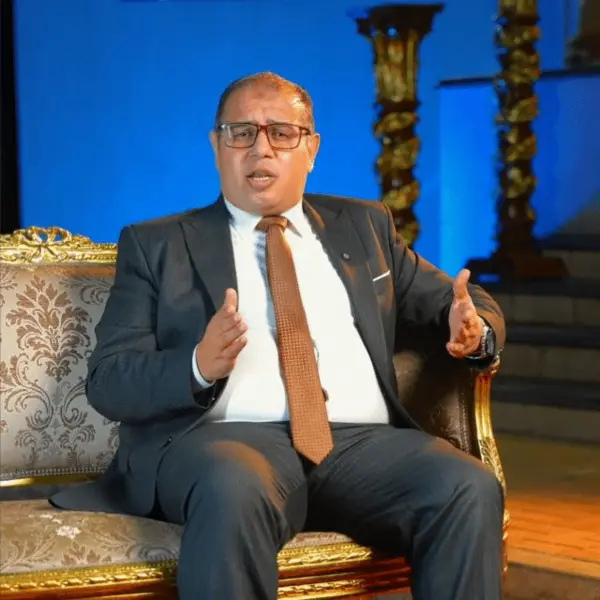
A specialist in psychological rehabilitation, behaviour modification and relapse prevention, with over 15 years in addiction programmes.
For awareness only — not a substitute for medical advice. Editorial policy · View profile