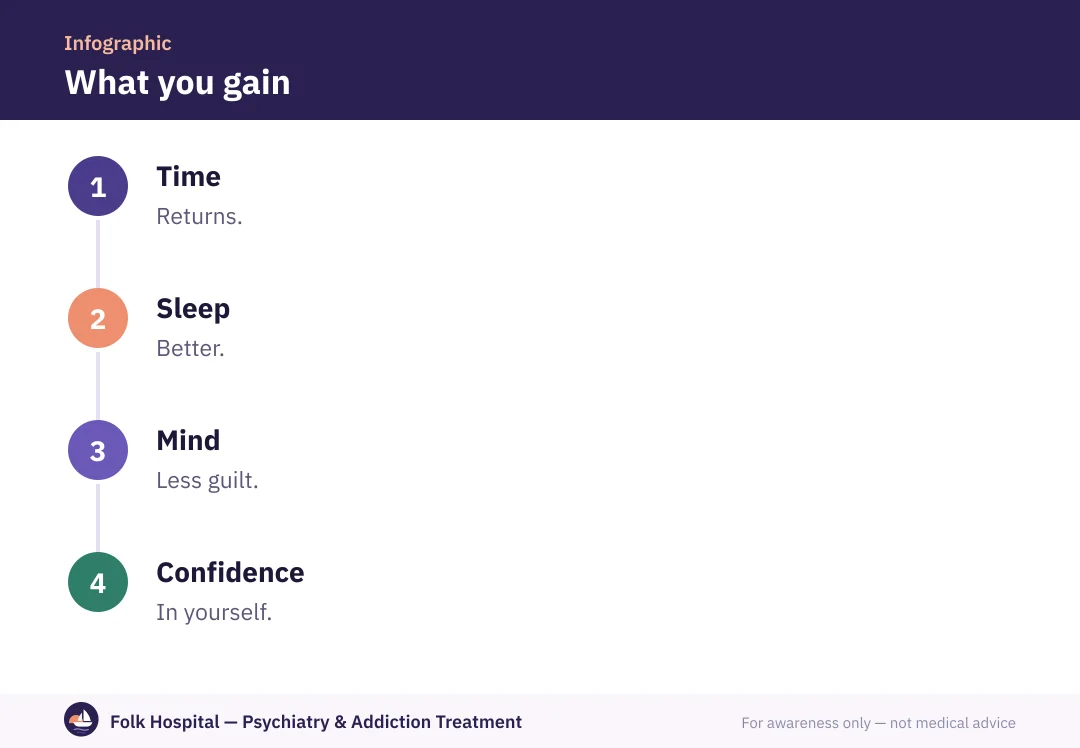
01What may improve?
| Area | Common improvement |
|---|---|
| Time | Regained |
| Sleep | Better |
| Mood | Less guilt and anxiety |
| Confidence | Higher |
Unhelpful motives
- Fear of myths
- Self-punishment
Helpful motives
- Regaining control
- Alignment with values
Read also: masturbation, treatment, benefits of quitting pornography.
؟Frequently asked questions
What are the benefits of stopping the compulsive habit?
Better time, sleep and focus, less guilt and more confidence.
Does stopping increase physical energy?
No strong medical evidence, but better sleep and mood can feel like more energy.
Is stopping medically necessary?
Not for non-compulsive use; the goal depends on control and values.
When do benefits appear?
Some quickly, like sleep and time; others over time.
What do I do after a relapse?
Learn from the trigger, adjust the plan and avoid self-punishment.
Do I need a specialist?
If attempts fail or anxiety or depression accompany it.
Sources and references
- Compulsive Sexual Behavior Disorder (Hypersexuality) — Cleveland Clinic
- Addictive behaviours: gaming disorder — World Health Organization

Written byDr. Mohamed HosneyConsultant in mental health and behavioural rehabilitation
A specialist in psychological rehabilitation, behaviour modification and relapse prevention, with over 15 years in addiction programmes.
For awareness only — not a substitute for medical advice. Editorial policy · View profile