01Medical reality
| Claim | Reality |
|---|---|
| Causes infertility | No evidence |
| Causes hair loss | No evidence |
| Harms focus | Compulsion and late nights are the cause |
| Affects relationships | Can, with compulsion and pornography |
02What improves with control?
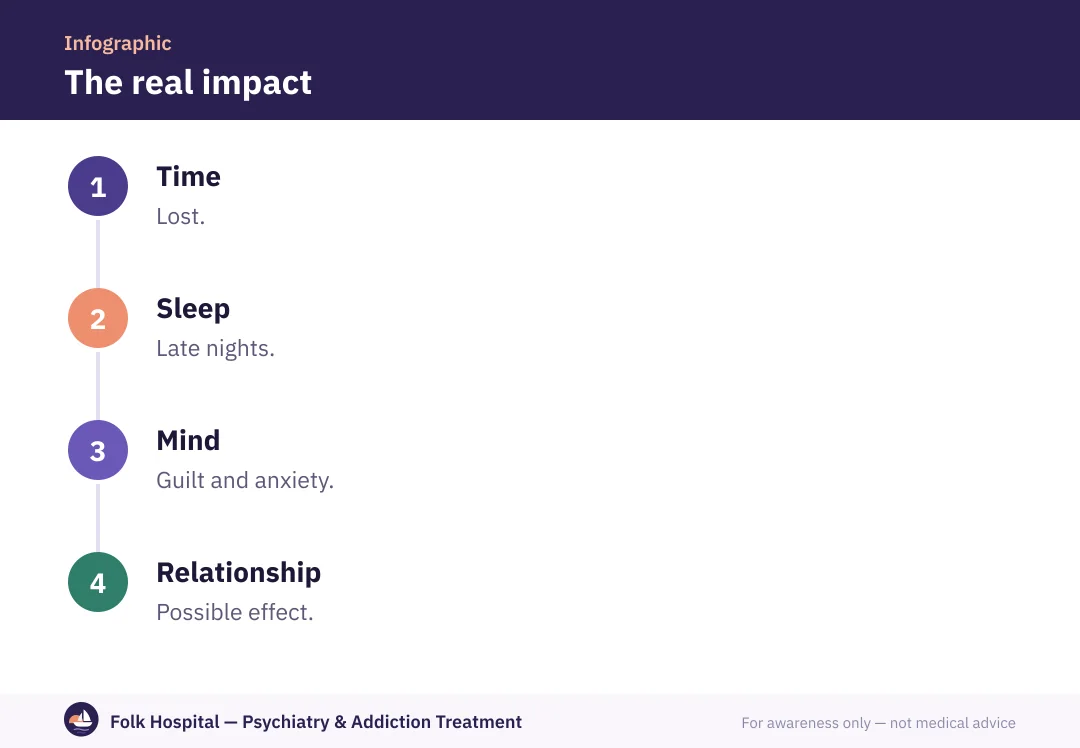
- Timeis regained.
- Sleepbecomes regular.
- Moodless guilt.
- Relationshipsbetter connection.
Read also: masturbation, benefits of stopping, pornography harms.
؟Frequently asked questions
What are the harms of masturbation?
No proven serious physical illness, but compulsion harms time, sleep, focus and relationships.
Does it cause erectile problems?
No evidence on its own; links with pornography may affect response with a partner in some.
Does it weaken memory?
No, but late nights and compulsion weaken focus.
Does it cause hair loss?
There's no evidence.
Does it affect marriage?
It can when compulsive and replacing connection.
Are the harms permanent?
No. They improve with regained control.
Sources and references
- Compulsive Sexual Behavior Disorder (Hypersexuality) — Cleveland Clinic
- Addictive behaviours: gaming disorder — World Health Organization

Written byDr. Mohamed HosneyConsultant in mental health and behavioural rehabilitation
A specialist in psychological rehabilitation, behaviour modification and relapse prevention, with over 15 years in addiction programmes.
For awareness only — not a substitute for medical advice. Editorial policy · View profile