01Why is stopping hard?
Pornographic content is always available, endlessly new, and often tied to moments of stress, loneliness, boredom or late nights. With repetition it becomes a quick way to escape feelings. Read about the signs of pornography addiction and its causes.
02A recovery plan
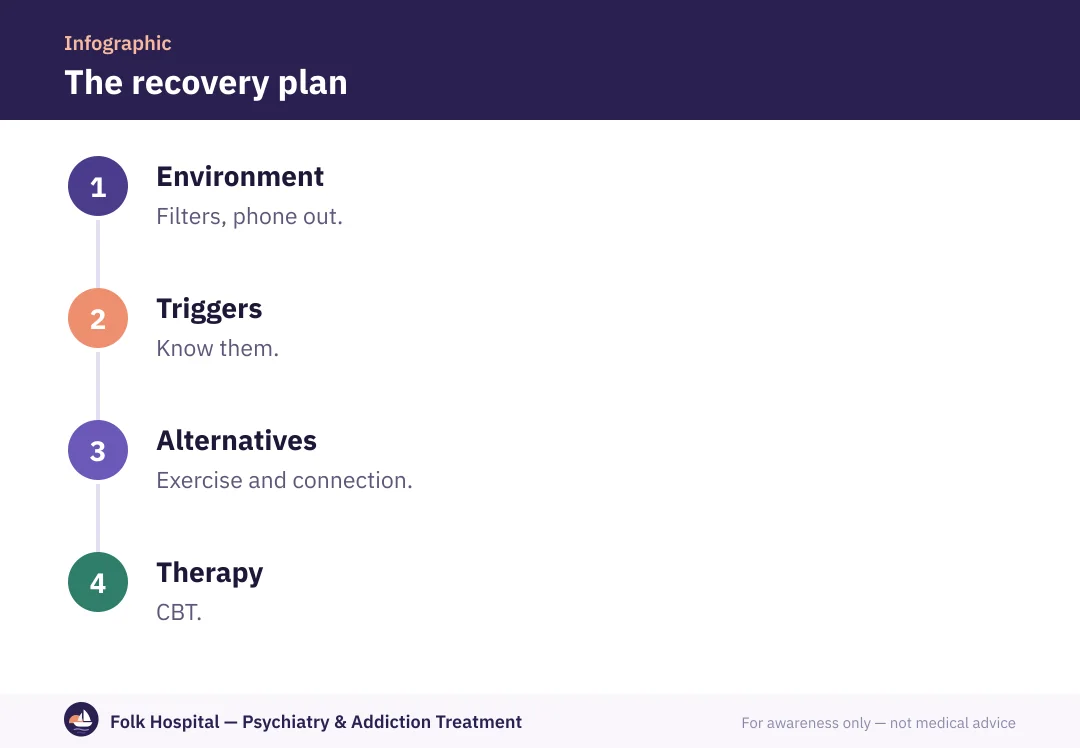
- Change the environmentcontent filters on devices, and the phone out of the bedroom.
- Track triggersnote when urges come: a time? A place? A feeling?
- Ready alternativesphysical activity, leaving the room or calling a friend.
- A healthy routineregular sleep, exercise and social activities.
- A supportive persona trusted friend, a support group or a therapist.
- Handling a slipanalysing it and adjusting the plan without self-punishment.
03High-risk times and alternatives
| High-risk time | Alternative |
|---|---|
| Staying up alone with the phone | Phone out of the room and a fixed bedtime |
| Boredom at home | A planned activity or going out |
| After a stressful day | A walk, a breathing exercise or talking to someone |
| Feeling lonely | Real contact with friends and family |
04Cognitive behavioural therapy
It helps when there's severe compulsion, anxiety, depression or OCD, and works on relapse-triggering thoughts such as «just once won't matter».
Read about the benefits of quitting pornography and its harms.
؟Frequently asked questions
What should I do after a relapse?
Treat it as information: what was the trigger? What changed? Then adjust the plan; harsh self-blame makes repetition more likely.
How long does recovery take?
It varies from person to person; the first weeks are usually hardest, then urges fade gradually with commitment to the plan.
Should I tell my partner?
Honesty can build strong support, but choose the right time; a therapist can help manage this conversation.
Are there medicines?
Medicine isn't usually used, except when there's a co-existing condition such as depression or OCD.
Sources and references
- Addiction: what is it? — NHS (UK)
- Psychotherapies — National Institute of Mental Health (NIMH)
- Depression — National Institute of Mental Health (NIMH)
- Anxiety Disorders — National Institute of Mental Health (NIMH)
A specialist in psychological rehabilitation, behaviour modification and relapse prevention, with over 15 years in addiction programmes.
For awareness only — not a substitute for medical advice. Editorial policy · View profile