01Types
| Type | Feature |
|---|---|
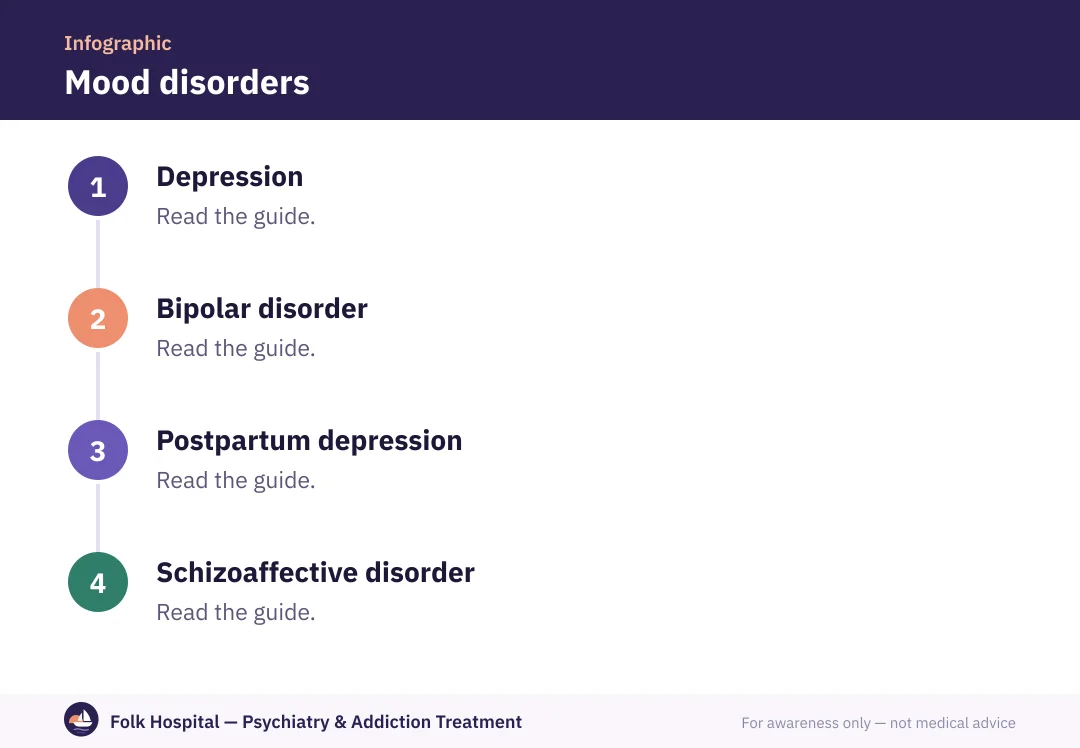
| Depression | Sadness and loss of interest for two weeks or more |
| Bipolar disorder | Manic and depressive episodes |
| Persistent depression | Milder depression lasting years |
| Cyclothymia | Ongoing swings milder than bipolar |
| Postpartum depression | After childbirth |
02Normal change or disorder?
Normal change
- Linked to a clear situation.
- Passes within days.
- Doesn't disrupt life.
Mood disorder
- Severe or without clear cause.
- Lasts weeks.
- Disrupts work and relationships.
- Suicidal thoughts or intent to harm yourself or others.
- Losing touch with reality or severe agitation.
In Egypt call the ambulance on 123 or the mental-health hotline 08008880700.
Ambulance: 123Read also: mood swings, antidepressants, depression test.
؟Frequently asked questions
What are mood disorders?
Disorders affecting mood and energy, chiefly depression and bipolar disorder.
How does depression differ from bipolar?
Depression has only depressive episodes; bipolar also includes manic or hypomanic episodes.
What is cyclothymia?
Mood swings milder than bipolar disorder but persisting for long periods.
Are mood swings a disorder?
Not always; normal swings are temporary and don't disrupt life.
How are mood disorders treated?
With medication suited to the diagnosis, psychotherapy, and regular sleep and routine.
Are they linked to addiction?
Yes. Depression and bipolar raise the risk of substance use, which worsens them.
Sources and references
- Depression — National Institute of Mental Health (NIMH)
- Bipolar Disorder — National Institute of Mental Health (NIMH)
- Mood Disorders — Cleveland Clinic

A psychiatrist specialising in addiction and mental illness in adults and adolescents, with a focus on dual diagnosis.
For awareness only — not a substitute for medical advice. Editorial policy · View profile