01Baby blues or depression?
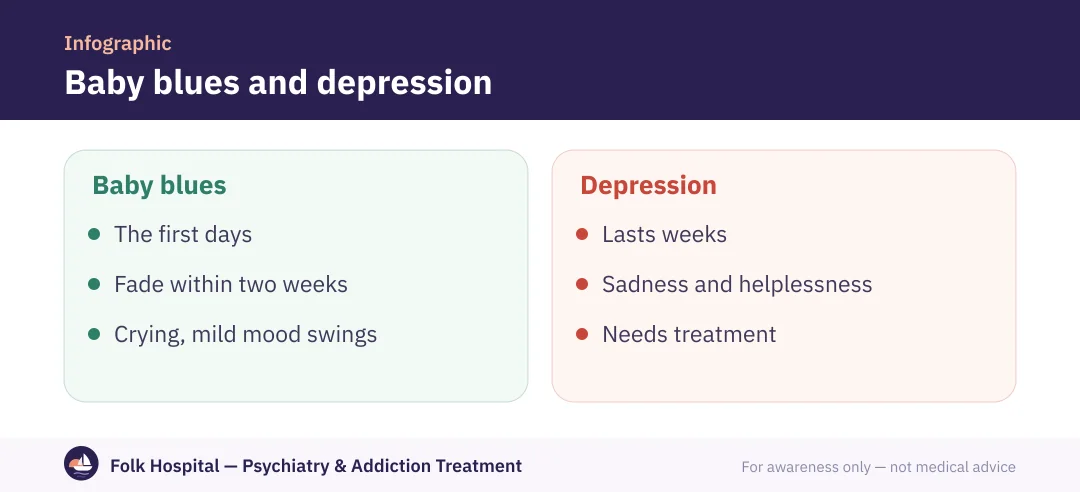
| Baby blues | Postpartum depression | Postpartum psychosis | |
|---|---|---|---|
| Onset | Days after birth | Within the first year | Usually the first weeks |
| Duration | Under two weeks | Weeks to months | — |
| Severity | Mild | Moderate to severe | Emergency |
- Suicidal thoughts or intent to harm yourself or others.
- Losing touch with reality or severe agitation.
In Egypt call the ambulance on 123 or the mental-health hotline 08008880700.
Ambulance: 12302Recovery plan
- Acknowledgingdepression is an illness, not failure.
- Assessmentwith a psychiatrist.
- Treatmentpsychological and breastfeeding-compatible medication.
- Practical supportsharing baby care and sleep.
Read postpartum depression symptoms, its causes, depression and depression in women.
؟Frequently asked questions
What is postpartum depression?
Depression within the first year after birth, with persistent sadness, loss of pleasure, exhaustion and guilt.
How does it differ from the baby blues?
The blues are mild mood swings that pass within two weeks; depression is more severe, persistent and disruptive.
Can it be treated while breastfeeding?
Yes, with psychotherapy and some breastfeeding-compatible medicines as the doctor decides.
Can fathers get it?
Yes, fathers can be affected too, less often.
When is it an emergency?
With thoughts of harming yourself or the baby, or confusion and hallucinations suggesting postpartum psychosis.
How can the family help?
With practical help caring for the baby, letting the mother sleep, and encouraging treatment without blame.
Sources and references
- Postnatal depression — NHS (UK)
- Postpartum Depression — U.S. National Library of Medicine — MedlinePlus
- Depression — National Institute of Mental Health (NIMH)

A psychiatrist specialising in addiction and mental illness in adults and adolescents, with a focus on dual diagnosis.
For awareness only — not a substitute for medical advice. Editorial policy · View profile