01The most common signs
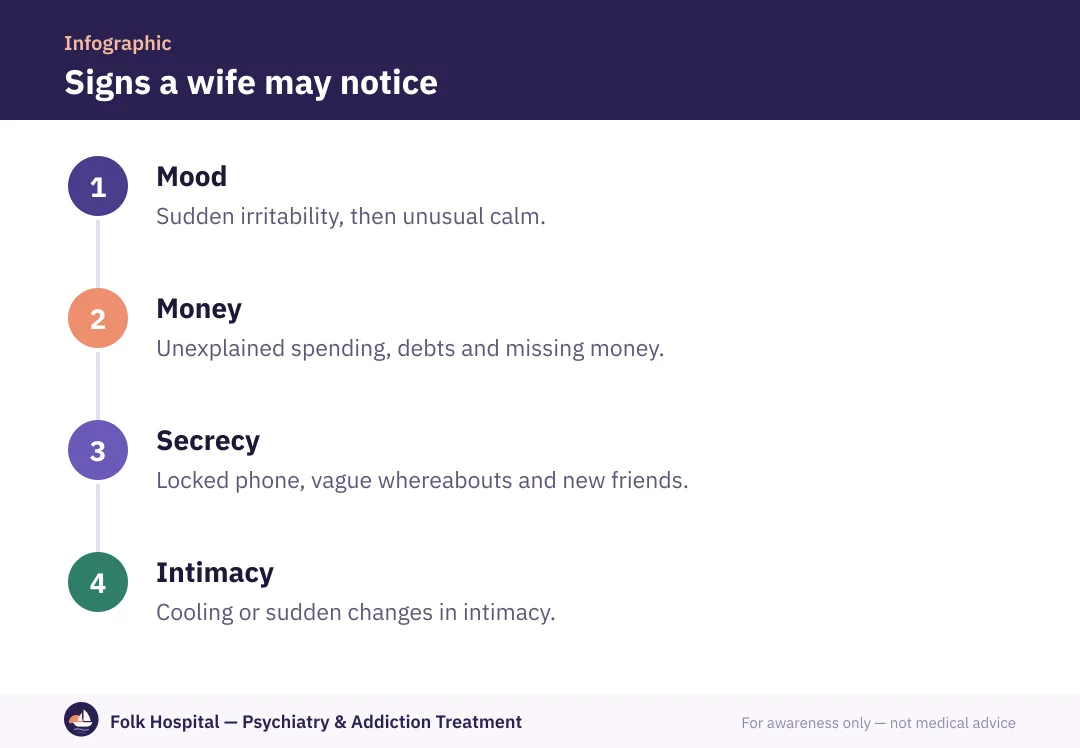
| Area | Signs |
|---|---|
| Mood | Excessive irritability, sharp swings, sudden energy followed by lethargy |
| Sleep | Long late nights or oversleeping, irregular hours |
| Money | Missing money, unexplained debts, selling things from the home |
| Secrecy | A locked phone, calls outside the house, new friends |
| Relationship | Coolness or change in the intimate relationship, emotional distance |
| Responsibilities | Missing work, neglecting the home and children, repeated excuses |
02Signs by substance
- Tramadol: energy and talkativeness after a dose, then irritability, aches and diarrhoea when it's missing.
- Cannabis: red eyes, sluggishness, big appetite and a distinctive smell.
- Shabu: staying up for days, rapid weight loss, suspicion and morbid jealousy.
- Pregabalin and sedatives: slurred speech, unsteadiness and drowsiness.
03Not every sign means drug use
Some of these changes may come from depression, work stress or health problems. That's why a medical assessment is the deciding factor.
04How to act
- Write it downfacts and dates instead of impressions.
- Protect yourselfmoney, documents and children.
- Choose the timetalk when he's sober.
- Suggest a stepa confidential medical assessment.
Read my husband is an addict: how do I cope? and drug testing.
- Violence, threats or signs of overdose: police 122, ambulance 123.
؟Frequently asked questions
My husband's mood changes with the time of day. Is that drug use?
It may be. Swings linked to specific times, such as energy after being away or morning irritability that suddenly improves, deserve attention, especially with other signs.
Is a weaker intimate relationship a sign of drug use?
It may be, since many substances such as tramadol and cannabis affect desire and performance. But it has other causes too, such as depression and physical illness.
Should I search his phone?
It can break trust and increase conflict. It's better to focus on the clear effects at home and talk about them directly.
What should I do once I'm sure?
Choose a calm time to talk, prepare a specific treatment step and seek support for yourself.
Sources and references
- Drugs, Brains, and Behavior: The Science of Addiction — National Institute on Drug Abuse (NIDA)
- Prescription Medicines — research topic — National Institute on Drug Abuse (NIDA)
- Opioids — research topic — National Institute on Drug Abuse (NIDA)
- Drug addiction: getting help — NHS (UK)
A specialist in psychological rehabilitation, behaviour modification and relapse prevention, with over 15 years in addiction programmes.
For awareness only — not a substitute for medical advice. Editorial policy · View profile