
01What are the physical signs of tramadol use?
Signs on the body
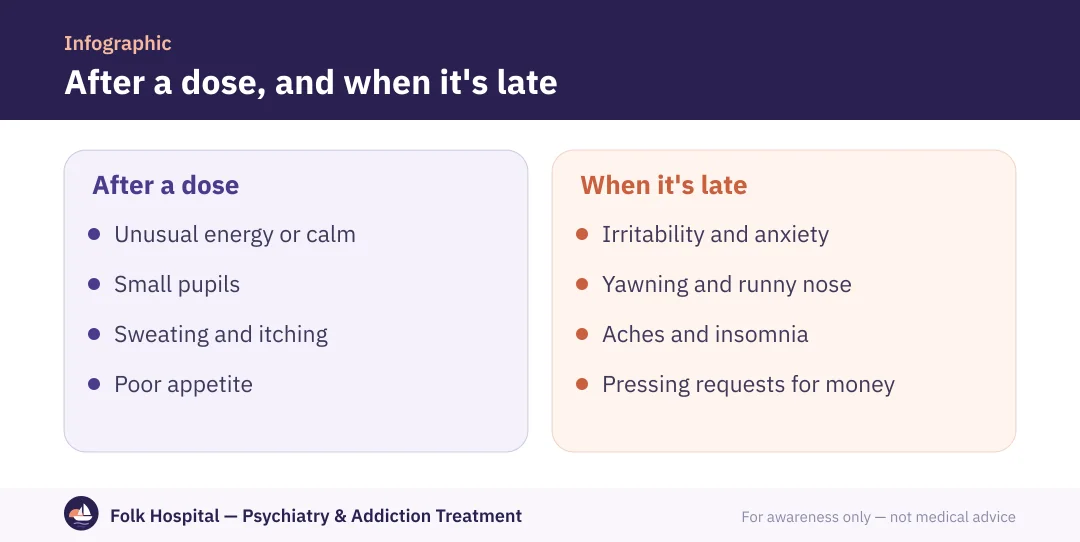
- Small pupils.
- Heavy sweating and itching.
- Constipation, poor appetite and weight loss.
- Nausea or dizziness.
- A slight tremor, and seizures at high doses.
02What are the behavioural signs?
Changes in behaviour
- Exaggerated energy and talkativeness, then sluggishness.
- Clear irritability at certain times of day.
- Looking for tablets or prescriptions from several pharmacies or doctors.
- Unexplained spending and missing money.
- Relying on it "to focus" at work or in the bedroom.
03What are the danger signs?
Signs that need an ambulance
- A seizure or loss of consciousness.
- Slow breathing or unresponsive drowsiness.
- High temperature, tremor and confusion (possible serotonin syndrome).
What to do right now
Call an ambulance on 123 immediately.
Ambulance: 123؟Frequently asked questions
Does tramadol show up on a standard drug test?
Not on every rapid test; some need a tramadol-specific strip. Read how long tramadol stays in the body.
My husband says he only takes it for work. Is that addiction?
If he takes it daily without pain, needs higher doses and becomes irritable without it, those are signs of real dependence, whatever the reason.
Sources and references
- Opioids — research topic — National Institute on Drug Abuse (NIDA)
- Prescription Medicines — research topic — National Institute on Drug Abuse (NIDA)

Written byDr. Mahmoud ElsawyConsultant in psychiatry and addiction treatment
A psychiatrist specialising in addiction and mental illness in adults and adolescents, with a focus on dual diagnosis.
For awareness only — not a substitute for medical advice. Editorial policy · View profile