01Why isn't appearance enough?
In the early stages, and with substances such as tramadol and cannabis, a person may look completely normal. Physical changes usually appear with continued use or high doses. So we rely on a set of signs, not appearance alone. Read about the signs of drug use.
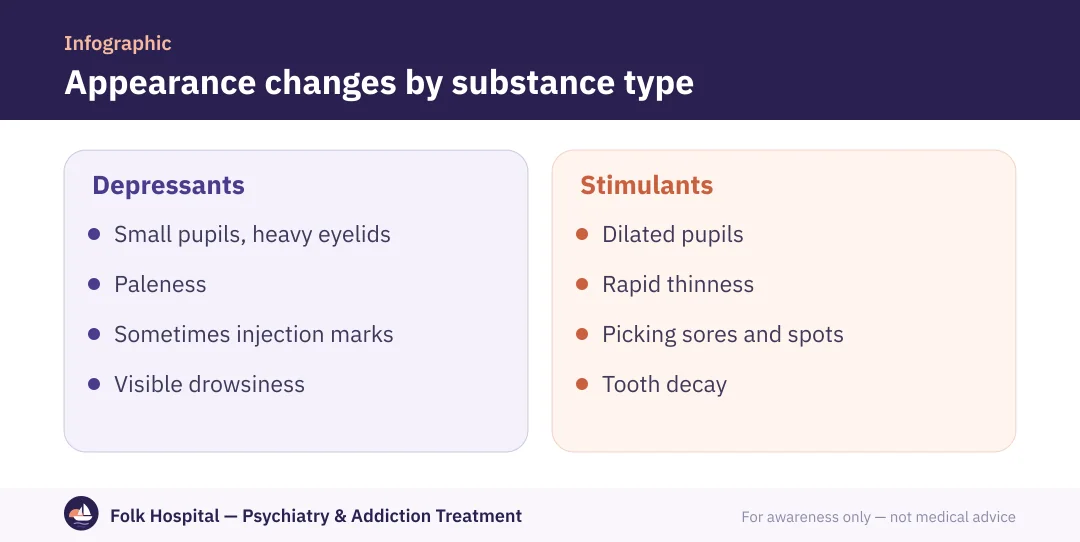
02Changes in appearance by substance
| Substance | What may appear |
|---|---|
| Opioids such as heroin and tramadol | Pinpoint pupils, drowsiness, pallor, and injection marks if injecting |
| Shabu and stimulants | Rapid weight loss, wide pupils, tooth decay and sores from scratching |
| Cannabis | Red eyes, dry mouth and sluggishness |
| Strox | A vacant stare, stiffness and strange movements |
| Sedatives and pregabalin | Unsteadiness, slurred speech and heavy eyelids |
03General changes with continued use
- Neglected hygiene and clothes.
- Dark circles and pallor.
- A clear change in weight.
- Skin and dental problems.
- Long sleeves in hot weather to hide marks.
04More telling than appearance
Appearance signs
More telling behaviour signs
- Weight loss | Isolation, lying and missing money
- Red eyes | Sharp mood swings
- Pallor | Slipping at school or work
- Neglected clothes | New friends and secrecy
05Don't judge alone
Some of these changes may come from depression or physical illnesses such as thyroid problems or anaemia. A medical assessment and a lab drug test settle the matter. Read about drug testing and how an addict thinks.
؟Frequently asked questions
Can an addict look completely normal?
Yes, especially early on or with some substances such as tramadol and cannabis. So families rely more on changes in behaviour and mood than on appearance.
What do an addict's eyes look like?
It depends on the substance: very small pupils with opioids, wide pupils with stimulants and red eyes with cannabis.
Is weight loss a sign of drug use?
It may be, especially with shabu and stimulants, but it has many other causes, such as depression and physical illness.
Do features return to normal after recovery?
Many changes improve with stopping, nutrition and sleep, while some, such as dental and skin problems, need treatment.
Sources and references
- Drugs, Brains, and Behavior: The Science of Addiction — National Institute on Drug Abuse (NIDA)
- Methamphetamine — research topic — National Institute on Drug Abuse (NIDA)
- Opioids — research topic — National Institute on Drug Abuse (NIDA)
- Cannabis (Marijuana) — research topic — National Institute on Drug Abuse (NIDA)

A specialist in psychological rehabilitation, behaviour modification and relapse prevention, with over 15 years in addiction programmes.
For awareness only — not a substitute for medical advice. Editorial policy · View profile