Tapentadol is an opioid painkiller stronger than tramadol, so people used to tramadol whose effect has faded may turn to it.
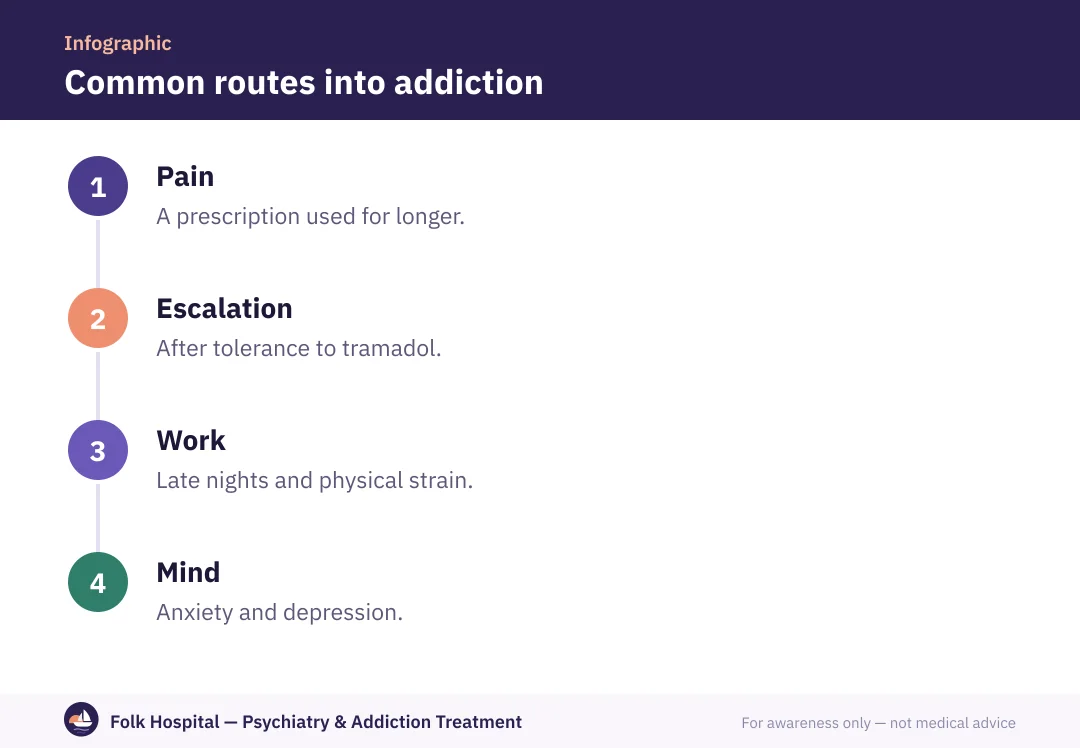
01Factors that raise the risk of addiction
| Factor | How it contributes |
|---|---|
| Pain | Starting on prescription |
| Escalation | Moving from tramadol to a stronger effect |
| Hard work | Coping with long hours |
| Anxiety and mood | Seeking calm |
| Easy access | Getting it without a prescription |
Having a risk factor doesn't make addiction inevitable, and lacking one doesn't guarantee protection; addiction is an illness with many causes, and it can be treated.
02How does use turn into addiction?
Tolerance drives dose increases, withdrawal makes stopping hard, and the person may escalate to stronger substances.
03What protects?
- Treating anxiety, depression and insomnia early and safely.
- Supportive relationships and open conversation in the family.
- Healthy ways of coping with stress and pain.
- Seeking help at the first signs of losing control.
Read about tapentadol symptoms, its withdrawal, its treatment.
؟Frequently asked questions
Why do tramadol users move to tapentadol?
Because tolerance weakens tramadol's effect, so they look for something stronger. But this deepens dependence and raises the risks.
Is tapentadol a safe alternative to tramadol?
No. It's a stronger opioid with a risk of dependence and withdrawal.
How does addiction start from a prescription?
By continuing after the pain has gone or raising the dose without a doctor.
Sources and references
- Opioids — research topic — National Institute on Drug Abuse (NIDA)
- Prescription Medicines — research topic — National Institute on Drug Abuse (NIDA)

A psychiatrist specialising in addiction and mental illness in adults and adolescents, with a focus on dual diagnosis.
For awareness only — not a substitute for medical advice. Editorial policy · View profile