01Signs
| Type | Signs |
|---|---|
| Under the effect | Drowsiness, dizziness, small pupils, and calm or euphoria |
| Physical | Nausea, constipation, sweating and slow breathing |
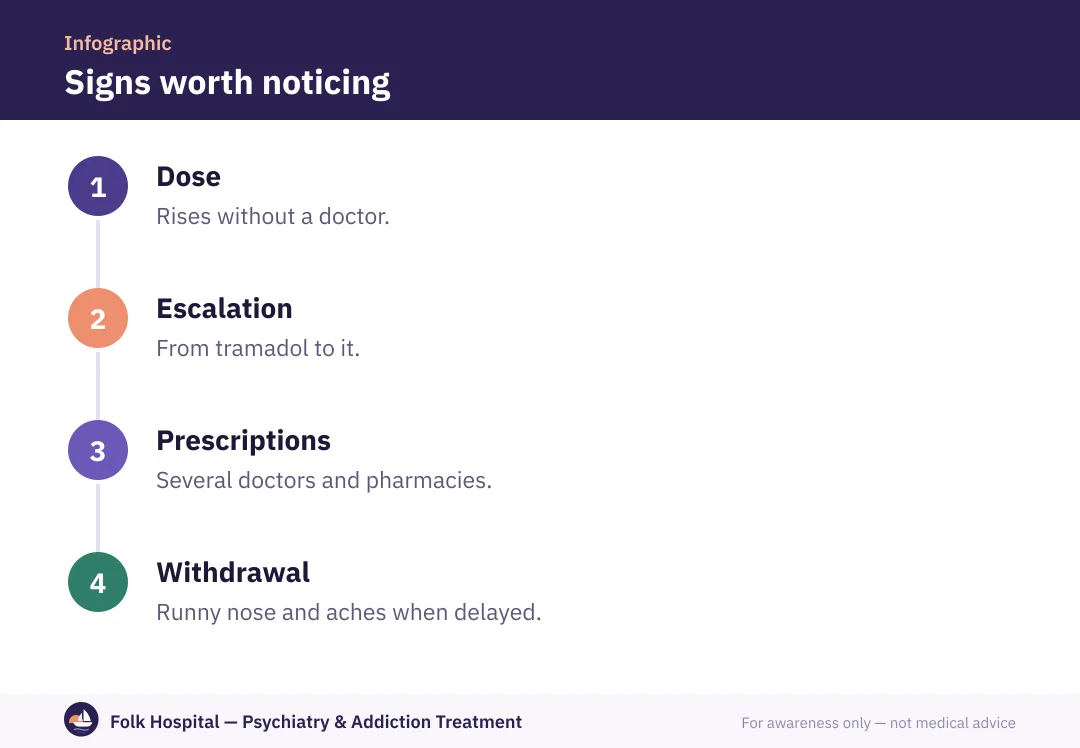
| Signs of addiction | Increasing the dose, seeking several prescriptions or pharmacies, running out early |
| When it's missing | Anxiety, insomnia, sweating, runny nose, aches and low mood |
02Danger signs
- Slow breathing or unresponsiveness.
- Seizures.
- Severe confusion after mixing with other substances.
03What should you do?
Don't stop it suddenly, and seek an assessment for a safe plan. Read about tapentadol withdrawal, its treatment and tramadol symptoms.
؟Frequently asked questions
How can I tell a relative moved from tramadol to tapentadol?
You may notice new medicine names or boxes, more spending and stronger symptoms. A calm conversation and an assessment are the best next step.
Is tapentadol like tramadol?
Both are opioid painkillers with an added effect on noradrenaline, but tapentadol is stronger, and both cause dependence.
Does it show on a standard drug test?
It may not show on all standard strips and sometimes needs a specific test.
Does it cause seizures?
It can, at high doses, with medicines that raise seizure risk, or in people with epilepsy.
Sources and references
- Opioids — research topic — National Institute on Drug Abuse (NIDA)
- Prescription Medicines — research topic — National Institute on Drug Abuse (NIDA)

A psychiatrist specialising in addiction and mental illness in adults and adolescents, with a focus on dual diagnosis.
For awareness only — not a substitute for medical advice. Editorial policy · View profile