01Why does pregabalin need a specific treatment plan?
Pregabalin is prescribed for nerve pain, some anxiety disorders and epilepsy, and is sold under several brand names including Lyrolin. But at doses above those prescribed it gives a sense of relaxation and euphoria, so for many people it turns from treatment into dependence. The problem is that the body adapts to it, so stopping suddenly brings withdrawal that can be very unpleasant and, at high doses, can cause seizures.
It's often misused with opioids such as tramadol and heroin, because it strengthens their effect. This combination is among the most dangerous patterns, as it raises the chance of slowed breathing and overdose. Read about pregabalin versus tramadol.
02Why do so many people start pregabalin?
- Nerve or back pain: on prescription at first, then raising the dose without advice.
- Anxiety and insomnia: the person feels calm quickly and comes to rely on it.
- Boosting another drug: with tramadol, heroin or cannabis.
- Easing opioid withdrawal: some use it as self-treatment and add a new dependence.
- Easy access and the belief that it's "a safe medicine" because pharmacies sell it.
Read about causes of pregabalin addiction.
03What are the stages of pregabalin treatment?
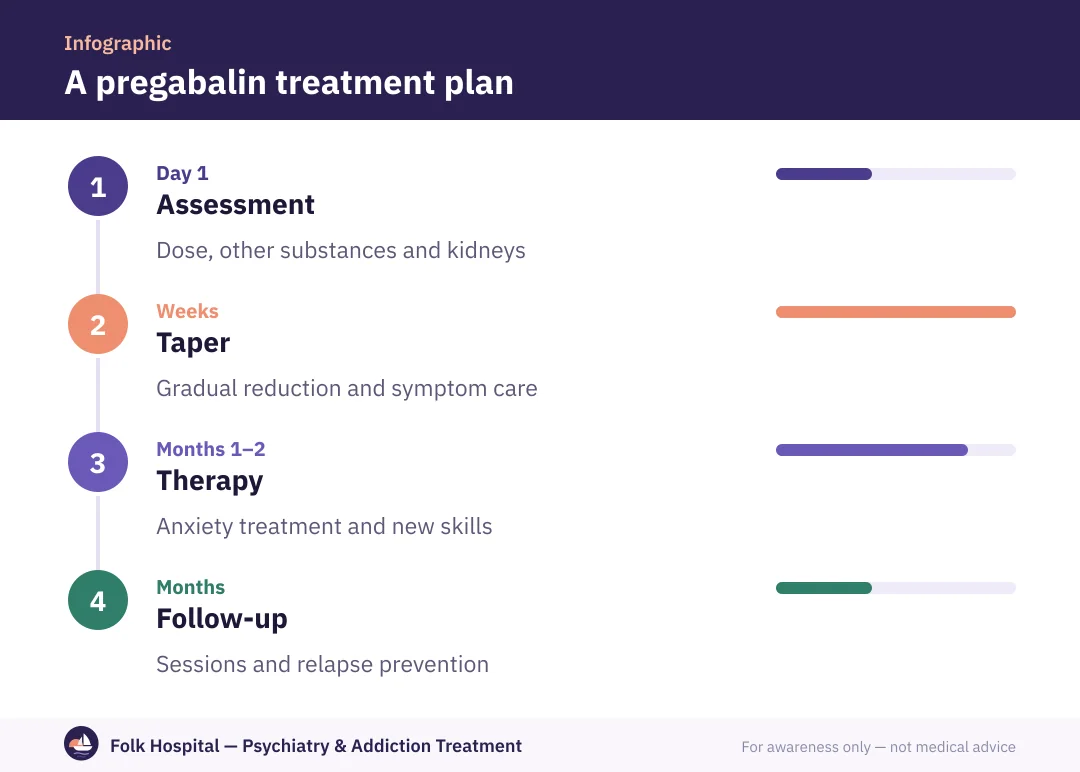
- Assessmentthe real daily dose, any mixing with tramadol, heroin or cannabis, kidney function, and any previous seizures.
- Gradual taperinga structured reduction under medical supervision, with safe medicines for insomnia and anxiety when needed.
- Treating the causepeople who started because of pain need a pain plan; people who started because of anxiety need anxiety treatment. Read alternatives to pregabalin.
- Psychological therapycognitive behavioural therapy for coping with stress.
- Follow-upsessions that prevent relapse.
04How does gradual tapering work?
Simply put, instead of stopping suddenly, the dose is reduced in steps that let the body adjust. The pace depends on:
| Factor | A faster taper is possible | A slower taper is needed |
|---|---|---|
| Daily dose | Close to a therapeutic dose | Far above the prescribed dose |
| Length of use | Weeks | Months or years |
| Other substances | None | Opioids, sedatives or alcohol |
| Seizures | No history | Previous seizures |
| Mental state | Stable | Severe anxiety or depression |
The doctor reviews symptoms at each step and slows down if withdrawal becomes severe. Safe medicines for sleep and anxiety are used when needed, avoiding replacing pregabalin with addictive sedatives. Read about pregabalin withdrawal.
05When pregabalin is mixed with opioids
The most dangerous combination
Pregabalin with tramadol, heroin, methadone or sedatives multiplies the risk of extreme drowsiness and slowed breathing. In this case we need a detox plan that addresses both drugs together, and residential care is usually the safest option. Read opioid addiction treatment.
- Extreme drowsiness or difficulty waking.
- Slow or weak breathing.
- Seizures.
- Severe confusion or loss of consciousness.
Call an ambulance on 123 immediately and don't leave the person alone.
Ambulance: 12306Treating anxiety and pain after stopping
The biggest reason people go back is the return of the original problem. So:
- Anxiety: treated with suitable non-addictive medicines chosen by the doctor, plus cognitive behavioural therapy, which gives lasting results. Read pregabalin and anxiety and generalised anxiety disorder.
- Nerve pain: other medication options, physiotherapy and psychological techniques for chronic pain, with a neurologist.
- Insomnia: sleep routines and healthy habits before any medicine, and short-term medication when needed.
07When is a residential stay needed?
A residential stay is better if
- The daily dose is very high.
- It's mixed with opioids or sedatives.
- There have been seizures.
- Outpatient attempts to taper have failed.
- There's severe depression or thoughts of self-harm.
Otherwise tapering can be done as an outpatient with regular visits. Read about outpatient care.
08Pregabalin and sexual life
Long-term use can affect desire and sexual performance, and these effects usually improve after stopping and stabilising. Read pregabalin and sex.
09How long does treatment take?
Tapering takes two to several weeks depending on the dose, psychological rehabilitation one to two months, and follow-up several months. Cases mixed with opioids take longer.
؟Frequently asked questions
Can I taper pregabalin on my own?
It's better for a doctor to set the tapering schedule, especially with high doses or other drugs, because a fast taper can cause severe withdrawal or seizures.
How long does tapering take?
It depends on dose and length of use; a week or two may be enough at therapeutic doses, while very high doses need weeks of structured tapering.
What are pregabalin withdrawal symptoms?
Anxiety, insomnia, sweating, nausea, headache, irritability and strong cravings, and at high doses seizures can occur. Severity varies with dose and duration.
Can pregabalin be addictive even though it's a medicine?
Yes, especially at doses above those prescribed or in people with a history of other drug use. It's often misused with opioids because it strengthens their effect.
I was taking it for anxiety. What do I do after stopping?
Anxiety needs a safe alternative treatment chosen by the doctor, along with psychological therapy such as CBT, which treats anxiety in the long term. Read about pregabalin and anxiety.
Does pregabalin show up on a drug test?
It usually doesn't appear on standard rapid tests and needs a specific test. Read how long pregabalin stays in the body.
Can treatment be done without a residential stay?
Yes, in many cases at moderate doses without other drugs, through a gradual taper and regular outpatient follow-up.
Sources and references
- Prescription Medicines — research topic — National Institute on Drug Abuse (NIDA)
- Treatment Approaches for Drug Addiction — DrugFacts — National Institute on Drug Abuse (NIDA)
- Drug misuse in over 16s: psychosocial interventions (CG51) — National Institute for Health and Care Excellence (NICE)
- Co-Occurring Disorders and Health Conditions — National Institute on Drug Abuse (NIDA)

A psychiatrist specialising in addiction and mental illness in adults and adolescents, with a focus on dual diagnosis.
For awareness only — not a substitute for medical advice. Editorial policy · View profile