01What is Lyrolin?
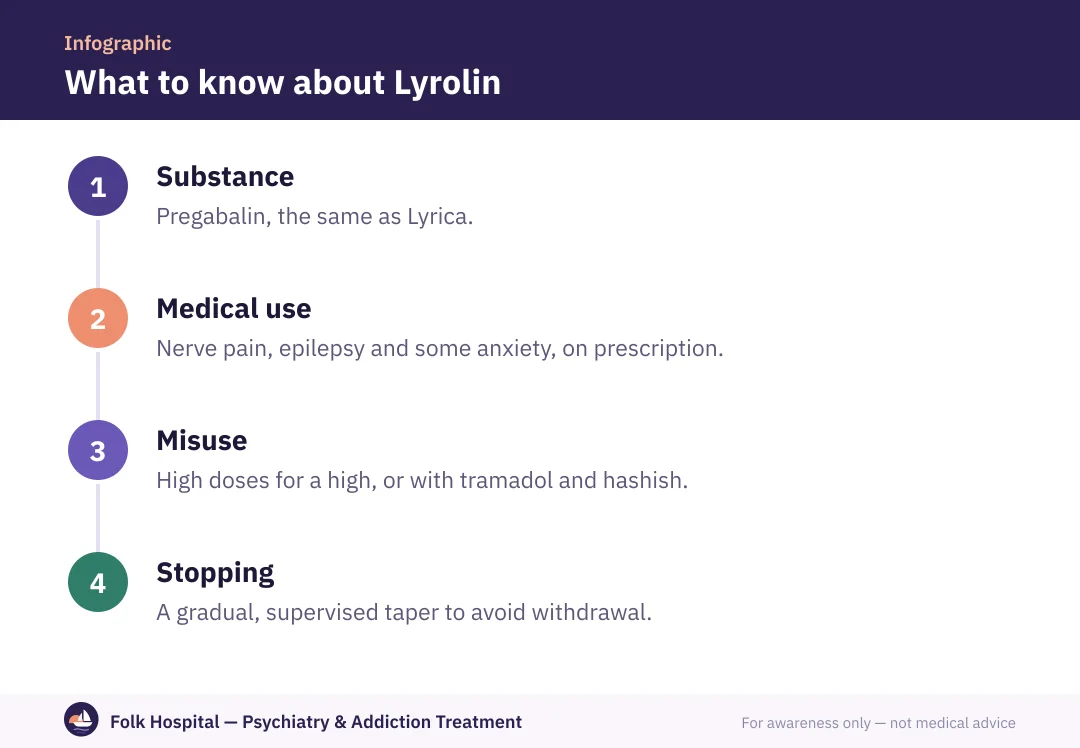
Lyrolin is one of the brand names for pregabalin, like other names produced by different companies for the same substance. Because the name is common on the street, some people think it's a different, «milder» or «stronger» substance, but it's the same medicine with all its uses and risks. Read the pregabalin guide.
02Medical use versus misuse
Medical use
- Nerve pain, such as diabetic neuropathy.
- Epilepsy as add-on treatment.
- Generalised anxiety in some countries, depending on the doctor's assessment.
- A low starting dose increased gradually with follow-up.
Misuse
- Doses above those prescribed, for a high or calm.
- Mixing with tramadol or hashish to boost the effect.
- Buying without a prescription from several pharmacies.
- Continuing after the medical reason has passed.
03Why is misuse so widespread?
Because it has been relatively available, gives a sense of calm, euphoria and confidence at high doses, and is used to boost tramadol or ease its withdrawal. That is exactly what makes it dangerous: every combination with opioids raises the risk of suppressed breathing.
04Signs of Lyrolin misuse
Common signs
- Dizziness, unsteadiness and slow speech.
- Unusual drowsiness or euphoria.
- Weight gain and swollen feet.
- Blurred or double vision.
- Anxiety, insomnia and irritability when a dose is late.
- Seeking the medicine from several sources.
- Deep drowsiness or difficulty waking.
- Slow breathing, especially with tramadol, sedatives or alcohol.
- Seizures.
- Swelling of the face or throat, or difficulty breathing after taking it.
05Withdrawal and stopping safely
Stopping suddenly after long use or high doses can cause anxiety, insomnia, sweating and nausea, and sometimes seizures. So stopping means a gradual taper set by the doctor. Read pregabalin withdrawal and pregabalin addiction treatment.
؟Frequently asked questions
What is Lyrolin?
A brand name for pregabalin, a medicine used for nerve pain, epilepsy and some anxiety conditions.
Is Lyrolin a drug of abuse?
It's a medicine, not originally a street drug, but it's misused at high doses for a high and can cause dependence, so pregabalin is controlled in many countries.
Is Lyrolin addictive?
It can cause dependence, especially in people with a history of addiction or who take more than prescribed or combine it with other substances.
What's the danger of mixing Lyrolin with tramadol?
Both depress the nervous system, and combining them raises the risk of deep drowsiness and suppressed breathing, which can be fatal.
How do I stop Lyrolin?
By a gradual, supervised taper over at least a week in medical use, and possibly longer with high doses or long-term use.
What are Lyrolin withdrawal symptoms?
Anxiety, insomnia, sweating, headache, nausea and diarrhoea; seizures can occur in people with epilepsy or after stopping high doses abruptly.
Sources and references
- Pregabalin — medicines A to Z — NHS (UK)
- Prescription Medicines — research topic — National Institute on Drug Abuse (NIDA)

A psychiatrist specialising in addiction and mental illness in adults and adolescents, with a focus on dual diagnosis.
For awareness only — not a substitute for medical advice. Editorial policy · View profile