01What are the short-term harms?
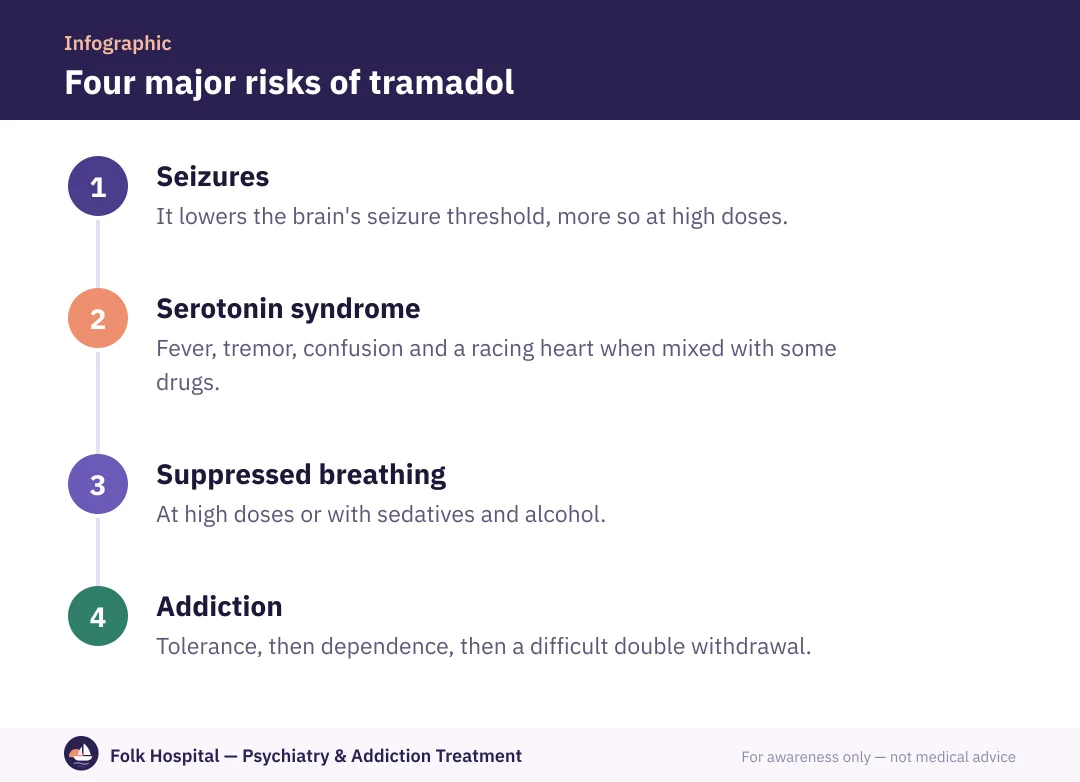
Nausea and dizziness, constipation, sweating, headache, and drowsiness or insomnia depending on the person. At high doses: tremor, a racing heart and possible seizures.
02What are the long-term harms?
| Area | Harm |
|---|---|
| Nervous system | Seizures, chronic headache, poor concentration |
| Mood | Anxiety, depression and swings, especially between doses |
| Sleep | Disturbed sleep and relying on the drug to sleep or stay awake |
| Hormones | Low libido, erectile problems, irregular periods |
| Digestion | Chronic constipation and poor appetite |
| Life | Spending, debt and depending on it for work |
03Why is mixing so dangerous?
- Sedatives, pregabalin or alcohol: higher risk of suppressed breathing.
- Certain antidepressants and migraine medicines: risk of serotonin syndrome.
- Stimulants: higher risk of seizures and heart rhythm problems.
If fever, tremor and confusion follow a combination, call an ambulance on 123.
Ambulance: 12304What improves after stopping?
Sleep and digestion settle within weeks, anxiety eases gradually, hormones and sexual function return over months, and the drug-related seizure risk disappears.
؟Frequently asked questions
Does tramadol damage the kidneys?
Tramadol itself isn't known to damage kidneys at medical doses, but weak kidneys let it build up and strengthen its effects. Unknown tablets, or paracetamol combinations taken in large amounts, can harm the liver.
Does a tramadol seizure leave lasting damage?
A single seizure usually doesn't, but it needs medical assessment. Repeated seizures, or ones with injury or lack of oxygen, can be dangerous.
Sources and references
- Opioids — research topic — National Institute on Drug Abuse (NIDA)
- Prescription Medicines — research topic — National Institute on Drug Abuse (NIDA)

A psychiatrist specialising in addiction and mental illness in adults and adolescents, with a focus on dual diagnosis.
For awareness only — not a substitute for medical advice. Editorial policy · View profile