01Harms
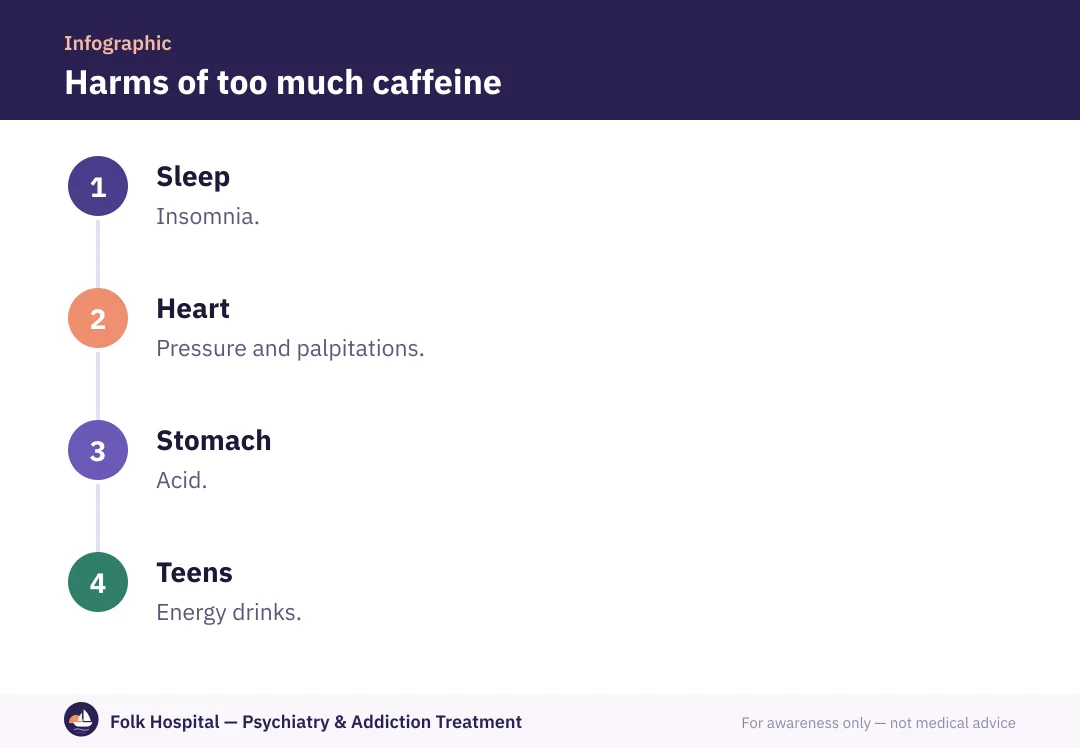
| Area | Harms |
|---|---|
| Sleep | Insomnia, broken sleep and daytime tiredness that drives more caffeine |
| Mind | Anxiety, tension, irritability, and it can trigger panic attacks |
| Heart | Palpitations, fast pulse and temporarily raised blood pressure |
| Digestion | Heartburn and upset stomach |
| Dependence | Headache and tiredness on stopping |
02The most sensitive groups
Pregnant women, people with heart disease or high blood pressure, those with anxiety or insomnia, and teenagers using energy drinks.
- Chest pain, a very fast irregular heartbeat or fainting after energy drinks or caffeine pills: ambulance 123.
03Cutting down safely
Reduce gradually to avoid headaches. Read about the symptoms of too much caffeine, its withdrawal and how long it stays in the body.
؟Frequently asked questions
How many cups of coffee are safe a day?
For most healthy adults, about 3–4 regular cups; the amount varies with size and preparation.
Does caffeine harm pregnancy?
Large amounts may be linked to pregnancy risks, so cutting down and consulting the doctor is advised.
Is mixing energy drinks with alcohol dangerous?
Yes. Caffeine masks the feeling of drunkenness so people drink more, and it adds strain on the heart.
Does caffeine cause osteoporosis?
Very large amounts may affect calcium absorption; moderation with good nutrition reduces this effect.
Sources and references
- Caffeine — U.S. National Library of Medicine — MedlinePlus

A psychiatrist specialising in addiction and mental illness in adults and adolescents, with a focus on dual diagnosis.
For awareness only — not a substitute for medical advice. Editorial policy · View profile