01Sources of caffeine
Coffee, tea, energy drinks, fizzy drinks, and some painkillers and cold medicines. With daily use the body gets used to it, so stopping suddenly brings on symptoms.
02Symptoms and timing
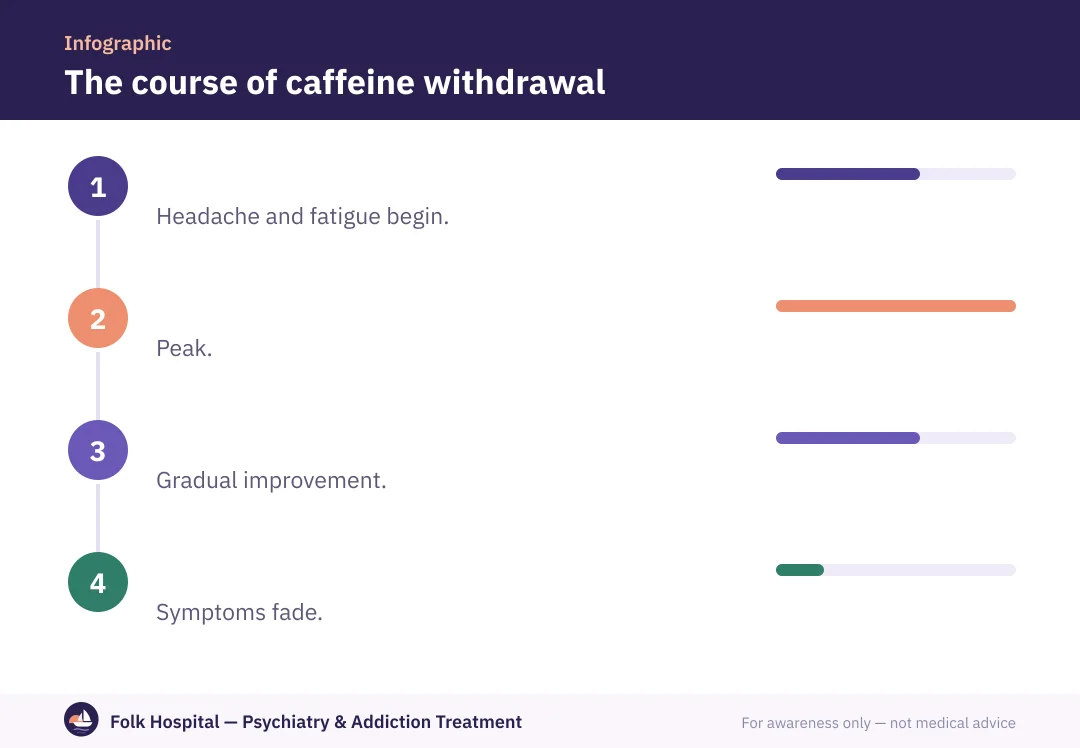
| Time | What happens |
|---|---|
| 12–24 hours | Headache, tiredness and sleepiness |
| One to two days | Peak symptoms: worse headache, poor concentration and irritability |
| Up to about 9 days | Symptoms ease gradually |
03A simple reduction plan
- Count your daily intakefrom all sources.
- Reduce graduallya quarter of the amount every few days.
- Alternativesdecaffeinated coffee or herbal drinks.
- Water and sleepease headache and tiredness.
- Movementa light walk to boost energy.
04When is caffeine a problem?
If it causes ongoing insomnia, palpitations or anxiety, or you can't cut down despite the harm. Read about the symptoms of too much caffeine, its harms and how long it stays in the body.
- Chest pain, a very fast heartbeat or fainting after energy drinks or caffeine pills.
؟Frequently asked questions
Is caffeine withdrawal dangerous?
No, it's unpleasant but not dangerous, and gradual tapering eases it.
How do I cut down on caffeine without headaches?
Reduce gradually over one or two weeks, for example replacing a cup with half a cup or a low-caffeine drink, while drinking water and sleeping enough.
Do headache painkillers help?
Simple painkillers may help for a short time if they suit you, but note that some painkillers contain caffeine.
When should a headache worry me?
If it's very severe and sudden, or comes with weakness, numbness, persistent vomiting or fever, it needs a medical assessment because it may not be from caffeine.
Sources and references
- Caffeine — U.S. National Library of Medicine — MedlinePlus

A psychiatrist specialising in addiction and mental illness in adults and adolescents, with a focus on dual diagnosis.
For awareness only — not a substitute for medical advice. Editorial policy · View profile