01Signs
| Type | Signs |
|---|---|
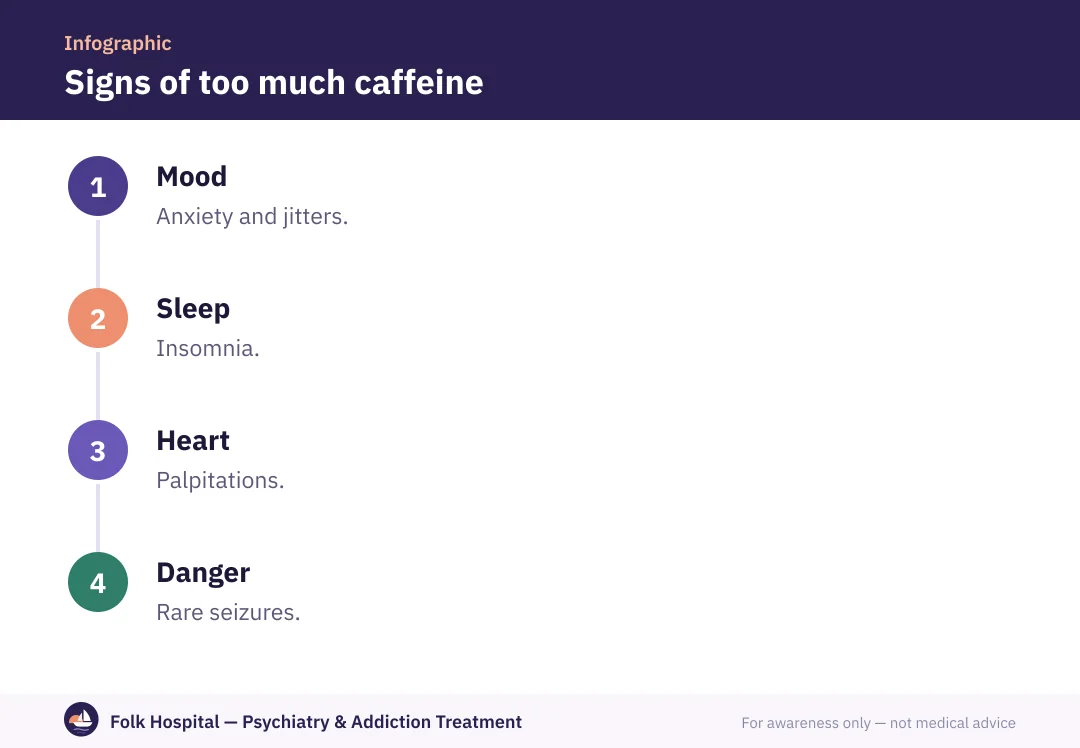
| Psychological | Anxiety, tension, irritability and difficulty relaxing |
| Sleep | Insomnia, trouble falling asleep or broken sleep |
| Heart | Palpitations and a fast pulse |
| Body | Tremor, upset stomach, frequent urination and headache |
| Dependence | Headache and tiredness when delayed, failed attempts to cut down |
02Danger signs
- Chest pain or a very fast, irregular heartbeat.
- Fainting or seizures.
- Severe vomiting after energy drinks or caffeine pills.
03How to cut down
Reduce gradually, replace some with decaffeinated drinks, and avoid it after mid-afternoon to improve sleep. Read about caffeine withdrawal, its harms and how long it stays in the body.
؟Frequently asked questions
Can caffeine cause panic attacks?
Yes, too much can trigger anxiety and panic attacks in those predisposed.
How many cups of coffee is too many?
It varies from person to person, and sensitivity is greater with anxiety, heart problems and pregnancy. What matters is noticing symptoms: insomnia, palpitations and anxiety.
Are energy drinks more dangerous than coffee?
They can be, because they contain large amounts of caffeine, sugar and other stimulants, are drunk quickly, and mixing them with alcohol is dangerous.
Does caffeine increase anxiety?
Yes, in many people, and it can trigger panic attacks in those prone to them.
Sources and references
- Caffeine — U.S. National Library of Medicine — MedlinePlus

A psychiatrist specialising in addiction and mental illness in adults and adolescents, with a focus on dual diagnosis.
For awareness only — not a substitute for medical advice. Editorial policy · View profile