Caffeine isn't tested for in drug tests, but knowing how long it stays matters for understanding its effect on sleep and anxiety.
01Detection window by sample type
| Sample | Approximate window |
|---|---|
| Urine | Cleared within hours to a day |
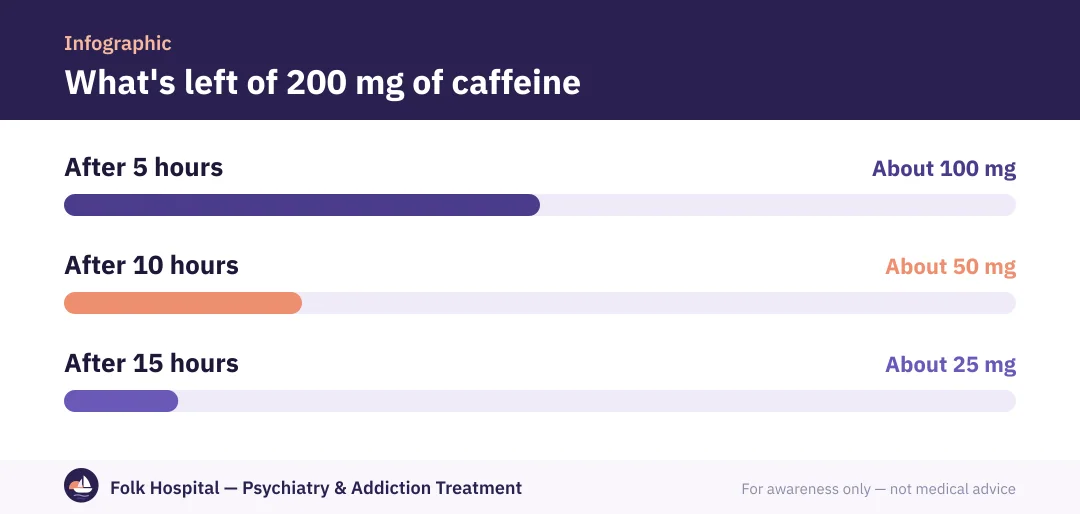
| Blood | Hours (half-life about 5 hours, ranging from 2 to 10) |
| Saliva | Hours |
| Hair | Not used |
Times are approximate and vary from person to person; lab confirmation is the reference.
02Does it show on a standard test?
No, caffeine isn't part of drug tests. The important question is its effect on your sleep and heart.
03What makes the window longer or shorter?
- Dose, frequency and length of use.
- Liver and kidney function.
- Age, weight and body fat.
- The type and sensitivity of the test.
It stays longer during pregnancy, with some contraceptive pills and with liver disease, and shorter in smokers.
There is no magic method
Detox drinks and drinking huge amounts of water don't speed up clearance and can be dangerous. Read about drug cleanse myths.
Read about the symptoms of too much caffeine, its withdrawal, its harms.
؟Frequently asked questions
Does caffeine show on a drug test?
No, standard drug tests don't look for caffeine.
When should I stop coffee to sleep well?
Avoiding it after mid-afternoon is often advised, because half the amount may still be in your body at bedtime.
Does it stay longer in pregnancy?
Yes. Its clearance slows during pregnancy.
Sources and references
- Caffeine — U.S. National Library of Medicine — MedlinePlus

A psychiatrist specialising in addiction and mental illness in adults and adolescents, with a focus on dual diagnosis.
For awareness only — not a substitute for medical advice. Editorial policy · View profile