01Signs
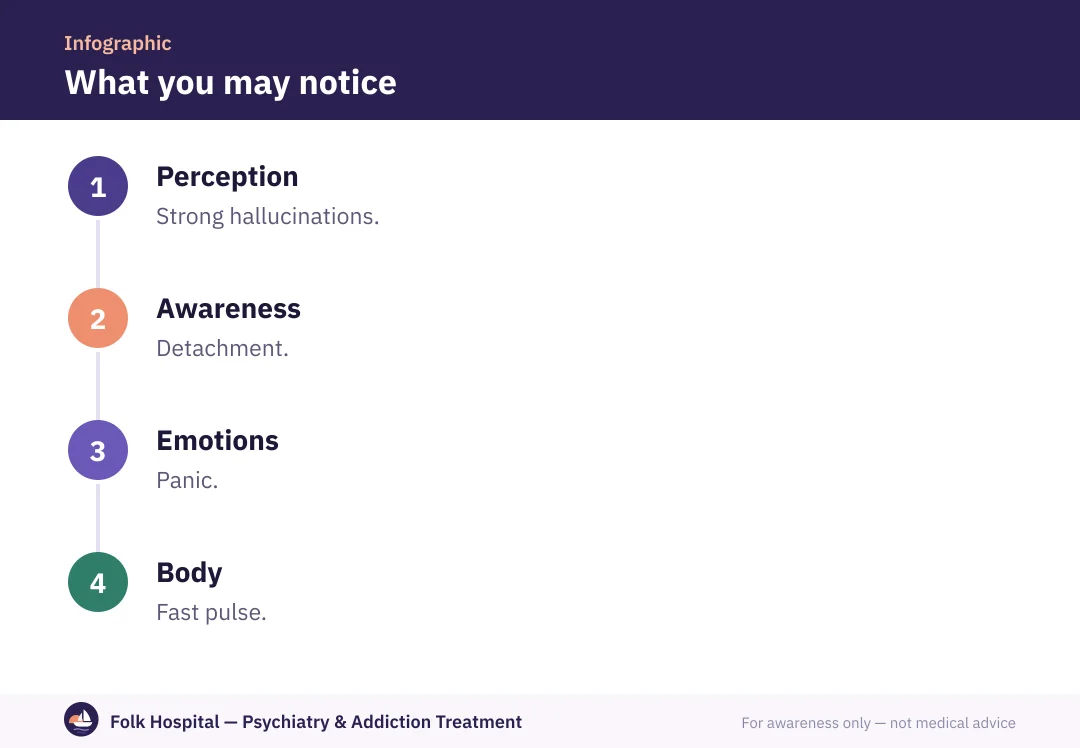
| Type | Signs |
|---|---|
| Under the effect | Visual hallucinations, changes in colours, sounds and time, detachment from the body and wide pupils |
| Physical | Fast heartbeat, raised blood pressure and temperature, sweating and nausea |
| Psychological | Panic, intense fear, suspicion and swinging emotions |
| Afterwards | Anxiety, confusion, insomnia and sometimes flashbacks |
02Danger signs
- Trying to jump or self-harm because of hallucinations.
- High temperature, seizures or unconsciousness.
- Severe panic that won't settle.
03After the episode
If hallucinations, suspicion or anxiety persist for days, a psychiatric assessment is needed, as it may be drug-induced psychosis. Read about the harms of Blue Elephant and hallucinogens.
؟Frequently asked questions
How should I act with someone panicking after a hallucinogen?
Stay calm, move them somewhere safe, reassure them, don't leave them alone, and call an ambulance if there's danger.
What is Blue Elephant?
A street name for pills or papers sold as hallucinogens, which may contain various unknown substances, increasing the danger.
Does Blue Elephant cause addiction?
Hallucinogens usually don't cause strong physical dependence, but repeated use causes psychological harm, and people may use other substances alongside.
What should I do with someone having a bad trip?
Stay calm, move them to a safe, quiet place, reassure them, don't leave them alone, and call an ambulance if there's danger, high temperature or seizures.
Sources and references
- Hallucinogens — research topic — National Institute on Drug Abuse (NIDA)
- Drugs, Brains, and Behavior: The Science of Addiction — National Institute on Drug Abuse (NIDA)

A psychiatrist specialising in addiction and mental illness in adults and adolescents, with a focus on dual diagnosis.
For awareness only — not a substitute for medical advice. Editorial policy · View profile