01Types
| Habit | Page |
|---|---|
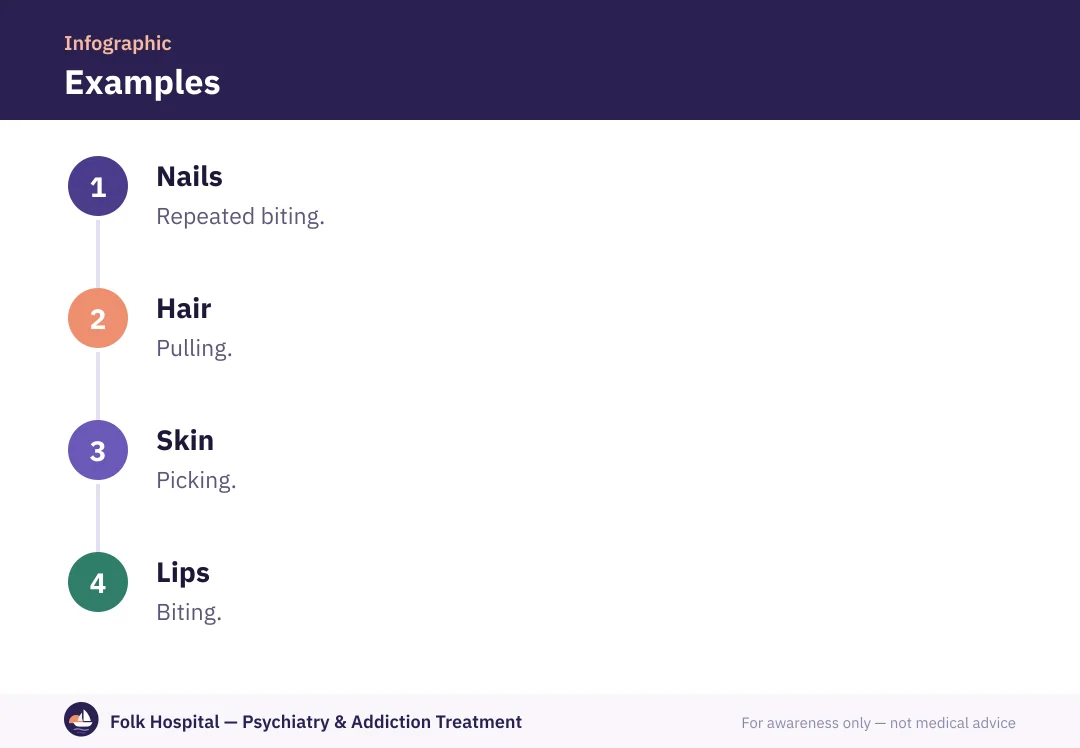
| Hair pulling | Hair pulling |
| Nail biting | Nail biting |
| Skin picking | A similar behaviour treated the same way |
02Habit reversal training
- Awarenessof the behaviour and triggers.
- A competing actionthat prevents it.
- Social supportencouragement without blame.
- Reinforcementrewarding progress.
Read also: types of behavioural addiction, OCD, body dysmorphia.
؟Frequently asked questions
What are compulsive habits?
Hard-to-resist repetitive behaviours like hair pulling, nail biting and skin picking.
Are they addictions?
They resemble addiction in loss of control but are classed close to OCD.
Why do they happen?
To relieve tension or boredom, or automatically without awareness.
What is the treatment?
Habit reversal training and CBT.
Do they need medication?
Sometimes, with co-occurring anxiety or OCD.
Do they affect children?
Yes, often starting in childhood.
Sources and references
- Body-Focused Repetitive Behavior (BFRB) Disorders — Cleveland Clinic
- Trichotillomania (hair pulling disorder) — NHS (UK)

Written byDr. Mohamed HosneyConsultant in mental health and behavioural rehabilitation
A specialist in psychological rehabilitation, behaviour modification and relapse prevention, with over 15 years in addiction programmes.
For awareness only — not a substitute for medical advice. Editorial policy · View profile