01Signs
Signs
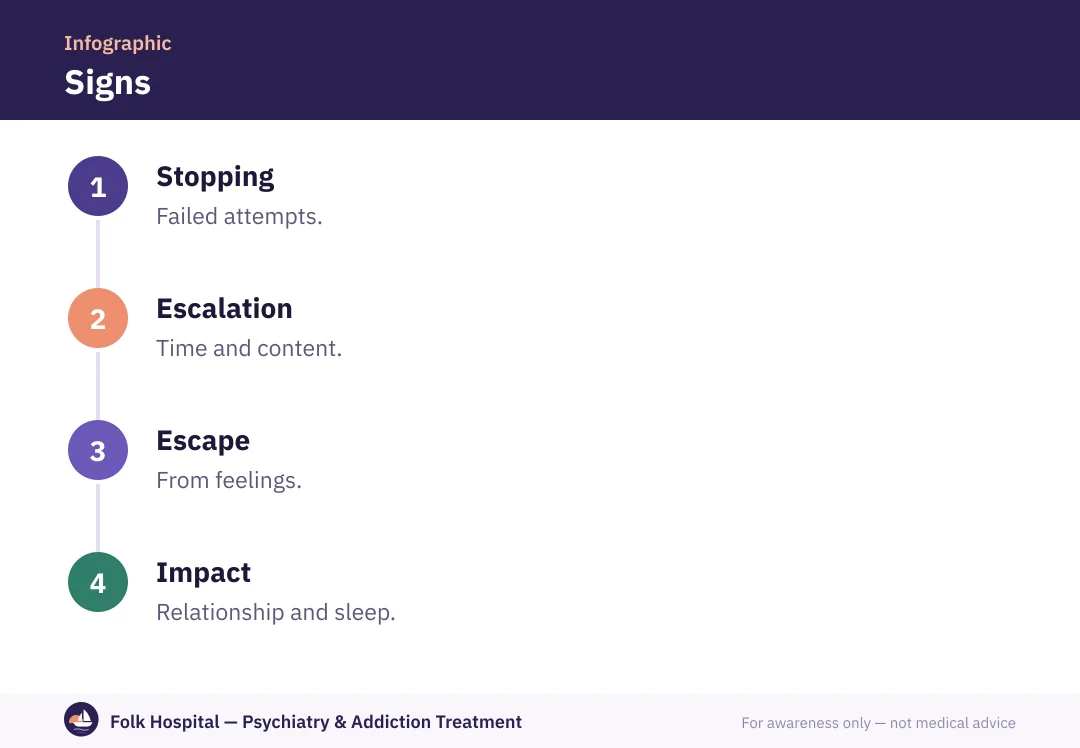
- Watching more than planned.
- Failed attempts to stop.
- Mental preoccupation.
- Needing more extreme content.
- Secrecy and late nights.
- Distress and guilt afterwards.
02Check yourself
| Question | Signal |
|---|---|
| Have you tried and failed to stop? | Loss of control |
| Do you watch when stressed? | Emotional escape |
| Has it affected your relationship or work? | Harm |
Read also: pornography addiction, treatment, compulsive sexual behaviour.
؟Frequently asked questions
What are the signs of pornography addiction?
Watching more than planned, failing to stop, preoccupation, more extreme content, secrecy and distress afterwards.
Is daily viewing addiction?
Control and harm matter more than frequency.
Is needing more extreme content a sign?
Yes. It suggests tolerance that needs attention.
Is guilt a sign of addiction?
It shows conflict with values; addiction is measured by loss of control and harm.
Does it affect intimacy?
It can reduce interest or change expectations.
How might a spouse notice?
Late nights, secrecy and emotional distance; calm dialogue beats accusation.
Sources and references
- Compulsive Sexual Behavior Disorder (Hypersexuality) — Cleveland Clinic
- Addictive behaviours: gaming disorder — World Health Organization

Written byDr. Mohamed HosneyConsultant in mental health and behavioural rehabilitation
A specialist in psychological rehabilitation, behaviour modification and relapse prevention, with over 15 years in addiction programmes.
For awareness only — not a substitute for medical advice. Editorial policy · View profile