01The common picture
Signs of contamination OCD
- Washing hands dozens of times.
- Very long showers.
- Excessive cleaning of the home and objects.
- Avoiding touching handles or shaking hands.
- Changing clothes after every outing.
- Strict cleanliness rules for the family.
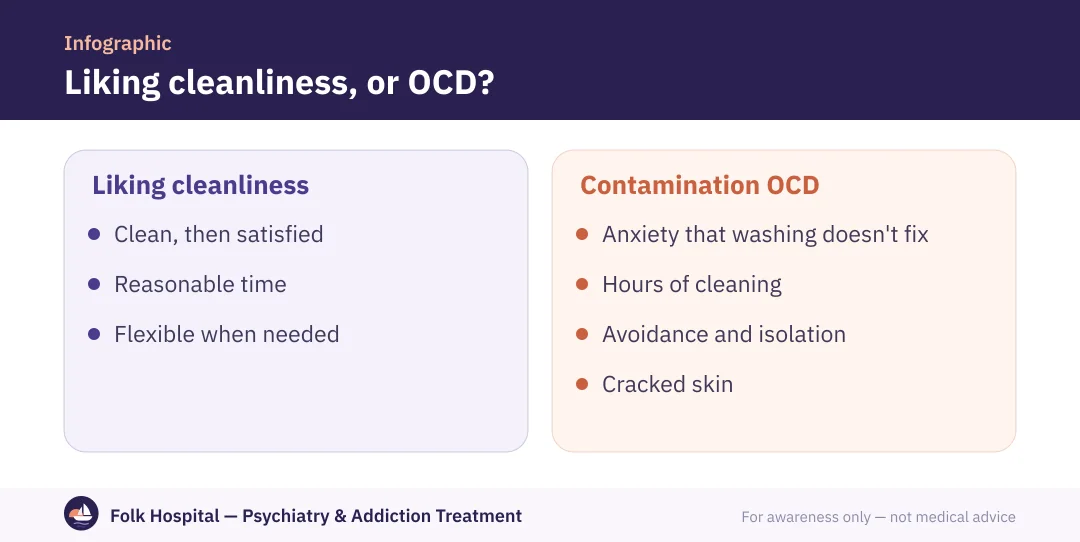
02Cleanliness or OCD?
| Normal cleanliness | Contamination OCD | |
|---|---|---|
| Motive | Comfort and health | Fear and distress |
| Time | Reasonable | Hours |
| Flexibility | Accepts circumstances | Intense distress when prevented |
| Skin | Healthy | Dry and cracked |
03Exposure treatment
- A fear ladderfrom easiest to hardest, such as touching a door handle, then sitting on a public chair.
- Exposuretouching the feared thing.
- Response preventionnot washing for a set time.
- Noticing anxietyit rises then falls on its own.
- Repetitionuntil the brain learns the danger is exaggerated.
Read OCD, its types and its treatment.
؟Frequently asked questions
What is contamination OCD?
An obsessive fear of contamination leading to excessive washing, cleaning and avoidance, taking time and causing distress.
How does liking cleanliness differ from contamination OCD?
Liking cleanliness is comfortable and flexible; contamination OCD is compulsive, exhausting and causes intense distress when prevented.
How is it treated?
With gradual exposure to what the person fears while preventing compulsive washing, sometimes with medication.
Does contamination OCD harm the skin?
Yes. Repeated washing and disinfectants cause dryness, cracking and infections.
Does it affect the family?
It can impose strict cleaning and entry rules on the household, increasing tension.
Do pandemics or illness news worsen OCD?
They can increase fear in vulnerable people, and treatment helps distinguish reasonable caution from compulsion.
Sources and references
- Obsessive-Compulsive Disorder — National Institute of Mental Health (NIMH)
- Obsessive compulsive disorder (OCD) — overview — NHS (UK)
- Psychotherapies — National Institute of Mental Health (NIMH)

A psychiatrist specialising in addiction and mental illness in adults and adolescents, with a focus on dual diagnosis.
For awareness only — not a substitute for medical advice. Editorial policy · View profile