01What happens in a «nervous breakdown»?
People use the term for a state in which someone can't carry on with daily life because of severe psychological pressure: constant crying, exhaustion, insomnia, panic attacks, or withdrawal from work and people. It isn't a medical diagnosis, but it often hides depression, anxiety or trauma. Read about the symptoms of a nervous breakdown and its causes.
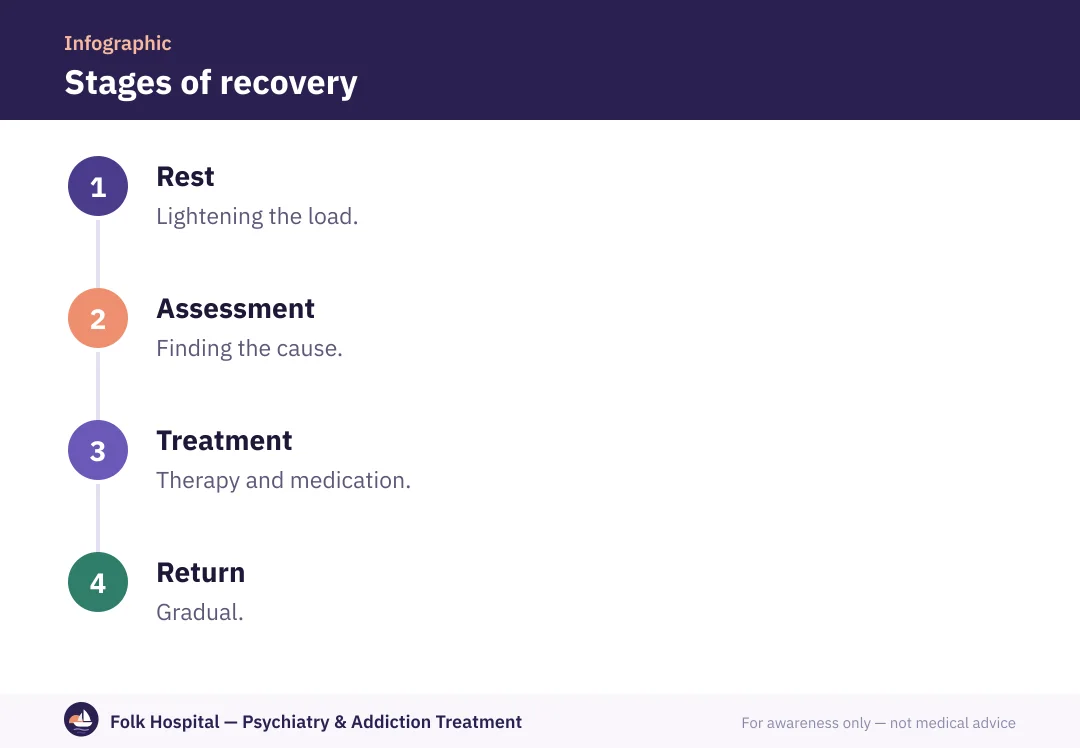
02Stages of recovery
- Safety and restpausing pressures temporarily, sleeping, eating regularly and asking for help.
- Psychiatric assessmentto find what's behind the crisis and rule out danger.
- Treating the causepsychological therapy, and sometimes medicines for depression or anxiety.
- Rebuilding routinefixed times, small enjoyable activities and a daily walk.
- Gradual return to workwith lighter tasks and fewer hours at first.
- A plan to prevent recurrenceknowing the early signs and acting on them.
03Early warning signs
| Sign | What to do |
|---|---|
| Insomnia or disturbed sleep for days | Review your schedule and reduce pressure |
| Irritability and quick temper | Take breaks and talk to someone you trust |
| Withdrawing from people | Keep in touch, even in small ways |
| Exhaustion that rest doesn't fix | Ask for an assessment |
| Turning to sedatives or substances | Seek help early |
04Signs that need urgent help
- Thoughts of suicide or self-harm.
- Being unable to eat, drink or care for yourself.
- Hallucinations, strange ideas or severe confusion.
Ambulance 123, or the mental health hotline 08008880700.
Ambulance: 123Read about stress and our psychiatric hospital.
؟Frequently asked questions
How long does recovery from a nervous breakdown take?
It varies, usually weeks to months depending on the cause, support and treatment.
Is a nervous breakdown a serious illness?
It's a crisis that needs attention and may hide severe depression, anxiety or another disorder. The greatest danger is when there are suicidal thoughts or psychotic symptoms.
Do I need time off work?
A short rest period set by the doctor usually helps, followed by a gradual return with lighter tasks rather than a long absence without a plan.
How do I prevent another breakdown?
By knowing your early signs, such as insomnia, irritability and withdrawal, dealing with them early, and keeping up sleep, boundaries at work and follow-up.
Sources and references
- Depression — National Institute of Mental Health (NIMH)
- Anxiety Disorders — National Institute of Mental Health (NIMH)
- Mental disorders — fact sheet — World Health Organization
- Psychotherapies — National Institute of Mental Health (NIMH)
- Suicide Prevention — National Institute of Mental Health (NIMH)

A psychiatrist specialising in addiction and mental illness in adults and adolescents, with a focus on dual diagnosis.
For awareness only — not a substitute for medical advice. Editorial policy · View profile