01What is Prozac (fluoxetine)?
Fluoxetine blocks serotonin reuptake so it stays available longer, gradually improving mood and reducing anxiety and obsessions. Its long life in the body makes a missed dose less disruptive and stopping gentler.
02Uses
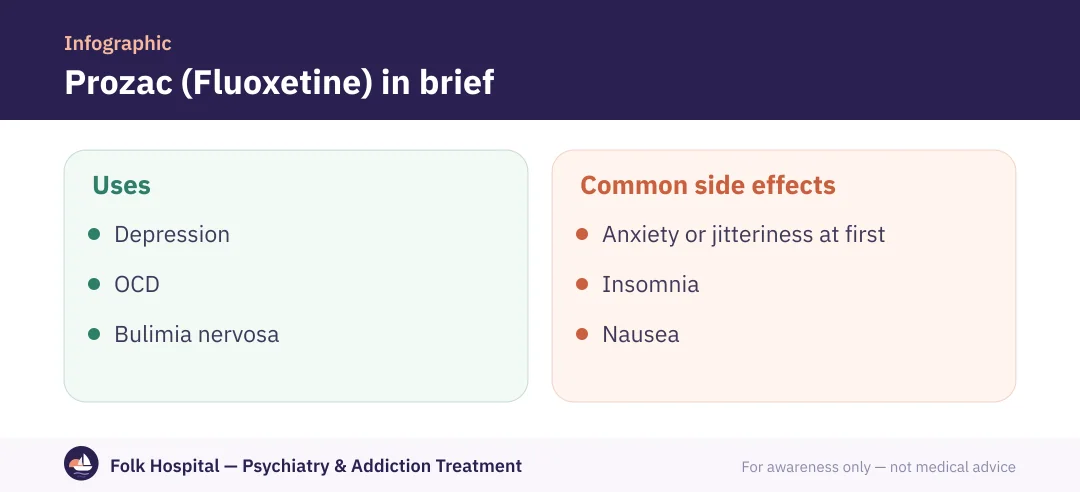
Used for
- Depression
- OCD
- Bulimia nervosa
- Panic disorder
03How is it used safely?
- On prescriptionafter the doctor assesses the condition and other medicines.
- Sticking to the dosewithout raising, lowering or sharing the medicine.
- Follow-upregular reviews of benefit and side effects.
- Stoppingwith a plan agreed with the doctor, not alone.
04Side effects
| Common effects | See a doctor straight away |
|---|---|
| Insomnia or jitteriness at first | Suicidal thoughts or sudden severe agitation, especially early on |
| Nausea | Stiffness, fever, tremor and confusion (serotonin syndrome) |
| Headache | Unusual bleeding |
| Reduced appetite | Severe rash or swelling |
| Low libido | — |
- Suicidal thoughts or sudden severe agitation, especially early on
- Stiffness, fever, tremor and confusion (serotonin syndrome)
- Unusual bleeding
- Severe rash or swelling
In Egypt call the ambulance on 123 immediately, or the mental-health hotline 08008880700 for suicidal thoughts.
Ambulance: 12305Important interactions
Don't combine without your doctor with
- Tramadol and triptan migraine medicines
- Other antidepressants or lithium
- Blood thinners, aspirin and anti-inflammatory painkillers
- Alcohol and stimulant drugs
- Medicines affected by liver enzymes, such as some antipsychotics
06Compared with similar medicines
| Medicine | Difference |
|---|---|
| Sertraline | Shorter life, slightly more noticeable withdrawal |
| Cipralex | Usually fewer drug interactions |
Read also: depression, OCD, antidepressant withdrawal, psychiatric medications.
؟Frequently asked questions
Is Prozac (fluoxetine) addictive?
Antidepressants aren't addictive in the sense of craving and escalating doses, but the body gets used to them.
Can I stop Prozac (fluoxetine) suddenly?
Sudden stopping is less troublesome than with others thanks to its long life, but tapering is the doctor's decision.
Can I drink alcohol with Prozac (fluoxetine)?
Best avoided. Alcohol worsens depression and drowsiness and weakens the treatment.
When does Prozac (fluoxetine) start working?
Improvement usually starts within two to four weeks; the full effect can take longer.
Is Prozac (fluoxetine) safe in pregnancy and breastfeeding?
The doctor decides case by case, weighing benefits and risks; don't stop it without advice if pregnancy occurs.
Does Prozac cause weight gain?
Usually not noticeably; some people lose a little weight at first.
Sources and references
- Fluoxetine (Prozac) — NHS medicines — NHS (UK)
- Mental Health Medications — National Institute of Mental Health (NIMH)

A psychiatrist specialising in addiction and mental illness in adults and adolescents, with a focus on dual diagnosis.
For awareness only — not a substitute for medical advice. Editorial policy · View profile