01Common symptoms
May include
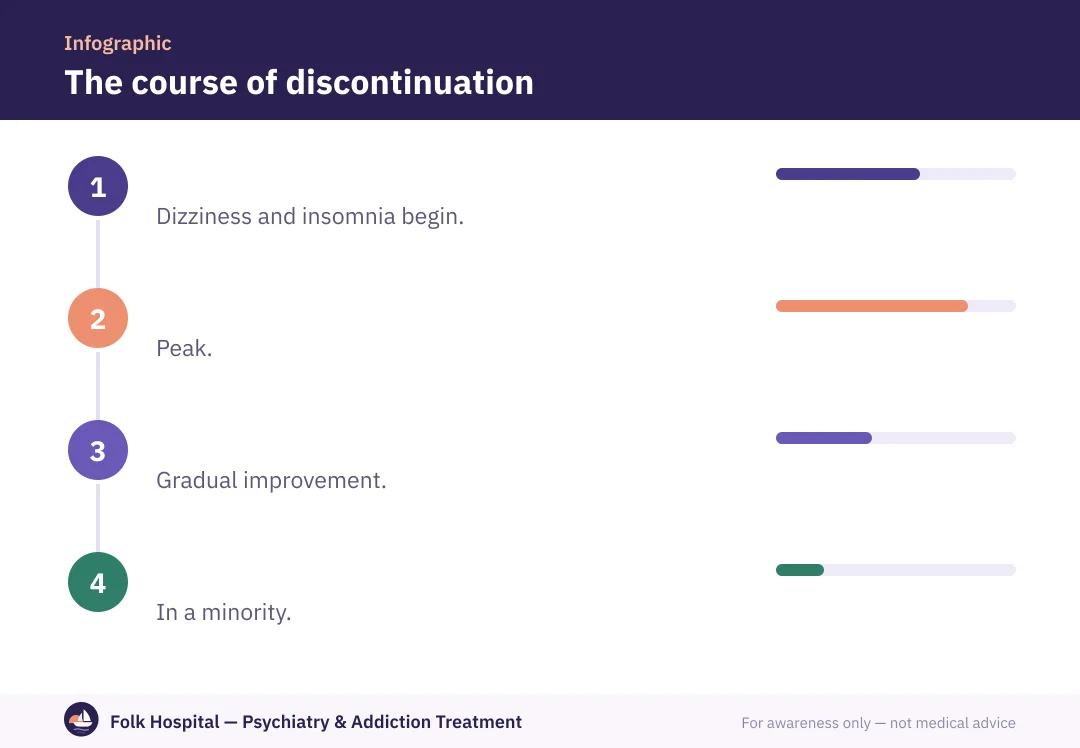
- Dizziness and unsteadiness.
- Electric-shock-like sensations.
- Irritability, anxiety and mood swings.
- Insomnia and vivid dreams.
- Nausea and flu-like symptoms.
02Withdrawal or relapse?
| Withdrawal | Relapse | |
|---|---|---|
| Onset | Within days of stopping | Usually slower |
| Physical symptoms | Dizziness and «zaps» | Fewer |
| Improvement on restarting | Fast | Slower |
03A safe stopping plan
- Decide with the doctorafter a long enough stable period.
- Gradual taperingin stages that suit the medicine.
- Follow-upnoting symptoms and telling the doctor.
- Flexibilityslowing the taper when needed.
Higher risk
Lower risk
- Prozac, thanks to its long life.
Read antidepressants and are psychiatric medicines addictive?.
؟Frequently asked questions
What are antidepressant withdrawal symptoms?
Dizziness, shock-like sensations, irritability, anxiety, insomnia, vivid dreams, nausea and flu-like symptoms.
How long do they last?
Usually days to weeks, sometimes longer, especially after long use.
Is it addiction?
No. It's physical adaptation without craving or compulsive behaviour.
How do I tell it from relapse?
Withdrawal starts soon after stopping and includes physical symptoms; relapse starts more slowly and resembles the original depression. The doctor assesses.
Which medicines cause it most?
Short-acting ones like paroxetine and venlafaxine; fluoxetine least.
What should I do if it happens?
Contact the doctor, who may slow the taper or temporarily restore the previous dose.
Sources and references
- Stopping or coming off antidepressants — NHS (UK)
- Antidepressants — overview — NHS (UK)
- Stopping or coming off antidepressants — NHS (UK)
- Antidepressants — overview — NHS (UK)

A psychiatrist specialising in addiction and mental illness in adults and adolescents, with a focus on dual diagnosis.
For awareness only — not a substitute for medical advice. Editorial policy · View profile